Smart Glasses · Guide
What are smart glasses? A plain-English guide to types, prices and privacy in 2026
Smart glasses are ordinary-looking frames with speakers, microphones and often a camera or a tiny display, linked to your phone and an AI assistant. Here's how the types differ, who makes them, what they cost and what to know before wearing a pair in public.
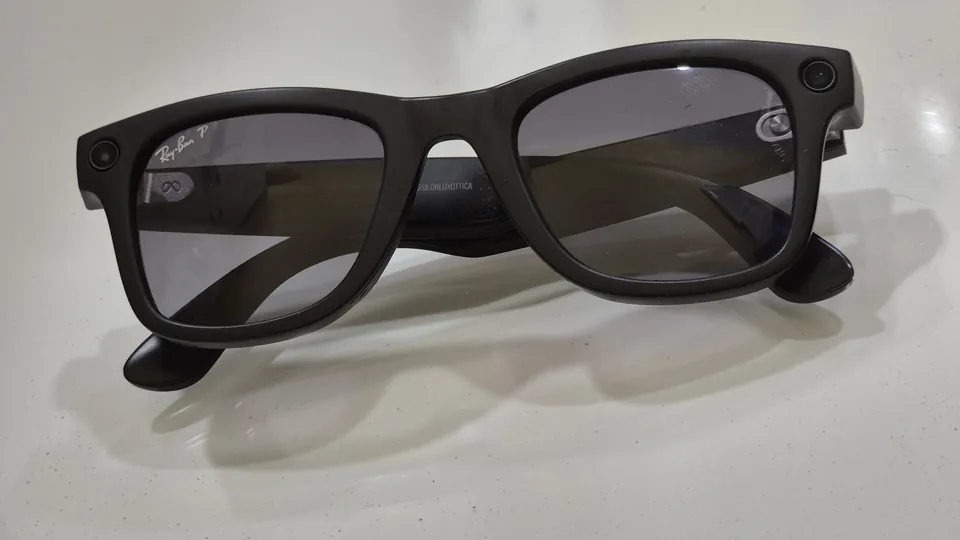
Smart glasses are glasses with electronics built into the frame. Most have microphones and small open-ear speakers in the temples, many add a camera, and a few have a tiny display inside the lens. They connect to your phone and, in most cases, to an AI assistant you talk to. The best-selling kind, such as Ray-Ban Meta and Oakley Meta, has no screen at all: you speak, and the glasses answer in your ear.
This guide is based on manufacturers' announcements, help pages and published specifications, along with market figures from Omdia and Counterpoint Research.
The main kinds of smart glasses
Companies haven't agreed on names. Meta sorts its glasses into "camera AI glasses," "display AI glasses" and augmented reality glasses. Google says its "intelligent eyewear" will come as audio glasses and display glasses. What you can buy or order in the US falls into five groups:
| Type | What it adds | Examples |
|---|---|---|
| Audio glasses | Speakers, microphones and an assistant, with no camera or display | Ray-Ban Meta Audio, Amazon Echo Frames |
| Camera AI glasses | A camera for photos, video and questions about what you see | Ray-Ban Meta Gen 3, Oakley Meta, Meta Glasses |
| Display AI glasses | A small screen in the lens for messages, directions and captions | Meta Ray-Ban Display, Even Realities G2 |
| Screen glasses | A large virtual screen fed by a phone, laptop or console over a cable | XREAL One, XREAL One Pro |
| AR glasses | See-through displays that place graphics in the room around you | Snap Specs, XREAL Aura |
Labels can mislead. The glasses Samsung is building for Google with Gentle Monster and Warby Parker are called audio glasses, but Google says they can "snap high-quality photos and videos," so they belong with the camera models. Meta's VR Glasses, due in spring 2027, are a separate category: virtual reality in a glasses shape, with a passthrough camera that shows you the room. We break down the differences in AI glasses vs AR glasses vs display glasses.
What smart glasses can do
Audio is the core. Meta says audio "has been our most popular feature since day one," and every pair in its lineup plays music and podcasts and handles calls. Ray-Ban Meta Gen 3 uses a six-microphone array that Meta says cuts more than 90% of background noise.
Camera models take photos and video hands-free. Gen 3 has a 12MP camera with a 100-degree field of view and records up to 3K video, according to Meta. Photos stay on the glasses until you import them to your phone through the Meta AI app, which moves them into your phone's photo library and deletes them from the glasses, Meta's help center says.
The assistant is what makes them "AI glasses." You can ask Meta AI about what you're looking at, set reminders or get live translation, and in June Meta said it was adding 14 languages to translation, including Japanese, Mandarin, Hindi and Korean. Google's glasses will use Gemini, and Meta says its Muse agent is coming to its glasses "in the coming months."
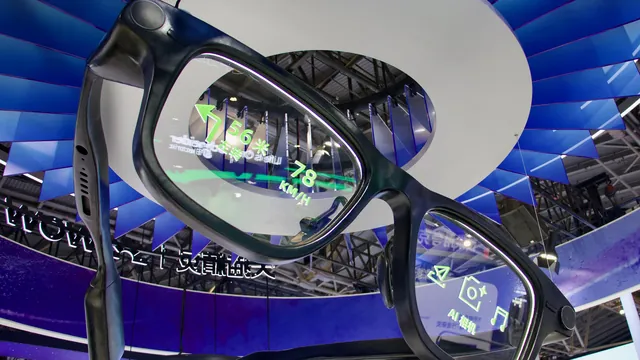
Display glasses show information instead of only speaking it. Meta Ray-Ban Display shows messages, walking directions, live captions and a camera viewfinder on a small color display placed off to the side of your view. You control it with Meta Neural Band, a wristband that reads the muscle signals behind small finger movements. Even Realities' G2 has a teleprompter, translation in 35 languages and notifications.
Screen glasses work like a portable monitor. XREAL says its One Pro shows a virtual screen of up to 171 inches when connected to any device with USB-C.
There are accessibility features, too. Meta's hearing enhancement software, cleared by the FDA for adults with perceived mild to moderate hearing loss, comes to supported glasses in the US later this year for $149.99.
How they work
Hamburg's data protection office took apart a first-generation Ray-Ban Meta pair for a report published in September. Inside it found a 12MP wide-angle camera, five microphones, two speakers, 32GB of flash storage, a rechargeable battery, Wi-Fi and Bluetooth, and a touch panel. The glasses rely on the phone app for setup, media transfer and sharing, and requests to the assistant go to Meta's servers.
Display models add a light engine and a see-through lens that carries the image to your eye. Even Realities uses a green microLED display and waveguides in the G2, with a 27.5-degree field of view. Snap's Specs use a liquid crystal on silicon display with a 51-degree field of view. XREAL's One Pro uses a Sony Micro-OLED panel.
Battery life follows the hardware. Meta rates Gen 3 at up to nine hours, plus 50 more from the charging case, and the camera-free Ray-Ban Meta Audio at up to 12 hours. Meta Ray-Ban Display lasts up to six hours of mixed use. Snap says Specs run up to four hours, with four more charges in the case.
Who makes smart glasses
Meta, working with eyewear giant EssilorLuxottica, dominates. Omdia estimates that 8.7 million AI glasses shipped worldwide in 2025, 322% more than in 2024, and that Meta accounted for 7.4 million of them, or 85.2%. Its lineup now spans Ray-Ban Meta, Oakley Meta, its own Meta Glasses brand and Meta Ray-Ban Display, and Meta says it will offer more than 100 styles by the end of the year.
Chinese companies follow. Omdia ranks Rokid and Xiaomi second and third worldwide, and says Chinese companies including Rokid, Alibaba and Even Realities shipped 71% of the AI glasses that had displays in 2025.
In the US, the other names to know are Snap, which makes Specs; XREAL, which makes screen glasses and the Android XR-based Aura; Amazon, with its Echo Frames audio glasses; and Google and Samsung, whose first glasses together are due this fall. Apple hasn't announced glasses. Bloomberg's Mark Gurman reports that Apple is targeting late 2027, according to Engadget.
What smart glasses cost
Prices below are US starting prices from each company.
| Model | Type | Starting price | Status |
|---|---|---|---|
| Meta Adventurer (black, plug-in case) | Camera | $249 | On sale since Oct. 23 |
| Meta Glasses | Camera | $299 | On sale |
| Ray-Ban Meta Audio | Audio | $349 | Shipping since Oct. 13 |
| Oakley Meta HSTN | Camera | $399 | On sale |
| XREAL One | Screen | $399 | Back-in-stock sign-up on XREAL's US store, Oct. 29 |
| Ray-Ban Meta Gen 3 | Camera | $449 | On sale since Sept. 23 |
| Oakley Meta Vanguard | Camera | $499 | On sale |
| XREAL One Pro | Screen | $539 | Listed on XREAL's US store, Oct. 29 |
| Meta Ray-Ban Display | Display and camera | $799 | On sale |
| XREAL Aura | AR | $1,099 (launch price) | Orders open, shipping from mid-November |
| Meta VR Glasses | VR | $1,299.99 | Spring 2027 |
| Snap Specs | AR | $2,195 | Shipping this fall |
Prescription lenses can add to the cost: XREAL, for example, sells them separately from $49.90. Google hasn't announced prices for its glasses. On Oct. 29, 2026, XREAL's US store listed the One at $399 with a back-in-stock sign-up and no restock date, and the One Pro at $539. XREAL Aura's launch pricing starts at $1,099 through the end of the year, and orders opened on Oct. 28, Google says.
Privacy and the law
Every pair of Meta camera glasses has a white "capture LED" on the front that blinks while it takes a photo or video. Meta says the light has no off switch and that, from the second generation on, the camera stops working if the light is blocked. Regulators aren't convinced it's enough. Hamburg's investigators found the light hard to see outdoors, and Europe's privacy board said in October that smart glasses "should make their recording obvious." Our guide to smart glasses recording lights explains what each brand's light means.
In the US, recording a conversation is legal in most states as long as you're part of it, but about a dozen states require everyone's consent, and every state restricts hidden cameras in private places such as bathrooms and changing rooms. Some places set their own rules: New York's courts have banned glasses with cameras or microphones since July 20, and Royal Caribbean doesn't allow recording glasses in areas such as restrooms and its casinos. See is it legal to record with smart glasses and, for the people on the other side of the lens, what bystanders should know and can do. Our analysis of how regulators are pushing back covers Norway's planned ban.
How to choose a pair
Start with the camera question. If you want photos, video and an assistant that can see what you see, you want camera glasses like Ray-Ban Meta Gen 3. If you mostly want music, calls and voice help, audio glasses such as Ray-Ban Meta Audio are lighter, at 43 grams, and cheaper. Don't count on them to get past every ban, though: New York's courts also exclude glasses with microphones.
Then decide whether you need a display. Directions and messages in your lens cost more, $799 for Meta Ray-Ban Display, and display models come in far fewer styles: Meta's comes in two colors. If you wear glasses all day, check the prescription range before anything else. And if what you really want is a big screen for movies or games, screen glasses like XREAL's are a different, cheaper purchase.
Our best smart glasses guide sorts the current models by need, the prescription guide lists every lens option, and the upcoming smart glasses tracker shows what's coming next. For how we got here, from Google Glass in 2013 onward, see our smart glasses timeline.
Correction, Oct. 31, 2026: The price table listed the XREAL One as on sale and the One Pro at $599. On Oct. 29, 2026, XREAL's US store showed a back-in-stock sign-up for the One and listed the One Pro at $539, so the table now says that. It also now gives XREAL Aura's launch pricing from $1,099, which Google announced on Oct. 28, in place of the $1,279 starting price from XREAL's Oct. 7 announcement.
Every Explainers guide
Essentials
- AI glasses vs AR glasses vs display glasses: the differences, with examplesAI glasses vs AR glasses vs display glasses: what each type does, how their displays differ, which 2026 models fit each category and what th
- AR glasses field of view explained: degrees, screen size and the published numbersWhat field of view means in AR and display glasses, how degrees convert to virtual screen size, and the published figures for Meta, XREAL, R
- Can you drive with smart glasses? US laws, Meta's warnings and lens rulesIs it legal to drive with smart glasses? California and Florida statutes, the 2013 Google Glass ticket, Meta's driving warnings and sun lens
- Open-ear speakers in smart glasses explained: how they work and who can hear themHow open-ear speakers in smart glasses work, whether people can hear Ray-Ban Meta audio, how the microphones handle calls and what hearing f
- Waveguide displays explained: how smart glasses put a screen in a clear lensWhat a waveguide display is, how diffractive, reflective and holographic waveguides carry light to your eye, and the trade-offs in today's s
How to use Meta glasses
- Meta Neural Band explained: how the wristband works, gestures, sizes and fitHow Meta's EMG wristband reads finger movements, every gesture for Meta Ray-Ban Display, the three band sizes, how to measure your wrist and
Fix common problems
- Ray-Ban Meta charging case lights: what each color and blink meansWhat the Ray-Ban Meta charging case light means: solid or blinking orange, green, red, blue and white, with the fix for each one from Meta's
- Ray-Ban Meta LED lights explained: white, blinking, pulsing and the capture lightWhat the lights on Ray-Ban Meta glasses mean: blinking or pulsing white, green, orange, red and blue, plus the front capture LED and why it
Frequently asked questions
Are smart glasses always recording?
No. Camera glasses take a photo or video when you press the capture button or ask the assistant, and on Meta's glasses a white light on the front blinks while they capture. The microphones listen for the wake word, and Meta's privacy notice lets it store the voice commands you give after "Hey Meta" for up to a year, TechCrunch reported in 2025.
Do smart glasses work with an iPhone?
Most do. Meta's glasses pair with the Meta AI app, which is on both the App Store and Google Play, and Google says the glasses it's launching with Samsung pair with both Android and iOS phones.
Can I get smart glasses with my prescription?
Yes, for most models, though the range of prescriptions varies. Meta's help center lists -12.00 to +6.00 total power for Ray-Ban Meta, and Even Realities makes G2 lenses from -12.00 to +12.00. Our prescription guide covers every option.
What's the difference between smart glasses and AR glasses?
Smart glasses is the umbrella term. AR glasses are the most advanced kind, with see-through displays that place graphics in the space around you, like Snap's Specs. Most smart glasses sold today have no display at all. Here's how the types compare.
How long does a smart glasses battery last?
It depends on the type. Meta rates Ray-Ban Meta Gen 3 at up to nine hours and the camera-free Ray-Ban Meta Audio at up to 12, Meta Ray-Ban Display at up to six hours of mixed use, and Snap's Specs at up to four. Even Realities says its G2 display glasses last up to two days.
Sources
- Meta: Introducing Ray-Ban Meta Audio and more AI glasses styles (Sept. 23, 2026)
- Meta: The biggest news from Connect 2026 (Sept. 24, 2026)
- Meta: Compare AI glasses
- Meta: Meta Ray-Ban Display, AI glasses with an EMG wristband (Sept. 17, 2025)
- Meta: We're partnering with EssilorLuxottica to launch Meta Glasses (June 23, 2026)
- Meta: Which AI glasses are right for you? (May 8, 2026)
- Meta: Introducing Meta VR Glasses (Sept. 23, 2026)
- Meta: Meta's AI glasses, your questions answered (July 7, 2026)
- Meta Help Center: How to capture photos and videos with AI glasses
- Meta Help Center: How to order prescription lenses for AI glasses
- Google: Intelligent eyewear is coming this fall (May 19, 2026)
- Snap Inc.: Snap debuts SPECS augmented reality glasses (June 16, 2026)
- XREAL: XREAL AURA starts at $1,279 (Oct. 7, 2026)
- Google: XREAL AURA is available to order today (Oct. 28, 2026)
- XREAL US store: products and prices
- XREAL US store: XREAL One
- XREAL: XREAL One Pro
- Even Realities: Even G2
- Omdia: global AI glasses shipments reach 8.7 million units (March 5, 2026)
- Counterpoint Research: global AI glasses shipments surge 263% in H1 2026
- Hamburg Commissioner for Data Protection: final report on Ray-Ban Meta AI Glasses (Sept. 10, 2026, PDF)
- European Data Protection Board: statement on smart glasses (Oct. 13, 2026)
- Engadget: Apple's smart glasses reportedly won't debut until end of 2027 (May 31, 2026)
- Syracuse.com: New York to ban smart glasses from all courthouses (July 7, 2026)
- Cruise Critic: Royal Caribbean adds smart glasses to restricted items list (Oct. 9, 2026)
- Reporters Committee for Freedom of the Press: Introduction to the Reporter's Recording Guide
- TechCrunch: If you own Ray-Ban Meta glasses, double-check your privacy settings (April 30, 2025)
- Amazon: Echo Frames
Join the conversation
Questions, or something to add? Talk about it with other smart glasses owners in r/Talaya, our community on Reddit.