Smart Glasses · Guide
AI glasses vs AR glasses vs display glasses: the differences, with examples
Smart glasses now come with no screen, a small screen you glance at, or a see-through display that places graphics in the room. Here's what separates AI glasses, display glasses, screen glasses and AR glasses, with real models and prices.
Part of our Explainers guide
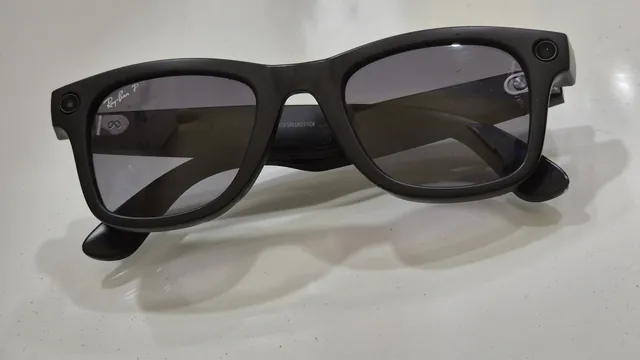
Smart glasses is the umbrella term, and the differences inside it come down to the display. AI glasses, like Ray-Ban Meta, have no screen: you talk to an assistant and it answers in your ear. Display glasses add a small screen in the lens for quick information such as messages and directions. AR glasses go further, with see-through displays wide enough to place apps and 3D objects in the room around you. A fourth group, screen glasses, plugs into a phone or computer and shows a big virtual monitor.
This explainer is based on manufacturers' specifications and announcements, plus shipment data from Counterpoint Research and Omdia.
The four types at a glance
| AI glasses | Display glasses | Screen glasses | AR glasses | |
|---|---|---|---|---|
| Display | None | Small, for quick glances | Large virtual screen | Wide, see-through, placed in the room |
| Best for | Audio, photos, an assistant | Messages, directions, captions | Movies, games, work | Apps and 3D content around you |
| Examples | Ray-Ban Meta Gen 3 ($449) | Meta Ray-Ban Display ($799) | XREAL One ($399) | Snap Specs ($2,195) |
Companies use their own labels. Meta splits its lineup into "camera AI glasses," "display AI glasses" and augmented reality glasses, according to its 2025 Connect announcement. Google says its "intelligent eyewear" will come as audio glasses and display glasses. XREAL markets its plug-in glasses as AR glasses.
AI glasses: no screen, all voice
AI glasses put microphones, open-ear speakers and usually a camera in a normal-looking frame, and connect to an assistant through your phone. Ray-Ban Meta Gen 3 is the reference point: a 12MP camera with a 100-degree field of view, video up to 3K, a six-microphone array and no display, according to Meta. You ask Meta AI questions, including about what you're looking at, and hear the answers.
This is by far the biggest category. Counterpoint Research says display-less models accounted for 96% of AI glasses shipped in the first half of 2026. Omdia put the share of AI glasses with displays at 8.4% in 2025, up from 3.3% the year before.
Some AI glasses skip the camera. Meta's compare page lists Ray-Ban Meta Audio as "audio-only frames," with no camera or capture button, at 43 grams and up to 12 hours of battery. The names can mislead in the other direction, though. Google calls the glasses Samsung is building with Gentle Monster and Warby Parker "audio glasses," yet says they can take photos and video. What they lack is a display.
The term "AI glasses" is mostly marketing. Meta uses it for its whole lineup, and Omdia and Counterpoint count both display-less and display models as AI glasses, so in practice it means smart glasses built around an assistant.
Display glasses: a small screen you glance at
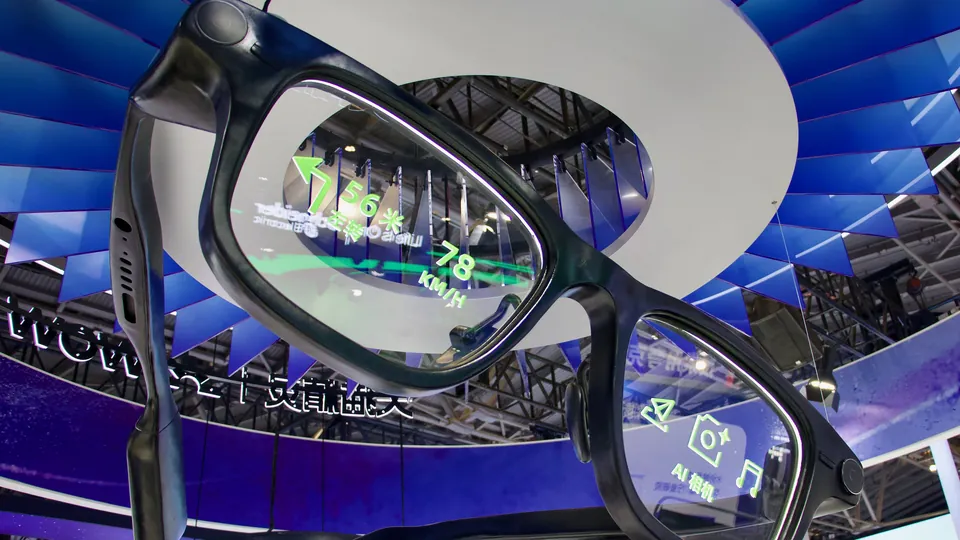
Display glasses add a screen you can check without taking out your phone. Meta Ray-Ban Display, which costs $799 with its Meta Neural Band wristband, has a full-color display that Meta says is "placed off to the side, so it doesn't obstruct your view," and is designed "for short interactions." It shows messages, walking directions, live captions and a camera viewfinder. "This isn't about strapping a phone to your face," Meta wrote. The glasses keep a camera and last up to six hours of mixed use.
Even Realities takes a different approach with the G2. Its display uses binocular waveguides and a green microLED panel with a 640 by 350 resolution, a 27.5-degree field of view and up to 1,200 nits of brightness, according to the company. The frames weigh 36 grams and have no camera, which Even describes as "camera-free. By design." The G2 launched at $599 in November 2025, according to Auganix, and Even says the battery lasts up to two days.
Chinese companies lead this category globally. Omdia says Chinese firms, including Rokid, Alibaba and Even Realities, shipped 71% of the AI glasses with displays in 2025, and that Meta Ray-Ban Display shipped 84,000 units that year.
Display glasses generally don't attach graphics to real objects. The image stays in one spot in your view, like a heads-up display in a car.
Screen glasses: a monitor on your face
Screen glasses are built for watching and working. XREAL's One Pro connects to a phone, laptop or handheld console over USB-C and shows a virtual screen of up to 171 inches, using a 0.55-inch Sony Micro-OLED panel with a 57-degree field of view, according to XREAL. A chip in the glasses can pin that screen in place as you turn your head, and an "ultrawide" mode curves it to 310 inches. A $99 add-on, XREAL Eye, adds what XREAL calls a "6DoF spatial screen," meaning the screen also stays put as you move around.
XREAL calls these AR glasses, but their main job is to float a flat screen in front of you, not to place objects around the room. They're also much cheaper than AR glasses. On Oct. 29, 2026, XREAL's US store listed the One at $399, with a back-in-stock sign-up and no restock date, and the One Pro at $539. The ROG XREAL R1, a 240Hz model for gaming, is listed at $849. Viture sells similar XR glasses aimed at entertainment, gaming and productivity.
AR glasses: graphics placed in the world
Augmented reality glasses combine a see-through view of the world with displays wide enough, and tracking precise enough, to put digital objects in a fixed place around you. Meta describes AR glasses as having "a large holographic display and digital experiences that augment the world around you."
Snap's Specs, on pre-order now, are the best-known example. They're standalone, with "no puck or tether," and have a 51-degree field of view, hand tracking and two Snapdragon processors, Snap says. They weigh 132 or 136 grams depending on size, run up to four hours on a charge and cost $2,195, with shipping planned for this fall in the US, the UK and France.
XREAL Aura splits the work in two. The glasses, under 95 grams, have a 70-degree field of view and hand tracking, and a cable connects them to a compute puck that runs Google's Android XR, according to XREAL. Orders opened on Oct. 28 in the US, Canada and South Korea, and open in Japan on Nov. 2, with launch pricing from $1,099 through the end of the year and shipments starting in mid-November, Google says. Meta has shown its own AR glasses, the Orion prototype, but hasn't sold them.
Field of view is the clearest dividing line. It measures how much of your vision the digital image can cover:
| Model | Type | Field of view |
|---|---|---|
| Even Realities G2 | Display glasses | 27.5 degrees |
| Snap Spectacles (2024, developers only) | AR glasses | 46 degrees |
| Snap Specs | AR glasses | 51 degrees |
| XREAL One Pro | Screen glasses | 57 degrees |
| XREAL Aura | AR glasses | 70 degrees |
Figures are each company's own measurements.
Where VR glasses fit
Meta's VR Glasses, due in spring 2027 for $1,299.99, aren't AR glasses even though they look like glasses. They use micro-OLED displays and pancake lenses that you look into, and "the open sides and passthrough camera keep you aware of what's happening nearby," Meta says. They weigh about 100 grams, connect to a pocket puck by an optical tether and last up to three hours of media playback. For the bigger headsets in this space, see our explainers on Samsung Galaxy XR and Apple Vision Pro.
Which type is right for you
AI glasses make the most sense if you want music, calls, hands-free photos and an assistant in frames you can wear all day. They're generally the cheapest option, and they come in the most styles.
Display glasses are for reading messages, following directions or seeing live captions without looking at your phone. Expect to pay more and choose from fewer frames.
Screen glasses suit anyone who wants a big private screen for flights, gaming or working from a laptop on the go.
AR glasses are the newest category, and early buyers accept high prices and shorter battery life: Snap rates Specs at up to four hours, against up to nine for Ray-Ban Meta Gen 3.
For specific models, see our best smart glasses guide. Our smart glasses explainer covers how they work and what they cost, and the upcoming smart glasses tracker lists what's due next, including Snap Specs and the first Android XR glasses. If you're new to Google's platform, start with what Android XR is.
Update, Oct. 30, 2026: This guide now gives the XREAL One Pro at the $539 XREAL's US store showed on Oct. 29, instead of $599, and notes the One's back-in-stock sign-up that day. It also gives XREAL Aura's launch pricing from $1,099 and open orders, which Google announced on Oct. 28, in place of the $1,279 starting price from XREAL's Oct. 7 announcement.
Frequently asked questions
Are Ray-Ban Meta glasses AR glasses?
No. Ray-Ban Meta glasses have no display, and Meta calls them camera AI glasses. Meta reserves the AR label for glasses with a large holographic display, like its Orion prototype, which isn't for sale.
Is Meta Ray-Ban Display augmented reality?
Meta puts it in a separate category, display AI glasses. Its full-color display sits off to the side of your view and is meant for short interactions, while AR glasses place graphics in the space around you.
Can other people see what's on a display glasses screen?
The companies say no. Even Realities describes the G2 display as visible only to the wearer, Meta calls the Display's in-lens view private, and XREAL says the One Pro reduces the image reflection that can appear on the front of the glasses.
Do AR glasses need a phone?
It depends on the model. Snap says Specs are fully standalone, with no puck or tether. XREAL Aura runs Android XR on a compute puck connected by a cable, and most AI and display glasses rely on a phone app.
Is there a difference between AI glasses and smart glasses?
Smart glasses is the general term. AI glasses is the industry's name for smart glasses built around an assistant: Meta uses it for its whole lineup, and analysts like Omdia and Counterpoint count both display-less and display models as AI glasses.
Sources
- Meta: Meta Ray-Ban Display, AI glasses with an EMG wristband (Sept. 17, 2025)
- Meta: Which AI glasses are right for you? (May 8, 2026)
- Meta: Compare AI glasses
- Meta: Introducing Ray-Ban Meta Audio and more AI glasses styles (Sept. 23, 2026)
- Meta: Introducing Meta VR Glasses (Sept. 23, 2026)
- Meta: Introducing Orion, our first true augmented reality glasses (Sept. 25, 2024)
- Google: Intelligent eyewear is coming this fall (May 19, 2026)
- Even Realities: Even G2
- Even Realities: Prescription smart glasses
- Auganix: Even Realities launches G2 glasses and R1 ring (Nov. 12, 2025)
- XREAL: XREAL One Pro
- XREAL: XREAL One
- XREAL US store: products and prices
- XREAL: XREAL AURA starts at $1,279 (Oct. 7, 2026)
- Google: XREAL AURA is available to order today (Oct. 28, 2026)
- Snap Inc.: Snap debuts SPECS augmented reality glasses (June 16, 2026)
- Snap Newsroom: Introducing new Spectacles and Snap OS (Sept. 17, 2024)
- Counterpoint Research: global AI glasses shipments surge 263% in H1 2026
- Omdia: global AI glasses shipments reach 8.7 million units (March 5, 2026)
- Viture: XR glasses
Join the conversation
Questions, or something to add? Talk about it with other smart glasses owners in r/Talaya, our community on Reddit.