Smart Glasses · Guide
Snap Specs: price, release date, features and everything else we know
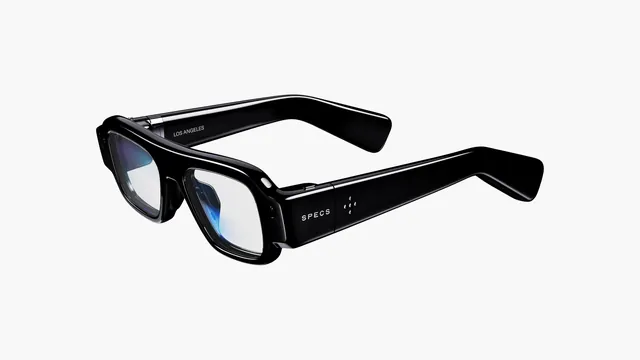
Snap's first AR glasses for consumers cost $2,195 and are due to ship this fall in the US, the UK and France. They fit a 51-degree display, two Snapdragon chips and the battery into a frame of 132 to 136 grams, after a decade of Spectacles.
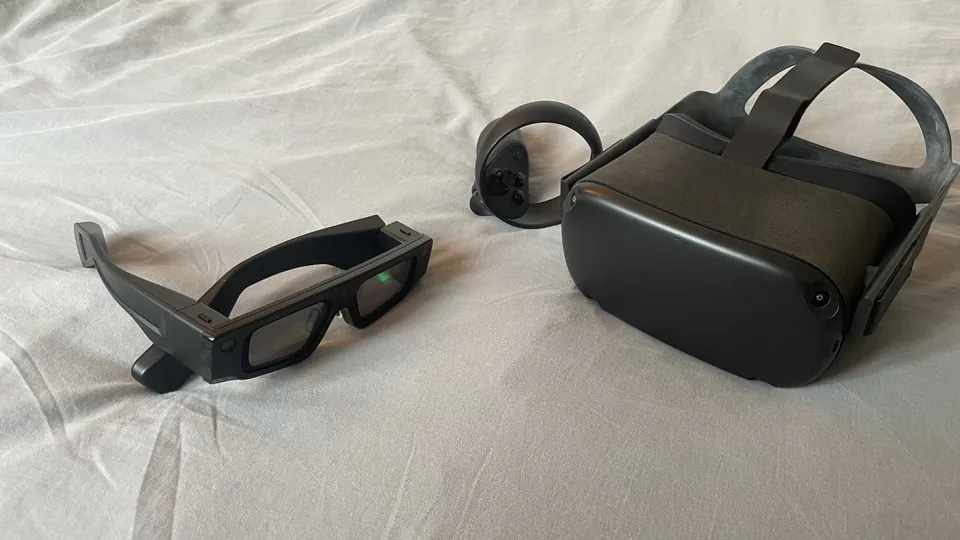
Snap Specs are see-through augmented reality glasses with the computer built into the frame. They cost $2,195, and Snap says they will start shipping later this fall in the United States, the United Kingdom and France. Snap unveiled them on June 16 at the Augmented World Expo, opened pre-orders the same day and showed what they can do at a launch event in Los Angeles on Sept. 16. They are the first AR glasses the company has sold to the public, after a decade of camera glasses and developer kits under the Spectacles name.
This guide is based on Snap's announcements, its product pages and published specifications. We haven't used Specs.
Snap Specs price and release date
Specs cost $2,195. You reserve a pair at specs.com with a $200 refundable deposit, and you can put up to five in your cart. The deposit isn't an order confirmation: Snap says it will contact you closer to your shipping window to pay the balance, and you can cancel at any time before then for a full refund of the deposit. Pre-orders are open only in the US, the UK and France.
At its September event, Snap introduced a second option: a SPECS Charging Case with Cellular, sold separately, which adds four charges and a mobile data connection. The SPECS Connected Case bundle, with the glasses and that case, costs $2,395. In the US, Verizon will offer eligible customers financing over 36 months, and its data plans for the glasses start at $10 a month for Verizon customers and $20 a month for everyone else. Orange will offer plans in France and EE in the UK, with prices still to come.
Snap hasn't given a shipping date beyond "later this fall." If you want to see them first, the SPECS First Look pop-up at Westfield Century City in Los Angeles has been offering guided demos since early October. Once a pair arrives, Snap's return policy gives you 14 days to send it back, and the glasses carry a one-year limited warranty.
On Oct. 20, Snap named Robert Downey Jr. the honorary Chief Customer Experience Officer of Specs, and his web series ran as TV spots during the NBA tip-off and the World Series. Read our story.
Snap Specs specs at a glance
| Snap Specs | |
|---|---|
| Price | $2,195 ($2,395 with the cellular case) |
| Display | Snap's liquid crystal on silicon (LCoS), 16 million colors |
| Field of view | 51 degrees |
| Weight | 132 grams (47mm) or 136 grams (52mm) |
| Frame | Swiss TR90 polymer, Narrow Fit and Wide Fit sizes |
| Lenses | Electrochromic, clear to tinted in 10 seconds; removable prescription inserts |
| Processors | Two Snapdragon chips, one for computer vision and one for apps |
| Motion-to-photon latency | 7 milliseconds |
| Battery | Up to 4 hours of mixed use; up to 20 hours with the charging case |
| Audio | Stereo speakers and six microphones in the temples |
| Controls | Hands and voice |
Snap compares the 51-degree view to a 24-inch monitor for work or a 115-inch screen about 10 feet away for video. The launch release says the waveguides in the lenses use "billions of invisibly small nanostructures" to bring the image to your eyes, and that the tinting lenses were inspired by the dimmable windows on Boeing's 787 Dreamliner. Snap verified the 7-millisecond latency with robotic measurement systems. Low latency matters in AR because digital objects have to stay pinned to the room as you turn your head.
To choose a size, Snap asks you to run its virtual try-on on an iPhone XS or later. Both sizes ship with swappable nose pads.
What you can do with Specs
Specs run Snap OS, and apps on them are called Lenses. Snap says developers have already published hundreds, and that it shipped 10 Snap OS updates with more than 40 new features and developer tools in the year and a half before the June unveiling.
For watching and listening, the built-in browser streams YouTube, HBO Max and other services on a large virtual screen, and a Travel Mode keeps that screen steady on a plane or a train. Spotify can pick music based on what you ask for or on a photo you take. Snap rebuilt Snapchat for the glasses, so you can snap your fingers to take a Snap or start a hands-free video call, and over Bluetooth Specs take calls and show your phone's notifications.
Out in the world, walking directions appear as arrows laid over the street, with optional voice guidance, and a Tripadvisor Lens suggests restaurants and landmarks nearby and converts currency. The translation feature captions a conversation in another language as the person speaks, with support for 60 languages.
For work, Specs can connect wirelessly to your computer and extend its screen, open a Whiteboard Lens for brainstorming and pair with Bluetooth keyboards. Snap is also working with Salesforce, Amazon Web Services, NVIDIA and other companies on tools for field service, remote support and retail.
The rest of the launch lineup leans on learning and play: basketball drills built with the NBA and WNBA, a golf coach developed with guidance from PGA professionals, a soccer skills course, an Apollo 11 recreation, a star map and a Harry Potter Lens tied to HBO's new series. Connected Lenses let friends in the same room play chess, table tennis or Jimmy Butler's dominoes together. Through the Shopify Catalog you can place products at full size in your room and then check out on the retailer's website. An ALO Wellness Club Lens is due next year.
SPECS Intelligence, Snap's AI assistant
Snap also introduced SPECS Intelligence, an "anticipatory" AI service for iPhone, Mac and the glasses. It learns your goals, routines and relationships from the apps you choose to connect and surfaces information before you ask, such as the decisions to make before a meeting or the details of an upcoming trip. On Specs you can say "Hey SPECS" to see flight and hotel details or a briefing on your day.
You don't need the glasses to try it. Anyone 18 or older in the US can download the SPECS app for iOS and connect a Google account to see insights drawn from Gmail and Google Calendar. The fuller version, with suggestions and actions, is invitation-only for now and runs through a Mac app.
Privacy on Specs
Snap says Specs don't use facial recognition to identify people and don't continuously record or save audio, video or photos. When the wearer captures a photo, video or audio, an LED in the center of the frame lights up or flashes so people nearby can see it. Lenses must ask before they access sensitive information, and you decide what Specs can reach. For SPECS Intelligence, Snap says its staff can't view your personal content and that content from connected accounts won't be used to train its AI models or to target ads.
"SPECS only work if people trust them," Evan Spiegel, Snap's co-founder and CEO, said at the June launch. "Privacy has to be built in from the very beginning."
Snap Specs vs XREAL Aura, Meta VR Glasses and Meta Ray-Ban Display
Specs open a new price bracket for glasses. The two closest alternatives also place apps in the room around you, but they move the computer into a puck on a cable. This comparison uses each company's published prices and specifications.
| Snap Specs | XREAL Aura | Meta VR Glasses | |
|---|---|---|---|
| Type | Standalone see-through AR glasses | See-through AR glasses with a tethered puck | VR glasses with passthrough and a tethered puck |
| Price | $2,195 | From $1,279 | $1,299.99 |
| Availability | Ships later this fall | Shipping soon | Spring 2027 |
| Glasses weight | 132 or 136 grams | Under 95 grams | About 100 grams |
| Software | Snap OS | Android XR with Gemini and Google Play | Meta's VR platform with Meta AI |
XREAL Aura is the nearest rival in spirit. It overlays apps on the real world through clear lenses, runs Google's Android XR with the Play Store and Gemini, and costs $916 less, with a 70-degree field of view. Meta VR Glasses work more like a headset shrunk into glasses, showing the room through cameras rather than clear lenses. Of the three, Specs are the only ones with the computer and battery inside the frame.
Meta's Ray-Ban Display starts at $799 with the Neural Band wristband and puts a small display for messages, directions and Meta AI into glasses that look ordinary, at about a third of the price of Specs. Apple Vision Pro, a full headset, now starts at $3,699 in the US.
From Spectacles to Specs: a short history
Snap has sold glasses since 2016, first as camera sunglasses and later as AR developer kits.
2016 to 2019: camera glasses
The first Spectacles were $130 sunglasses with a camera that sent short videos to Snapchat. Snap sold them from yellow vending machines called Snapbots, starting on Nov. 10, 2016, The Verge reported. The following year was rough: in the third quarter of 2017, Snap recorded $39.9 million of charges related to Spectacles inventory, mostly for excess stock and canceled purchase commitments.
A smaller, water-resistant version arrived on April 26, 2018, and could take photos as well as video. Spectacles 3, announced on Aug. 13, 2019, had a steel frame and two HD cameras that captured depth for 3D effects. Forbes reported a price of $380.
2021 to 2024: AR glasses for developers
On May 20, 2021, Snap showed its first Spectacles with displays. They weren't for sale: a select group of creators received them, with a 26.3-degree field of view, a weight of 134 grams and about 30 minutes of use per charge.
The fifth-generation Spectacles, unveiled on Sept. 17, 2024, were standalone glasses with a 46-degree field of view, a weight of 226 grams and up to 45 minutes of continuous use. They introduced Snap OS and were available only through a developer program costing $99 a month with a one-year commitment in the US, and later €110 a month in six European countries.
2025 and 2026: Specs
On June 10, 2025, Snap said it had spent 11 years and more than $3 billion on a new kind of computer for augmented reality, called Specs, and would launch it in 2026. Snap OS 2.0 followed that September with a rebuilt browser, WebXR support and the Travel Mode that Specs now use.
In January 2026, Snap moved the business into a wholly owned subsidiary, Specs Inc., which it said could take minority investment. In April it signed a multi-year deal for Qualcomm to supply Snapdragon chips for future generations. The glasses arrived in June, followed by the launch event in September and the Downey campaign in October.
Who Specs are for
On paper, Specs suit people who want to use AR through the day: following directions on foot, captioning a conversation, carrying a workspace or a big screen with them, or playing games with friends in the same room. The four-hour battery and the $2,195 price are the obvious limits, and nobody outside Snap's demos has lived with a pair yet. If what you want is a large private screen for movies or a laptop, display glasses that plug into a phone or computer cost a fraction as much, and our XREAL lineup guide explains those options.
Every Snap Specs guide
- AWE 2026 recap: Snap Specs, XREAL Aura and what happened nextWhat smart glasses were announced at AWE USA 2026 in Long Beach, with dates, prices and shipping status for Snap Specs and XREAL Aura as of
- Upcoming smart glasses: release dates and prices for late 2026 and 2027Upcoming smart glasses release dates and prices: Snap Specs, XREAL Aura, Samsung and Google's glasses, Meta VR Glasses and more, with offici
Frequently asked questions
How much do Snap Specs cost?
Specs cost $2,195, and Snap takes a $200 refundable deposit at specs.com. A bundle with the cellular charging case costs $2,395, and in the US Verizon offers financing on it.
When is the Snap Specs release date?
Snap hasn't given an exact date. It says shipping is expected to begin later this fall in the US, the UK and France, and that it will contact pre-order customers closer to their shipping window to pay the balance.
Do Snap Specs need a phone?
No. The processors and battery are built into the frame, with no puck or cable. You can pair Specs with a phone over Bluetooth for calls, notifications and music.
Can you get Snap Specs with prescription lenses?
Yes. Snap says removable inserts support a wide range of prescriptions. The glasses come in two sizes, Narrow Fit (47mm) and Wide Fit (52mm), and Snap's virtual try-on on iPhone helps you pick one.
Can I try Snap Specs before I buy them?
Snap runs a SPECS First Look pop-up at Westfield Century City in Los Angeles. If you buy a pair, Snap's return policy gives you 14 days from delivery to return them for a refund.
Are Snap Specs the same as Spectacles?
Specs are the consumer successor to Spectacles. The fifth-generation Spectacles from 2024 were available only to developers through a $99-a-month program, and Snap used them to build the software Specs run.
Sources
- Snap Newsroom: Introducing SPECS augmented reality glasses (June 16, 2026)
- Snap Inc.: Snap debuts SPECS augmented reality glasses (June 16, 2026)
- Snap Newsroom: Making computing more human with SPECS (Sept. 16, 2026)
- Snap Newsroom: Introducing SPECS Intelligence (Sept. 16, 2026)
- SPECS: product page and FAQ
- Snap Newsroom: Robert Downey Jr. joins SPECS (Oct. 20, 2026)
- Snap Newsroom: Introducing Specs Inc. (Jan. 28, 2026)
- Snap Newsroom: Snap and Qualcomm expand strategic collaboration (April 10, 2026)
- Snap Newsroom: Snap to launch new lightweight, immersive Specs in 2026 (June 10, 2025)
- Snap Newsroom: Introducing Snap OS 2.0 (Sept. 15, 2025)
- Snap Newsroom: SPS 2024, introducing new Spectacles and Snap OS (Sept. 17, 2024)
- Snap Newsroom: Spectacles launching in first European countries (Oct. 29, 2024)
- Snap Newsroom: SPS 2021, introducing the next generation of Spectacles (May 20, 2021)
- Snap Newsroom: Introducing Spectacles 3 (Aug. 13, 2019)
- Snap Newsroom: New Spectacles, made for summer (April 26, 2018)
- Snap Inc.: Third quarter 2017 results
- The Verge: Snapchat's Spectacles are available today from yellow vending machines (Nov. 10, 2016)
- Forbes (archived): Snap announces Spectacles 3 at $380 (Aug. 13, 2019)
- Meta: Meta Ray-Ban Display, AI glasses with an EMG wristband
- XREAL: XREAL AURA starts at $1,279 (Oct. 7, 2026)
- Meta: Introducing Meta VR Glasses (Sept. 23, 2026)
- Apple: Buy Apple Vision Pro
Join the conversation
Questions, or something to add? Talk about it with other smart glasses owners in r/Talaya, our community on Reddit.