Smart Glasses · Guide
What is Android XR? Google's platform for headsets and glasses, explained
Android XR is the version of Android that Google built for headsets and smart glasses, with Gemini at its center. Here is what it does, which devices run it now, which are coming and how it compares with Apple's and Meta's platforms.
Android XR is the version of Android that Google built for headsets and smart glasses. Google announced it on Dec. 12, 2024, together with Samsung and Qualcomm, and the first device, Samsung's Galaxy XR headset, went on sale in October 2025. In Google's own words on its Android XR page, the operating system "provides the user interface, the ability to access popular apps, and AI assistance from Gemini" to these devices.
This explainer is based on Google's announcements, Android's developer documentation and the specifications device makers have published.
What XR means, and what Android XR does
XR stands for extended reality, an umbrella term for virtual reality, augmented reality and mixed reality: anything that blends digital content with the world around you or replaces it. Android XR is meant to run on all of those devices, from a headset that can wrap you in a virtual movie theater to a pair of glasses that only talks in your ear.
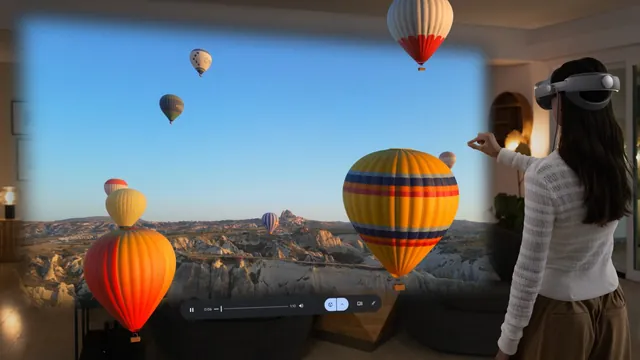
On a headset, that looks familiar if you've used an Android phone. You get Google Play, and Google said from the start that phone and tablet apps "will work right out of the box." Google also rebuilt some of its own apps for the format: YouTube and Google TV on a giant virtual screen, Google Photos in 3D, Google Maps with Immersive View to fly over cities, Chrome with several windows at once, and Circle to Search, which lets you circle anything you see, digital or real, to look it up.
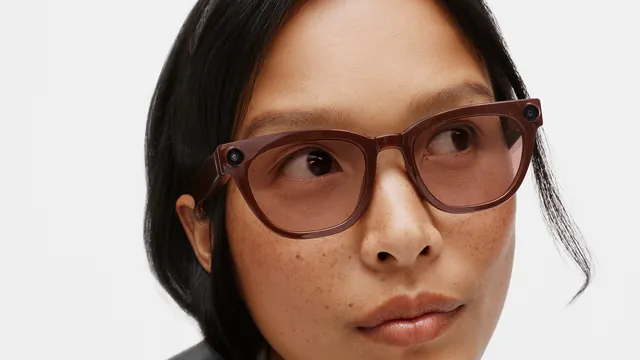
On glasses, the experience is mostly voice. You say "Hey Google" or tap the frame and ask Gemini for help. The glasses work in tandem with your phone, which supplies the apps.
Google describes Android XR as "an open, unified platform for XR headsets and glasses." In practice, that means several companies make the hardware while Google supplies the software, the store and the assistant, the same arrangement Android uses on phones.
The four kinds of Android XR devices
Google's developer documentation sorts Android XR hardware into four types:
| Type | How it works | Example | Status in October 2026 |
|---|---|---|---|
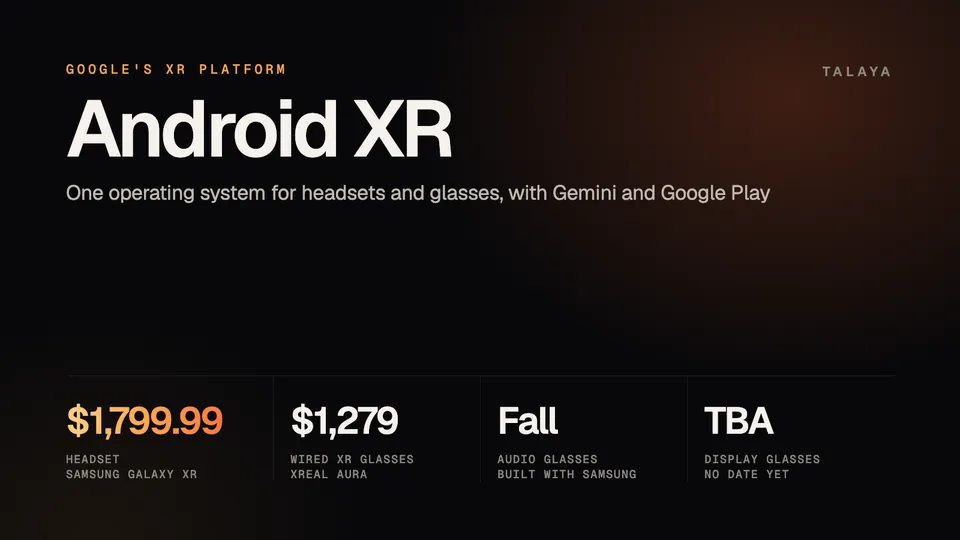
| XR headsets | Opaque displays show the world through cameras; wide field of view, typically 110 degrees or more | Samsung Galaxy XR | On sale since October 2025, $1,799.99 |
| Wired XR glasses | See-through lenses with additive displays, typically 50 to 70 degrees, tethered to a computing device | XREAL Aura | From $1,279, shipping soon |
| Audio glasses | Speakers, microphones and a camera, no display | Samsung with Gentle Monster and Warby Parker | Due this fall |
| Display glasses | Like audio glasses, plus a small display in the lens | Not announced | No date |
Google groups the last two as "intelligent eyewear": light glasses meant to be worn all day, controlled mostly with a touchpad and your voice. On see-through displays, pure black shows up as transparent, so apps for glasses are designed differently from apps for headsets.
Android XR devices you can buy or reserve
These are the main devices so far. For every announced Android XR product and its status, see our Android XR device tracker.
Samsung Galaxy XR
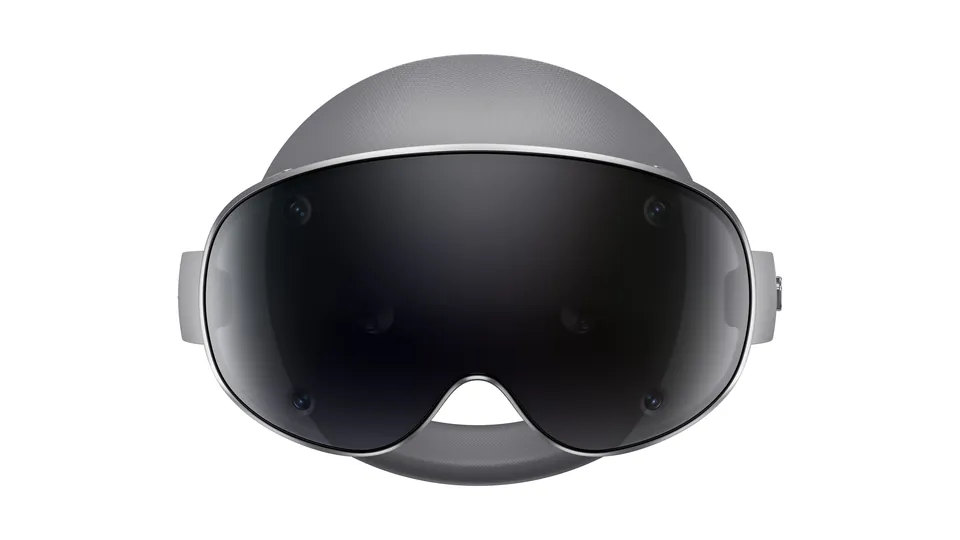
Galaxy XR is the only Android XR device on sale today. It's a micro-OLED headset with a Snapdragon XR2+ Gen 2 chip, 16GB of memory and 256GB of storage, and it costs $1,799.99 on Samsung's US store. It also sells in South Korea and the UK. Android XR updates have since added PC Connect, travel mode and Likeness avatars in December 2025, and auto-spatialization of 2D apps and video in April 2026. Our Galaxy XR explainer has the full specs.
XREAL Aura
XREAL Aura is the first pair of see-through glasses to run Android XR. The glasses weigh under 95 grams and plug into a compute puck that runs the operating system with a Snapdragon Reality Elite chip. XREAL set the price at $1,279 with 12GB of memory and 256GB of storage, or $1,499 with 16GB and 512GB, and said on Oct. 7 that the launch was "just weeks away," starting in the US, Canada, Japan and South Korea. Our XREAL Aura guide has the details, and we covered its launch lineup, including a new game from Google's Owlchemy Labs.
Audio glasses from Samsung, Gentle Monster and Warby Parker
Audio glasses come next. At Google I/O in May, Google showed the first designs from Gentle Monster and Warby Parker, built with Samsung, and said they would launch "later this fall." Two Samsung models have since cleared FCC testing, Road to VR reported on Oct. 1, adding that they're said to use a Snapdragon AR1 Gen 1 chip and a 12MP camera with an indicator LED and to last up to nine hours per charge. Road to VR noted that no official spec sheet or price had been released. Our Samsung smart glasses guide tracks what's known.
Display glasses
Display glasses are the last category. Google's Android XR page simply says "stay tuned." In December, Google described them as glasses with an in-lens display that "privately shows you helpful information," like turn-by-turn directions or translation captions.
How Android XR got here
- Dec. 12, 2024: Google announces Android XR with Samsung and Qualcomm, reveals Samsung's headset under the code name Project Moohan and says prototype glasses will be tested with a small group of users.
- May 20, 2025: At Google I/O, Google demos glasses with live translation and directions and names Gentle Monster and Warby Parker as its first eyewear partners, with Kering Eyewear to follow.
- Oct. 21, 2025: Samsung's headset goes on sale as Galaxy XR, the first Android XR device.
- Dec. 8, 2025: Google shows Project Aura from XREAL and opens development for AI glasses with Developer Preview 3 of the SDK.
- May 19, 2026: Google starts calling its glasses "intelligent eyewear" and says audio glasses will launch first, this fall.
Gemini is the center of it
Google calls Android XR "the first Android platform built in the Gemini era," and the assistant is built into the system. On Galaxy XR, Gemini can talk to you about the apps and windows you have open and, if you turn on view sharing, about the room around you. On the audio glasses, Google says Gemini will answer questions about what you see, give turn-by-turn directions, summarize missed messages, translate speech and signs, take and edit photos and handle multi-step tasks like preparing a DoorDash order for you to confirm. We break all of that down in our guide to Gemini on Android XR.
What developers get
For developers, the selling point is that Android XR uses the tools they already know. The Android XR SDK reached Developer Preview 4 in June, according to the Android Developers Blog, with emulators in Android Studio so apps can be built without hardware. Some of the pieces:
- Jetpack XR and Jetpack Compose for XR, for building immersive apps for headsets and wired glasses.
- Jetpack Projected, which extends an existing phone app to audio and display glasses, and Jetpack Compose Glimmer, a set of interface components designed for see-through displays.
- Support for Unity, OpenXR and WebXR, and newly for Unreal Engine and Godot.
- An early Geospatial API for wired XR glasses that anchors content to real-world locations.
- Gemini models through Firebase AI Logic, so apps can add their own AI features.
Google is also running a Developer Catalyst Program that gives accepted developers pre-release hardware, including display glasses and wired XR glasses.
How it compares with Apple's and Meta's platforms
Apple's visionOS runs on a single device, Apple Vision Pro, which now starts at $3,699 and uses Siri as its assistant. Our Vision Pro guide covers it in detail.
Meta's headsets run Horizon OS. That includes the Quest line and the Meta VR Glasses announced in September, which share Quest's operating system, according to Road to VR, and go on sale in spring 2027 for $1,299.99. Meta says it has "integrated your Meta AI agent directly into the operating system" on that device. Meta's camera glasses, like Ray-Ban Meta, are a separate family built around the Meta AI app on your phone.
Android XR's difference is breadth. Google designed it from the start for headsets, wired glasses and all-day eyewear made by several companies, and it says its glasses pair with both Android phones and iPhones. The catch, as of October 2026, is that most of that range is still on its way: one headset is on sale, and everything else is due in the coming weeks or months.
Frequently asked questions
What devices run Android XR?
Today, Samsung's Galaxy XR headset, which costs $1,799.99 in the US. XREAL Aura wired glasses start at $1,279 and are close to shipping, and the first audio glasses from Samsung with Gentle Monster and Warby Parker are due this fall.
Do Android XR glasses work with an iPhone?
Google says its audio glasses pair with both Android and iOS phones, and that you can use your phone's apps, such as Uber, through them by voice.
Can Android XR run regular Android apps?
Yes. Google said from the start that phone and tablet apps from Google Play would work on Android XR headsets, and by April 2026 there were also more than 100 apps built specifically for XR.
When do Android XR smart glasses come out?
Google says audio glasses arrive later this fall, made with Samsung, Gentle Monster and Warby Parker. Display glasses with a screen in the lens don't have a date yet.
Is Android XR the same as Android on phones?
It's a separate version of Android built for extended reality devices. Google calls it the first Android platform built for the Gemini era, and it shares Android's tools and Google Play.
Sources
- Google: Android XR, the Gemini era comes to headsets and glasses (Dec. 12, 2024)
- Android: Android XR
- Google: A new look at how Android XR will bring Gemini to glasses and headsets (May 20, 2025)
- Android Developers: Understand the types of Android XR devices
- Google: Intelligent eyewear is coming this fall (May 19, 2026)
- Google: New features for Galaxy XR and a look at future devices (Dec. 8, 2025)
- Google: 5 new features for Android XR (April 7, 2026)
- Android Developers Blog: What's new in Android XR (June 15, 2026)
- Samsung US: Galaxy XR store page
- XREAL: XREAL AURA starts at $1,279 (Oct. 7, 2026)
- Road to VR: Samsung FCC approval signals Gentle Monster and Warby Parker smart glasses nearing release (Oct. 1, 2026)
- Meta: Introducing Meta VR Glasses (Sept. 23, 2026)
- Road to VR: Meta VR Glasses, Quest 3 and Steam Frame compared (Sept. 29, 2026)
- Apple Store: Buy Apple Vision Pro
Join the conversation
Questions, or something to add? Talk about it with other smart glasses owners in r/Talaya, our community on Reddit.