Smart Glasses · Analysis
Smart glasses are selling fast, and regulators are starting to push back
The company that makes Meta's Ray-Ban and Oakley glasses just reported another strong quarter. In the same weeks, Norway moved to ban camera glasses from parks and schools, and Europe's privacy watchdogs said the recording light isn't enough.
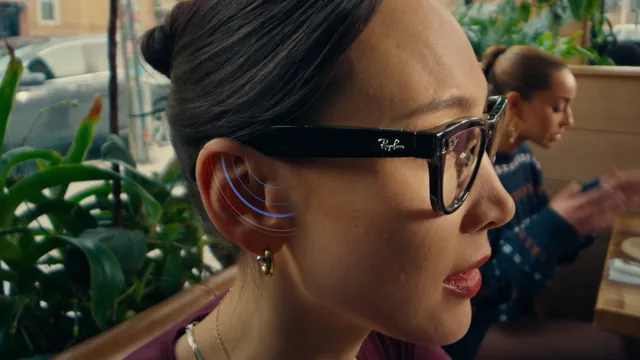
EssilorLuxottica, the eyewear company that builds Meta's Ray-Ban and Oakley glasses, said on Oct. 20 that revenue from its wearables grew 20% in the third quarter at constant exchange rates. It doesn't give units or dollars for the category, and the figure also includes its Nuance Audio hearing glasses. Its two top executives still called the result proof of "the strong momentum behind this emerging category we continue to lead," and said new AI glasses launches will strengthen the lineup heading into the holiday season.
Governments and regulators spent the same weeks moving the other way. On Oct. 5, Norway's government said it wants camera glasses out of parks, beaches and schools. On Oct. 13, the European Union's privacy regulators published their first joint position on the devices, and much of it is about the small light on the frame, which they say doesn't tell bystanders enough.
The numbers keep going up
Omdia counted 8.7 million AI glasses shipped worldwide in 2025, up 322% from 2024, with Meta taking 85% of the market and the United States as the biggest single country. It expects more than 15 million in 2026. IDC, which tracks glasses and headsets together, forecasts unit growth of 26% this year and 40% in 2027, with display-free models like Ray-Ban Meta making up 70% of shipments in the second quarter.
Meta alone has sold at least 9 million pairs of the Ray-Ban versions since the start of 2023, according to The Guardian.
Norway wants them out of public places
Norway's minority Labour government plans a bill that would temporarily ban camera-equipped glasses in parks, beaches, museums, shopping centers, schools, daycare centers, health facilities, gyms and public events. Private use would still be allowed. Torgeir Micaelsen, the minister of digital affairs, said the government did not want "a society where people worry about being recorded without their knowledge, photographed or filmed in places and situations where they are accustomed to not being monitored."
The ban isn't law yet. Labour needs other parties to pass it, and an expert group will draft permanent rules in the meantime. It would add to restrictions that already exist: courtrooms in the United States and the United Kingdom keep the glasses out, and so do a growing number of restaurants, pubs and cinemas.
Europe's regulators: the light isn't enough
The European Data Protection Board, which brings together the privacy regulators of every EU country, adopted its first statement on smart glasses on Oct. 13. Under its reading, filming your family at a birthday party is a personal activity that EU privacy law doesn't cover, but posting that clip to a public account, or wearing the glasses at work, can make the wearer what the law calls a data controller, with the obligations that come with it. The companies that make the glasses and their apps can't pass their own obligations on to customers.
The board also wants recording to be hard to miss. "Smart glasses should make their recording obvious," said Anu Talus, who chairs the board, suggesting "bright LED lights, audio signals or voice activation cues, privacy-friendly smartphone notifications, or unique designs." She added: "Even in public spaces, bystanders should clearly understand that someone is filming or photographing them."
What a teardown found inside Ray-Ban Meta
In Germany, Hamburg's data protection commissioner took a first-generation Ray-Ban Meta Wayfarer apart, intercepted the traffic of the Meta AI app and requested the data Meta keeps, then published a 53-page final report on Sept. 10.
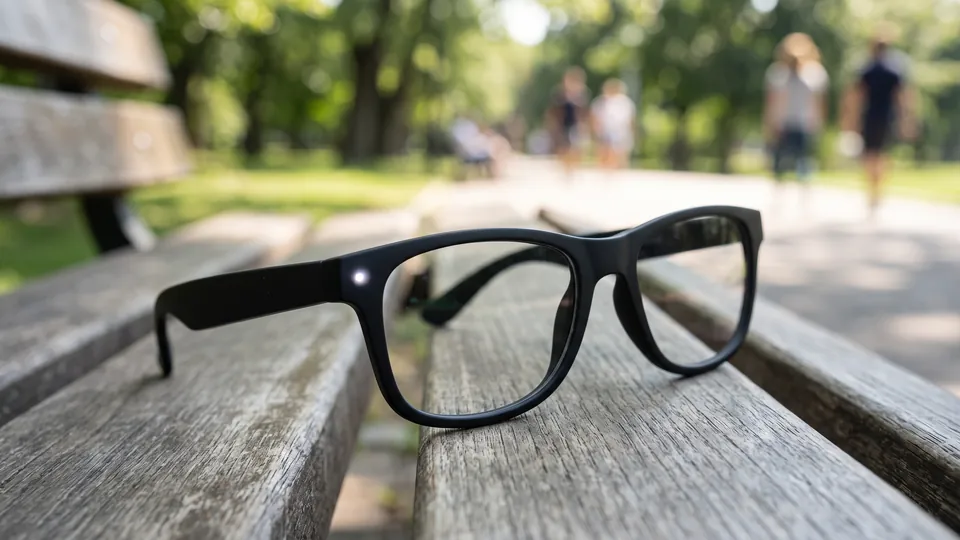
The investigators found the recording light hard to see outdoors or in direct sunlight, and useful only to people standing close and looking straight at the frame. On the second-generation glasses, the light doesn't turn on at all when the wearer is simply asking Meta AI about their surroundings, as opposed to taking a photo or a video.
They did not find facial recognition running. The app does contain database tables whose names point to facial recognition, but they were empty, and the report reads them as groundwork for a feature that could be added later. On the legal side, the report puts much of the responsibility on the wearer. When a wearer hasn't objected to Meta using their interactions for AI training, it says, the wearer and Meta become joint controllers of that data. And in most real-world situations, it concludes, recognizably capturing people outside your own circle of friends and family won't be lawful under EU data protection rules, except in rare cases, because informed consent can't realistically be obtained.
Meta's answer
Meta's position is that the light does its job and keeps getting harder to defeat. In early September it told CBS News that the camera now shuts off if the light is covered after a recording has started, closing a gap testers had found. "Only a tiny minority of people try to get around these protections, and the fact they have to go to these lengths shows our efforts are working," Alex Himel, Meta's vice president of wearables, wrote at the time.
"Every pair with a camera has a bright light on the front that blinks when you take a photo or video," a Meta spokesperson told The Guardian after Norway's announcement. "It can't be turned off and the camera is disabled if someone covers or tampers with it."
The United States is moving more slowly. California Gov. Gavin Newsom vetoed a bill in late September that would have penalized people for using smart glasses to record others in changing rooms, doctors' offices and similar private spaces. The state already has laws against unlawful recording.
Why it matters
If you own a pair, expect the rules to depend on where you are, and expect more places to ask you to take them off. For the companies, privacy is becoming part of the product. In September, IDC wrote that Meta added protections "only after public backlash forced its hand," and that this "leaves room for a competitor willing to build privacy safeguards in before launch." Google and Samsung are preparing Android XR glasses and Snap is getting its Specs ready, so that room won't stay empty for long.
Sources
- EssilorLuxottica: Q3 2026 revenue (Oct. 20, 2026)
- Omdia: global AI glasses shipments reach 8.7 million units (March 5, 2026)
- IDC: smart glasses growth cools to 35% as Meta doubles down on distribution (Sept. 16, 2026)
- The Guardian: Norway plans temporary ban on smart glasses in some public places (Oct. 5, 2026)
- European Data Protection Board: statement 1/2026 on smart glasses (Oct. 13, 2026)
- Hamburg Commissioner for Data Protection: final report on Ray-Ban Meta AI Glasses (Sept. 10, 2026, PDF)
- CBS News: Meta says AI glasses fix stops users from secretly recording others (Sept. 2, 2026)
Join the conversation
Questions, or something to add? Talk about it with other smart glasses owners in r/Talaya, our community on Reddit.