Smart Glasses · Guide
Can you drive with smart glasses? US laws, Meta's warnings and lens rules
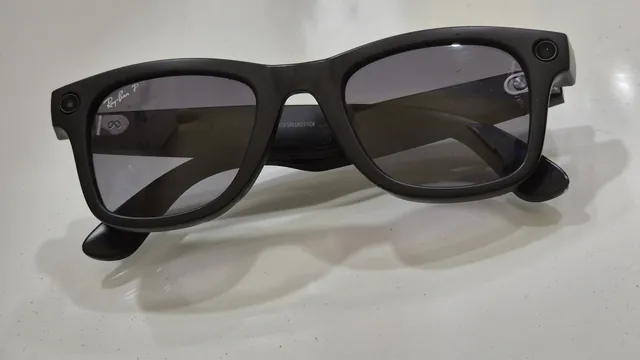
No state law we read names smart glasses, but rules written for phones, headsets and video screens can reach them, and Meta tells wearers to use caution at the wheel. This guide covers the statutes, Meta's warnings and the lens makers' driving advice.
Part of our Explainers guide
None of the four state statutes we read mentions smart glasses. They cover handheld phones, reading messages on a handheld device, video screens the driver can see and headsets worn over the ears. Whether any of them reaches a pair of glasses depends on the state's wording and on what the glasses are doing at the time. Meta's safety guides tell wearers to use caution in a moving vehicle, and its Display guide says following local law is the wearer's responsibility.
Laws differ by state and change, and this guide is general information, not legal advice. It is based on the statutes linked below, NPR's report on a Google Glass ticket, Meta's and Ray-Ban's safety guides, Meta's help center and Transitions' product page, and we haven't tested the glasses in a car.
What the sources say, by use
| What you might do at the wheel | What the sources say |
|---|---|
| Take a call by voice | California's handheld phone law permits a device "specifically designed and configured to allow voice-operated and hands-free operation" if it is used that way |
| Read a message in a lens | Florida bans "sending or reading data" on a handheld device "for the purpose of nonvoice interpersonal communication"; Meta lists audio-only mode and driving detection among the ways to keep the display off |
| Follow directions | Meta Ray-Ban Display doesn't support driving routes; California's video-screen law exempts GPS and mapping displays "when installed in a vehicle" |
| Play music or podcasts | California bars headsets and earphones covering, resting on or inserted in both ears, and the text doesn't mention glasses |
| Record video | Consent laws for recorded conversations apply, as our recording guide explains |
Phone and hands-free laws
California's handheld phone law, Vehicle Code 23123.5, says a person "shall not drive a motor vehicle while holding and operating a handheld wireless telephone or an electronic wireless communications device unless" it is "specifically designed and configured to allow voice-operated and hands-free operation, and it is used in that manner while driving." A phone can be operated by hand only if it is mounted on the windshield, dashboard or center console and the driver uses "a single swipe or tap." The base fine is $20 for a first offense and $50 for each later one.
Florida's ban on texting while driving, Statute 316.305, says a person may not operate a motor vehicle "while sending or reading data on such a device for the purpose of nonvoice interpersonal communication." It defines the device as "any handheld device used or capable of being used in a handheld manner." The exceptions include "Using a device or system for navigation purposes" and wireless communication "that does not require reading text messages, except to activate, deactivate, or initiate a feature or function." A first offense is a noncriminal, nonmoving violation.
The Governors Highway Safety Association says nearly every state has some statewide law against distracted driving and that more are adopting hands-free laws. Its advice is to avoid cellphones and other electronic devices at the wheel "regardless of the current law."
Both statutes were written around phones. California's applies to a device a driver is "holding and operating," and Florida's defines the device by how it is held. Neither mentions glasses, and we found no official guidance on how either applies to a pair worn on your face. A voice call placed with "Hey Meta" is the use closest to that hands-free wording. Reading a message in a lens is where wording about "reading" matters most. A lawyer in your state is the person to ask.
Video-screen laws and California Vehicle Code 27602
California also restricts screens the driver can see. Vehicle Code 27602 says:
A person shall not drive a motor vehicle if a television receiver, a video monitor, or a television or video screen, or any other similar means of visually displaying a television broadcast or video signal that produces entertainment or business applications, is operating and is located in the motor vehicle at a point forward of the back of the driver's seat, or is operating and the monitor, screen, or display is visible to the driver while driving the motor vehicle.
The section has a navigation exception. It "does not apply to the following equipment when installed in a vehicle": "A vehicle information display," "A global positioning display," "A mapping display," and a display "used to enhance or supplement the driver's view forward, behind, or to the sides of a motor vehicle for the purpose of maneuvering the vehicle." The exceptions are written for equipment installed in a vehicle, and the section doesn't mention wearable displays, so the text doesn't say whether a map shown in a lens falls inside or outside the rule.
The 2013 Google Glass ticket
In October 2013, a California Highway Patrol officer gave Cecilia Abadie two citations, one for speeding and one that police said violated Vehicle Code 27602 because she was wearing Google Glass, NPR reported. She said the screen wasn't on. On Jan. 16, 2014, San Diego Court Commissioner John Blair found her not guilty, saying there was no proof the screen was on while she drove on Interstate 15 and not enough evidence of speeding.
The ruling turned on evidence, so it didn't settle whether the statute covers glasses. NPR, citing the Associated Press, added that legislators in at least three states, Delaware, New Jersey and West Virginia, had introduced bills that would ban driving with Glass. Google told wearers that the device's legality "depends on where you are and how you use it." Our history of Google Glass covers what came next.
What Meta says about driving
Meta's safety guide for Meta Ray-Ban Display, in a copy archived on June 15, 2026, warns that images on the display "may obscure or block your view of your surroundings, including in low visibility conditions like night, rain, or fog." It lists operating a moving vehicle among situations where you should reduce hazards, and says:
Use caution when operating a moving vehicle, such as a car or bicycle, while using the Product. Always pay attention to your surroundings, including signs and obstacles, and keep your focus on operating the vehicle. It is your responsibility to ensure your use of the Product complies with all local laws and requirements, including any laws relating to the use of mobile or electronic devices while operating a moving vehicle.
If you can't reduce the hazards, the guide's options are to take the glasses off, turn off their electronic functions, set a volume that keeps you aware of your surroundings, turn on audio-only mode or turn on driving detection.
Meta's help center explains both features, in a copy archived on Sept. 24, 2026. With audio only on, notifications don't wake the display and Meta AI answers by audio only. With driving detection on, audio only turns itself on when high-speed movement is detected, and the display stays off until that stops. Driving detection needs motion and fitness permission (iOS) or physical activity permission (Android) for the Meta AI app, relies on your phone's signal and doesn't work without a paired phone. It responds to speed, so it can switch on when you're a passenger, and saying "Hey Meta, I'm a passenger" turns off audio only. You can still wake the display by hand, and doing that doesn't turn off driving detection.
Navigation on the Display is for walking, with cycling and transit directions announced for the US and Canada. Meta's navigation guide says "Driving routes aren't currently supported," and the Maps app's Share to Phone sends a destination to your phone's navigation app, as our Display navigation guide records. Ray-Ban Meta glasses have no display. Ray-Ban's 2023 safety guide for them says "Use caution when operating a motor vehicle while wearing the Product, and keep your focus on driving," and tells wearers to use only features they can use safely without taking their attention off driving and to follow local laws and requirements on mobile phone operation.
Calls and music through open-ear speakers
Meta's glasses place calls by voice and play them through open-ear speakers, as our calls and messages guide explains. California's headset rule, Vehicle Code 27400, says a driver "may not wear a headset covering, earplugs in, or earphones covering, resting on, or inserted in, both ears." The exceptions cover emergency vehicles, some work vehicles, hearing protection and prosthetic devices that aid the hard of hearing.
That wording targets headsets and earbuds. It doesn't mention glasses, and we found no official guidance on speakers built into glasses temples. Other states word their headphone rules differently, so look up yours.
Lenses for driving: tint categories, Transitions and polarized
Sunglass lenses are sorted into filter categories from 0 to 4. Ray-Ban's 2023 safety and warranty guide for Ray-Ban Meta lists EN ISO 12312-1:2022 and ANSI Z80.3-2018 as the reference standards for its sunglass lenses. It says lenses with filter category 4 "are not suitable for driving and road use," that lenses in categories 1 to 4 aren't suitable for driving at twilight or at night, and that sunglasses marked +NSRU aren't suitable for driving and road use either. The category and the filter type appear on the packaging, on the bar-code sticker or in the last two characters of the model number on the temple. The number is the category, and the letter is the type: N for normal, P for polarized and F for photochromic. We couldn't read the standards themselves, which their publishers sell.
Transitions lenses are clear indoors and darken outdoors, and the Ray-Ban, Meta and Oakley pages we read don't say how their Transitions lenses behave behind a windshield, as our Ray-Ban Meta lens guide notes. Transitions sells a separate line, Drivewear, and describes it as "The only polarized sun lenses that adapt to light behind the wheel." Oakley's lens menu names a different Transitions lens, XTRActive, as one that darkens behind a windshield, and Oakley's pages don't say whether it is offered for Oakley Meta, per our Oakley Meta lens guide. For a given pair, the optician or the maker has to answer.
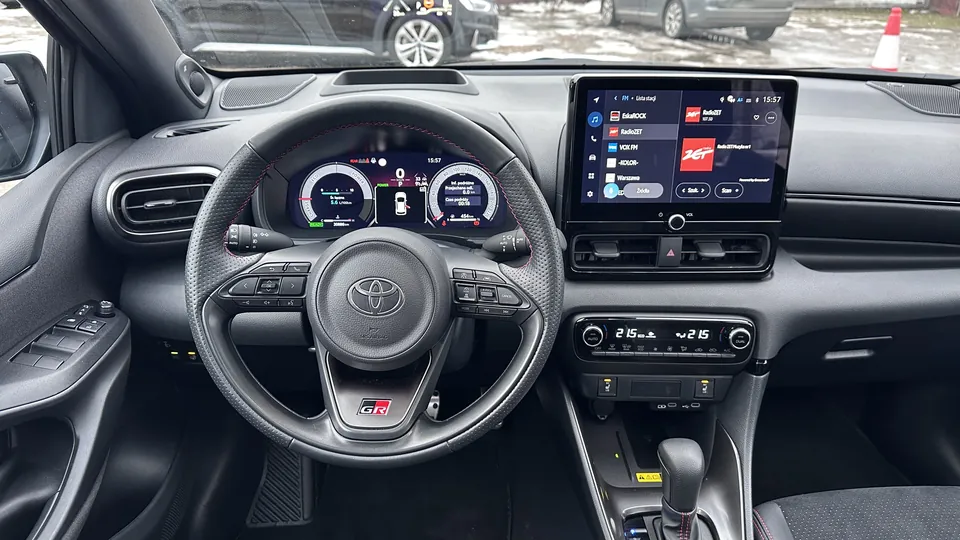
Oakley says polarized lenses "use a special filter to cut down glare from reflective surfaces like water, snow, and roads." None of the Ray-Ban, Oakley or Meta pages we read says how polarized lenses look against an in-car screen, and Ray-Ban's safety guide doesn't mention the question. Check your dashboard and navigation screen while parked before you drive in them.
At night, the sun and polarized lenses on Ray-Ban Meta stay tinted, and Ray-Ban's guide rules out categories 1 to 4 at twilight and after dark. Clear lenses are the tint-free option on Ray-Ban Meta, according to our lens guide.
Recording while driving
Camera glasses record sound with video, so the consent rules for recorded conversations can apply to a conversation in your car. About 11 states, including California, Florida, Illinois, Maryland, Massachusetts, Pennsylvania and Washington, primarily require everyone's consent, according to the Reporters Committee for Freedom of the Press, and our recording guide lists them. Starting a capture by voice or by touch also takes attention that Meta's guides say to keep on the road.
Before you drive in smart glasses
- Look up your state's handheld phone, texting, headphone and video-screen rules. The statutes we read word the same idea in different ways.
- On Meta Ray-Ban Display, turn on driving detection, keep audio only on while you drive and plan your route before you leave. Use your phone's navigation app for the drive. California lets a mounted phone be operated with "a single swipe or tap."
- Turn off the features that pull your attention, as Meta's guides say, use voice for calls and keep the volume low enough to hear traffic.
- Pick clear lenses for night driving, and check the category on any sun lenses.
- Look at your car's screens through the lenses while parked.
Frequently asked questions
Is it legal to drive with Ray-Ban Meta glasses?
None of the state statutes we read names smart glasses. They cover handheld phones, reading messages on handheld devices, video screens and headsets, so what applies depends on your state and on what the glasses are doing. Meta tells wearers to use caution and follow local law. This isn't legal advice.
Can you drive with Meta Ray-Ban Display?
Meta's safety guide says to use caution in a moving vehicle and offers audio-only mode and driving detection to keep the display off. Meta's navigation guide says driving routes aren't supported. The statutes we read don't say whether a display in a lens counts under a state's screen or messaging rules. See our Display navigation guide.
Did anyone get a ticket for wearing Google Glass while driving?
Yes. In October 2013 a California Highway Patrol officer cited a driver under Vehicle Code 27602, the video-screen law. A San Diego court commissioner found her not guilty on Jan. 16, 2014, saying there was no proof the screen was on, NPR reported. Our Google Glass history has more.
Are Transitions lenses okay for driving?
The sources are thin. The Ray-Ban, Meta and Oakley pages we read don't say how their Transitions lenses behave behind a windshield, and Transitions sells a separate line, Drivewear, for driving. Ask your optician about the exact lens. Our Ray-Ban Meta lens guide has the details.
Can I wear tinted smart glasses at night?
Ray-Ban's safety guide says lenses in categories 1 to 4 aren't suitable for driving at twilight or at night, and that category 4 lenses aren't suitable for driving at all. Clear lenses are the tint-free option on Ray-Ban Meta.
Are open-ear glasses allowed where headphones are banned?
California bars wearing a headset or earphones covering, resting on or inserted in both ears, and the text doesn't mention glasses. We found no official guidance on speakers built into glasses, and other states word their rules differently, so check your state's code.
Sources
- California Legislature: Vehicle Code 27602, television and video screens in motor vehicles
- California Legislature: Vehicle Code 23123.5, handheld wireless devices
- California Legislature: Vehicle Code 27400, headsets and earphones
- The Florida Senate: Florida Statutes 316.305, wireless communications devices (2025)
- Governors Highway Safety Association: Distracted driving (updated June 2026)
- NPR: 'Google Glass Driver' Is Cleared In San Diego Court (Jan. 16, 2014)
- Meta: Meta Ray-Ban Display Safety Guide (archived copy of June 15, 2026)
- Meta Help Center: How to use audio only and driving detection on Meta Ray-Ban Display (archived copy of Sept. 24, 2026)
- Meta: GPS navigation with AI glasses (navigation guide, as recorded in our Display navigation guide)
- Ray-Ban: Ray-Ban Meta safety and warranty guide (2023 edition, PDF)
- Transitions Optical: Transitions Drivewear lenses
- EssilorLuxottica: Ray-Ban Meta (Gen 2) brochure for eye care professionals (March 2026)
- Oakley: The new Oakley Meta AI glasses (US landing page)
Join the conversation
Questions, or something to add? Talk about it with other smart glasses owners in r/Talaya, our community on Reddit.