Smart Glasses · Guide
What happened to Google Glass, from the 2012 skydive to Android XR
Google Glass went from a skydiving stunt in 2012 to a $1,500 prototype, a backlash over privacy and looks, a second life in factories and a final shutdown in 2023. Google is now back with Android XR glasses, made with Samsung and eyewear brands and due this fall.
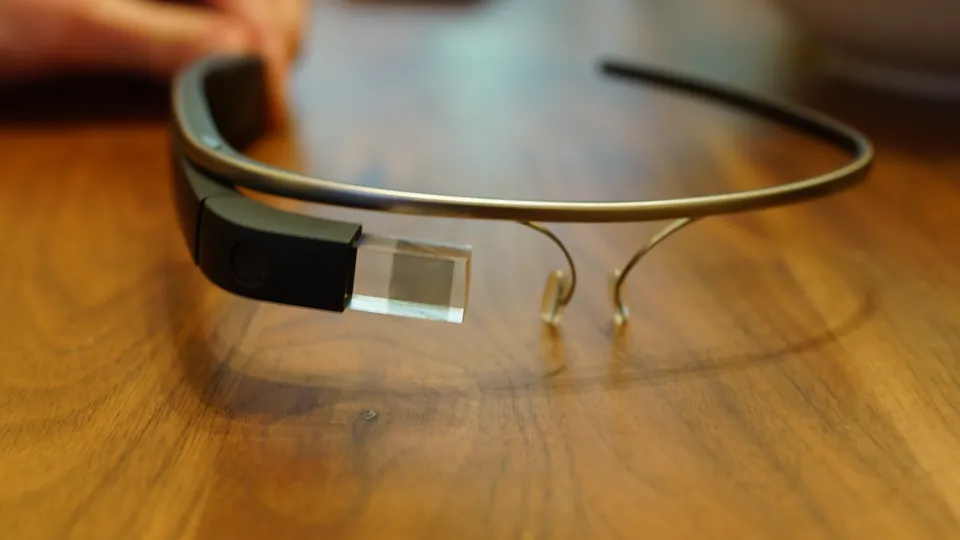
Google Glass was a small computer worn like glasses, with a camera and a tiny display over the right eye, that Google unveiled in 2012 and never released as a finished consumer product. It sold a $1,500 prototype called the Explorer Edition from 2013, pulled it from consumers in January 2015 after a backlash over price, privacy and looks, and kept selling a version for businesses until March 15, 2023. More than a decade after Glass, Google is back with Android XR, its platform for smart glasses made with Samsung and eyewear brands.
This history is based on Google's announcements and on reporting from the time, with dates and sources for each step.
Google Glass timeline
| Date | What happened |
|---|---|
| April 4, 2012 | Google X unveils Project Glass with a concept video |
| June 27, 2012 | Skydivers wearing Glass land on the roof of Google I/O; developers can pre-order for $1,500 |
| April 16, 2013 | Google starts distributing Glass to contest winners and developers |
| April 2014 | Glass goes on sale to the US public for one day |
| May 13, 2014 | Anyone in the US can buy Glass while stocks last |
| June 23, 2014 | Glass goes on sale in the UK for £1,000 |
| Jan. 15, 2015 | Google ends the Explorer program and stops consumer sales |
| July 18, 2017 | Glass Enterprise Edition opens to more businesses |
| May 20, 2019 | Google launches Glass Enterprise Edition 2 |
| March 15, 2023 | Google stops selling Glass Enterprise Edition |
| Dec. 12, 2024 | Google announces Android XR for headsets and glasses |
2012: Project Glass and the skydive
The New York Times first wrote about Google's glasses in February 2012. On April 4, members of the Google X lab, including Babak Parviz, Steve Lee and Sebastian Thrun, made it official in a post on Google+, alongside a video showing a man walking around New York while messages, maps and a video chat appeared in his view, the Times reported. "We're sharing this information now because we want to start a conversation and learn from your valuable input," they wrote.
The public debut came at Google's I/O developer conference on June 27, 2012. Skydivers wearing Glass jumped from a blimp over San Francisco and landed on the roof of the Moscone Center, with live video from the glasses streamed to the audience. "This morning at the Google I/O conference we did a special kind of demo," Sergey Brin, Google's co-founder, wrote afterward. Google offered the prototype to developers at the conference for $1,500, to ship early the next year, the Associated Press reported. "This is new technology and we really want you to shape it," Brin told about 6,000 attendees.
2013 and 2014: the Explorer program
Google then picked 8,000 people in the US through a contest to buy the test version, still at $1,500, and began distributing Glass on April 16, 2013, according to the AP. Google called this early sale the Explorer program. The device showed information on a small screen above the right eye, took photos and video and gave directions, and it worked with a connected phone.
Sales opened gradually. Google sold Glass to the US public for a single day in April 2014, then on May 13 moved to "a more open beta," letting anyone in the US buy it while stocks lasted, CNBC reported. On June 23, 2014, it went on sale in the UK for £1,000, The Verge reported. Every buyer was still, officially, a beta tester. The consumer version was expected later, and never came.
Why Glass failed with consumers
Several problems added up, and reporters at the time named most of them. The price was $1,500 for an unfinished product. Privacy was the loudest objection: the camera let wearers record people around them, and some bars and restaurants banned the glasses, the BBC reported. The look was another. The BBC's technology correspondent, Rory Cellan-Jones, who had worn Glass for a couple of months, wrote that "it makes its users look daft, and that meant that it was never going to appeal to a wide audience." Even enthusiasts drifted away. Early users "soon tired of Glass, complaining that it was not evolving in the ways that had been promised," the BBC wrote, and TechCrunch noted that software updates had been "few and far between" in the months before the end.
January 2015: Google stops selling Glass
On Jan. 15, 2015, Google said it would end the Explorer program and stop taking orders the following week, TechCrunch reported. Glass moved out of the Google X lab into its own unit, still run day to day by Ivy Ross but reporting to Tony Fadell, the head of Google's Nest smart-home business. Google kept selling Glass to businesses, developers and schools and said it would invest in its Glass at Work program for companies. Owners could keep using their glasses, without new software updates.
Fadell said the project had "broken ground and allowed us to learn what's important to consumers and enterprises alike," according to the BBC. Cellan-Jones was blunter: "Google Glass is dead, at least in its present form."
2017 to 2023: a second life at work
Glass came back in factories. In July 2017, Alphabet opened Glass Enterprise Edition to more businesses after testing it with companies such as Boeing, GE and DHL, The Verge reported. It had a better 8-megapixel camera, longer battery life, faster Wi-Fi and a faster processor, and a red light that came on when it recorded video. The electronics also came off as a module that could attach to compatible frames, including safety glasses. "This isn't an experiment. It was an experiment three years ago. Now we are in full-on production with our customers and with our partners," said Jay Kothari, the project lead, as quoted by The Verge.
Google followed with Glass Enterprise Edition 2 on May 20, 2019. It ran on Qualcomm's Snapdragon XR1, was built on Android with support for corporate device management, charged faster over USB-C and could be fitted with safety frames from Smith Optics. Google listed AGCO, Deutsche Post DHL Group, Sutter Health and H.B. Fuller among its customers, and the Glass team moved from X to Google itself.
The end came in a help-center notice. As of March 15, 2023, Google stopped selling Glass Enterprise Edition. It supported the devices until Sept. 15, 2023, said they would keep working afterward with no further software updates planned, and warned that the built-in Meet app could stop working at any time.
What Google did next
Google kept working on glasses. In June 2020 it bought North, a Canadian company that made smart glasses, as part of its push into what it calls ambient computing. At Google I/O in May 2022, CEO Sundar Pichai showed a prototype that put translation and transcription "in your line of sight" so that people speaking different languages, or people who are deaf or hard of hearing, could follow a conversation.
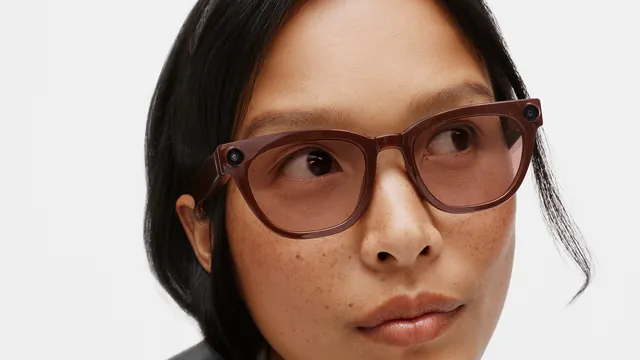
In December 2024, Google announced Android XR, an operating system for headsets and glasses built with Samsung, and said it would test prototype glasses with a small group of users. This time, eyewear brands are designing the frames. Google said in May that the first Android XR glasses, made with Samsung and designed with Gentle Monster and Warby Parker, are audio glasses that launch "later this fall," with display glasses to follow. A Samsung official told The Korea Herald that its pair arrives in November. Our guide to every Android XR device tracks where each one stands.
What Glass left behind
Today's camera glasses carry eyewear brands, like Meta's Ray-Ban and Oakley models and Google's frames from Gentle Monster and Warby Parker. Companies now make recording indicators a selling point: Samsung has said its glasses will show recording with lights inside and outside the frame and switch off the camera if the outer light is covered, according to The Korea Herald. Regulators are paying closer attention too, from Norway's planned limits on camera glasses to Europe's privacy watchdogs, as we covered in our analysis of the smart glasses backlash.
Frequently asked questions
Is Google Glass still available?
No. Google stopped selling Glass to consumers in January 2015, and on March 15, 2023, it stopped selling Glass Enterprise Edition, the version for businesses. Support for it ended on Sept. 15, 2023.
Why did Google Glass fail?
It cost $1,500, raised privacy worries because of its camera, led some bars and restaurants to ban it, and many early users lost interest when it didn't improve as promised, according to the BBC's reporting at the time. Google never released the consumer version it had planned.
How much did Google Glass cost?
The Explorer Edition cost $1,500 in the US. When Google started selling it in the UK in June 2014, the price was £1,000.
Does Google Glass still work?
Google said Glass Enterprise Edition devices would keep working after Sept. 15, 2023, with no further software updates, and that the built-in Meet app could stop working at any time. When consumer sales ended in 2015, Google said Explorer Edition owners could keep using their glasses but would get no new software updates.
Is Google making new smart glasses?
Yes. Google's Android XR platform will power glasses made with Samsung, Gentle Monster and Warby Parker. Google says the first, audio glasses without a display, launch this fall, and a Samsung official told The Korea Herald its pair arrives in November.
Sources
- The New York Times (Bits): Google begins testing its augmented-reality glasses (April 4, 2012)
- Google: Project Glass demo, Hangouts in Air (June 27, 2012)
- Associated Press via Gadgets 360: Google starts selling Project Glass prototype (June 28, 2012)
- Associated Press via Gadgets 360: Google contest winners start getting their $1,500 Glass (April 2013)
- CNBC/Reuters: Google Glass goes back on sale in US for $1,500 (May 14, 2014)
- The Verge: Google Glass is now available in the UK (June 23, 2014)
- BBC News: Google Glass sales halted but firm says kit is not dead (Jan. 15, 2015)
- TechCrunch: Google Glass Explorer program shuts down, team now reports to Tony Fadell (Jan. 15, 2015)
- The Verge: Google Glass gets a second chance in factories (July 18, 2017)
- Google: Glass Enterprise Edition 2, faster and more helpful (May 20, 2019)
- Google: Our focus on helpful devices, Google acquires North (June 30, 2020)
- Google: I/O 2022 keynote, advancing knowledge and computing (May 11, 2022)
- Google: Glass Enterprise Edition announcement FAQ (March 15, 2023)
- Google: Android XR, the Gemini era comes to headsets and glasses (Dec. 12, 2024)
- Google: Intelligent eyewear is coming this fall (May 19, 2026)
- The Korea Herald: Samsung to launch first AI glasses in November (Oct. 1, 2026)
Join the conversation
Questions, or something to add? Talk about it with other smart glasses owners in r/Talaya, our community on Reddit.