Smart Glasses · Guide
Is it legal to record with smart glasses in the US? State-by-state rules explained
Taking photos in public is generally legal, but smart glasses also record sound, and that's where federal and state wiretap laws come in. Here's how consent rules work, where recording is off-limits and what employers and venues can ban.
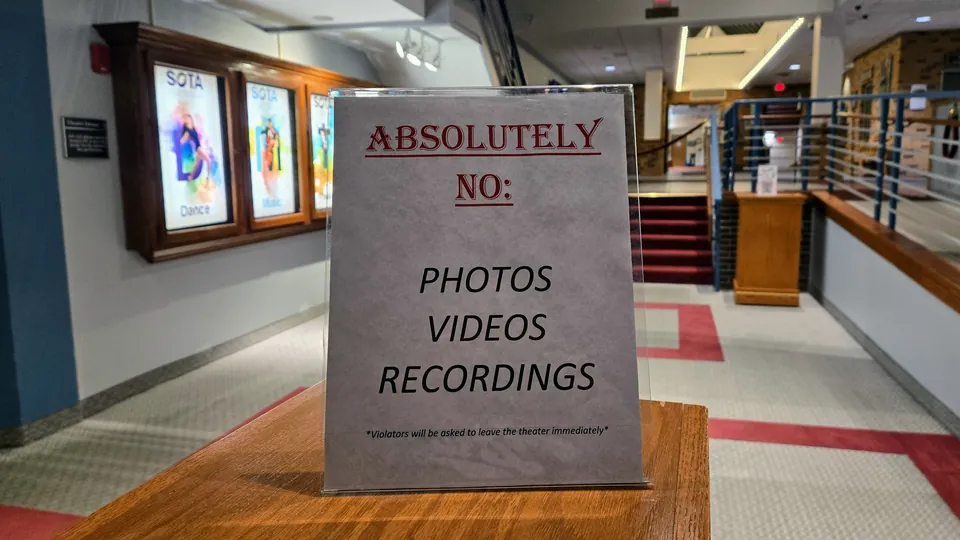
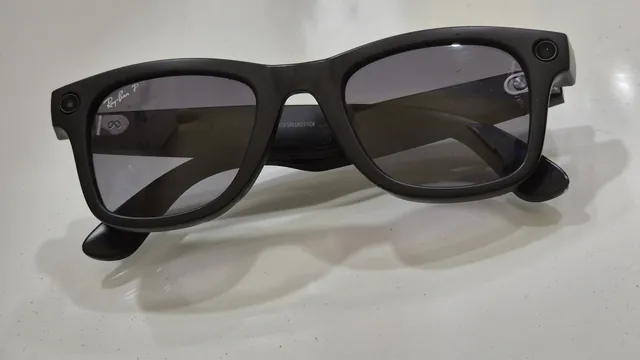
In most of the US, you can legally take photos and video in public with smart glasses, the same as with a phone. The complications come from sound. Camera glasses such as Ray-Ban Meta record audio along with video, and recording a conversation falls under federal and state wiretap laws, some of which require everyone in the conversation to agree. Private places like bathrooms are off-limits almost everywhere, and courts, theaters, cruise lines and employers can set stricter rules of their own.
This guide summarizes federal statutes, recent court decisions and the Reporter's Recording Guide published by the Reporters Committee for Freedom of the Press, which tracks recording laws in every state. It's general information, not legal advice. For a specific situation, talk to a lawyer licensed in your state.
Photos and video in public
Laws about recording are mostly about two things: conversations and private places. "If your camera does not record audio, wiretap laws will generally not apply," the RCFP's introduction to its guide says, and the consent rules for conversations usually apply only when the people talking have a reasonable expectation of privacy. In a public place, "especially if the parties are talking loudly, there is no reasonable expectation of privacy," it adds.
That covers a lot of what smart glasses do. A photo taken on a sidewalk has no sound. Video is different: Meta's camera glasses record audio along with it, and when it launched the 2023 Ray-Ban Meta, Meta said its five-microphone array captured sound "whether in front of you, from the sides, the rear, and even above." If your glasses pick up a conversation, the rules below apply.
Filming government officials is also protected. Six federal appeals courts have recognized a First Amendment right to record officials doing their jobs in public, such as police officers at a traffic stop, as long as you don't interfere, according to the RCFP.
What federal law says about recording conversations
The federal Wiretap Act sets the floor for the whole country. It says it isn't unlawful for a private person "to intercept a wire, oral, or electronic communication where such person is a party to the communication or where one of the parties to the communication has given prior consent," unless the recording is made "for the purpose of committing any criminal or tortious act," under 18 U.S.C. § 2511. That's one-party consent: you can record a conversation you're in.
The protection applies to an "oral communication" only when the speaker has "an expectation that such communication is not subject to interception under circumstances justifying such expectation," according to the law's definitions. States can be stricter than this, and many are. Vermont is the only state with no recording law of its own, so only the federal rule applies there.
One-party and all-party consent states
Most states follow the federal one-party rule. About 11 states primarily require the consent of all parties, according to the RCFP: California, Delaware, Florida, Illinois, Maryland, Massachusetts, Michigan, Montana, New Hampshire, Pennsylvania and Washington. A few more split the rules between phone calls and in-person conversations.
| State | Conversations in person | What to know |
|---|---|---|
| California | All parties | Covers "confidential" conversations (Cal. Penal Code § 632). Conversations in public where people expect to be overheard are excluded. |
| Delaware | All parties (to be safe) | The wiretap law is one-party, but a privacy law requires everyone's consent (Del. Code tit. 11, § 1335). The RCFP advises following the stricter one. |
| Florida | All parties | Applies when the speaker expects privacy (Fla. Stat. § 934.03). |
| Illinois | All parties | Applies to private conversations (720 ILCS 5/14-2). |
| Maryland | All parties | Applies to private conversations (Md. Code, Cts. & Jud. Proc. § 10-402). |
| Massachusetts | All parties | Applies to secret recordings (Mass. Gen. Laws ch. 272, § 99). A state appeals court has applied it in public places too, though a federal appeals court exempted recordings of police on duty in public. |
| Michigan | All parties, for outsiders | Courts disagree on whether a participant can record without consent (Mich. Comp. Laws § 750.539c). |
| Montana | All parties | Covers recording with a hidden device without everyone's knowledge (Mont. Code § 45-8-213). |
| New Hampshire | All parties | Applies when people expect not to be recorded (N.H. Rev. Stat. § 570-A:2). |
| Pennsylvania | All parties | Applies to private conversations (18 Pa. Cons. Stat. §§ 5703, 5704). |
| Washington | All parties | Consent can be given by a recorded announcement (Wash. Rev. Code § 9.73.030). |
| Oregon | Everyone must be told | Phone calls are one-party, but in-person conversations can't be recorded unless all participants are "specifically informed" (Or. Rev. Stat. § 165.540). |
| Connecticut, Nevada | One party | Phone calls need everyone's consent (in Connecticut, to avoid a civil lawsuit). |
| Missouri | All parties advised for private talks | Few court cases have interpreted the law, so the RCFP recommends getting everyone's consent for private in-person conversations. |
| Hawaii, Maine | One party | All parties' consent is needed in especially private places such as dressing rooms and bathrooms. |
Sources: the RCFP's state pages, with Oregon updated for the court ruling below.
Oregon deserves a note because its rule has been in court. A Ninth Circuit panel struck down the in-person provision in 2023, and the RCFP's Oregon page still reflects that. But in January 2025, the full Ninth Circuit upheld the law, 10 to 2, finding that the state's interest in letting residents know when their conversations are recorded justifies the notice requirement.
Penalties in these states can be steep. In California, anyone injured by an illegal recording can sue for $5,000 or three times their actual damages, whichever is greater, according to the RCFP, and most states with recording laws allow civil suits on top of criminal charges.
Consent doesn't always have to be spoken. Courts generally presume it when a recording device is in plain view, or when people are told about a recording and keep talking, the RCFP says. Smart glasses are built to look like ordinary eyewear, though, and the only sign of recording on Meta's glasses is a small white light. In an all-party state, saying that you're recording is the clearer path.
Private places: bathrooms, locker rooms and homes
Every state and the District of Columbia has laws against certain uses of hidden cameras in private places, according to the RCFP, although many apply only to recordings of nudity. California, for example, prohibits secretly recording people in a restroom, dressing room, tanning booth or any area where they have a reasonable expectation of privacy with "a concealed camcorder, motion picture camera, or photographic camera of any type" (Cal. Penal Code § 647(j)(3)). Michigan makes it a felony to use a device to observe or record someone in a private place without consent.
At the federal level, the Video Voyeurism Prevention Act of 2004 makes it a crime to intentionally capture an image of a person's private areas without consent where they have a reasonable expectation of privacy, with up to a year in prison. It applies only in what the law calls the "special maritime and territorial jurisdiction of the United States," so state laws cover most situations.
California lawmakers tried to name smart glasses in the law this year. A bill that would have penalized using smart glasses to record people without permission in changing rooms, doctors' offices and similar spaces was vetoed by Gov. Gavin Newsom on Sept. 30, the Associated Press reported. Newsom said the bill's definition of a wearable recording device was too broad and noted that state law already bars recording people without consent in spaces considered private.
Courts, theaters, cruise ships and other places with rules
Federal courts don't allow photos or broadcasting during criminal proceedings under Rule 53 of the Federal Rules of Criminal Procedure. New York's state courts went further this summer. Since July 20, "eyewear or headwear containing a camera, microphone, computer or other technology that permit the user to record video or audio" has been banned from all Unified Court System facilities, according to the court system's amended memo, and the ban reaches more than 1,240 courts, Syracuse.com reported. The ban covers prescription glasses with recording features and applies to court staff and attorneys. Anyone who arrives wearing them has to leave them with court officers. Courts in Wisconsin and Pennsylvania have also banned smart glasses, according to the paper.
Movie theaters have federal law on their side. Using a recording device to copy a film in a theater without permission is punishable by up to three years in prison for a first offense, under 18 U.S.C. § 2319B. Simply having a recording device there can be used as evidence, though it isn't enough on its own for a conviction.
Private businesses can set their own policies, and cruise lines have started to. MSC Cruises bans devices "capable of covertly or discreetly recording or transmitting data (e.g. smart glasses)" in public areas of its ships, USA Today reported, while Carnival allows "Google-type glasses" in public areas but not at gangway operations. Royal Caribbean's prohibited items policy says smart glasses may come aboard but may not be used in the casino, spa service areas, restrooms, locker rooms, medical facilities, security screening locations, youth facilities, back-of-house tours, crew areas or anywhere with a reasonable expectation of privacy, and that use in those areas may result in confiscation. Our guide to where smart glasses are banned collects the written rules.
Smart glasses at work
Employers "generally may restrict or prohibit AI-enabled glasses," the employment law firm Fisher Phillips wrote in March, as long as the policy supports a legitimate business interest such as safety, confidential information or customer privacy. Delta Air Lines, for one, bars employees from wearing or using smart eyewear while working, it told USA Today.
There's a limit. Under Section 7 of the National Labor Relations Act, recording working conditions can count as protected activity when it documents safety problems, harassment, discrimination or union organizing, Fisher Phillips notes, and under the National Labor Relations Board's current Stericycle standard, a rule that could chill that activity is presumed unlawful unless it's narrowly tailored. That standard may change: the NLRB's general counsel has asked the board to replace it with a test based on how an "objectively reasonable employee" would read a rule, according to the law firm Genova Burns.
State recording laws apply at work too. Fisher Phillips warns that in all-party consent states, an employee who records meetings without consent can create legal exposure for the employer as well.
Sharing what you record
Posting a recording can be a separate offense from making it. Federal law and almost every state make it illegal to disclose the contents of a conversation that was recorded illegally, according to the RCFP. Platforms set their own limits too: Instagram has said it takes down videos that harass the people in them, such as pickup-line clips filmed with smart glasses, according to The Guardian.
For more on the light that's supposed to warn people, see how smart glasses recording lights work. For the other side of the lens, see our guide to smart glasses privacy for bystanders, and for what's happening outside the US, our analysis of regulators' pushback.
Frequently asked questions
Is it legal to wear smart glasses in public?
Generally, yes. Recording laws focus on what you record and where, not on the glasses themselves, but property owners can ask you to take them off. New York's courts, for example, don't allow glasses with cameras or microphones inside.
Can I record someone with Ray-Ban Meta glasses without telling them?
Photos and video of people in public places are generally legal. Recording a private conversation without everyone's consent can break the law in all-party consent states, Oregon requires that everyone be told before an in-person conversation is recorded, and secretly filming people in private places is illegal in every state.
Can my employer ban smart glasses at work?
In most cases, yes. Employers can generally restrict or prohibit AI glasses when the policy supports a legitimate business interest, according to the law firm Fisher Phillips, though rules that are too broad can run into federal labor law.
Can I record the police with smart glasses?
Six federal appeals courts have recognized a First Amendment right to record government officials doing their jobs in public, according to the Reporters Committee for Freedom of the Press, as long as you don't interfere and follow reasonable time, place and manner restrictions.
Can I wear smart glasses in a movie theater?
Theaters can ask you to take them off. Recording a film in a theater without the copyright owner's permission is a federal crime punishable by up to three years in prison for a first offense, under 18 U.S.C. § 2319B.
Sources
- 18 U.S. Code § 2511: interception of wire, oral or electronic communications (Cornell LII)
- 18 U.S. Code § 2510: definitions (Cornell LII)
- 18 U.S. Code § 1801: video voyeurism (Cornell LII)
- 18 U.S. Code § 2319B: unauthorized recording of motion pictures (Cornell LII)
- Federal Rules of Criminal Procedure, Rule 53 (Cornell LII)
- Reporters Committee for Freedom of the Press: Reporter's Recording Guide
- Reporters Committee for Freedom of the Press: Introduction to the Reporter's Recording Guide
- RCFP Reporter's Recording Guide: California
- RCFP Reporter's Recording Guide: Massachusetts
- RCFP Reporter's Recording Guide: Michigan
- RCFP Reporter's Recording Guide: Delaware
- RCFP Reporter's Recording Guide: Washington
- RCFP Reporter's Recording Guide: Missouri
- RCFP Reporter's Recording Guide: Oregon (last updated October 2023)
- US Court of Appeals for the Ninth Circuit: Project Veritas v. Schmidt, en banc opinion (Jan. 7, 2025, PDF)
- Syracuse.com: New York to ban smart glasses from all courthouses (July 7, 2026)
- USA Today: This cruise line banned smart glasses from public areas (Dec. 13, 2025)
- Cruise Critic: Royal Caribbean adds smart glasses to restricted items list (Oct. 9, 2026)
- Fisher Phillips: AI glasses enter the workplace, FAQs for employers (March 11, 2026)
- Genova Burns: NLRB general counsel advocates change to standard for employee conduct policies (Sept. 28, 2026)
- Associated Press via US News: Newsom vetoes measure that would have penalized secret recording with smart glasses (Sept. 30, 2026)
- Meta: Introducing the new Ray-Ban Meta smart glasses (Sept. 27, 2023)
- The Guardian: Restaurants, pubs and theatres ban Meta's spy glasses over privacy fears (Aug. 6, 2026)
- New York State Unified Court System: amended memo on smart glasses in court facilities (July 1, 2026), copy hosted by the Workplace Privacy Report
- Royal Caribbean: What items are prohibited onboard a cruise ship? (read Oct. 26, 2026)
Join the conversation
Questions, or something to add? Talk about it with other smart glasses owners in r/Talaya, our community on Reddit.