Smart Glasses · Guide
Smart glasses and privacy: what bystanders should know, and what they can do
Camera glasses look like ordinary frames, and their recording light is easy to miss. Here's how to tell when someone might be filming, what happens to the images, where the law protects you and what you can do if you'd rather not be recorded.

If someone near you is wearing smart glasses, there's a good chance they can take photos and video, and you may not notice when they do. Camera glasses such as Ray-Ban Meta look like ordinary frames, and their only outward sign of recording is a small light. Regulators who have tested it say it's easy to miss. Still, there are ways to spot camera glasses, and the law protects you in private places and, in about a dozen states, during conversations.
This guide draws on manufacturers' announcements and help pages, regulators' reports and US recording laws.
How to tell if glasses have a camera
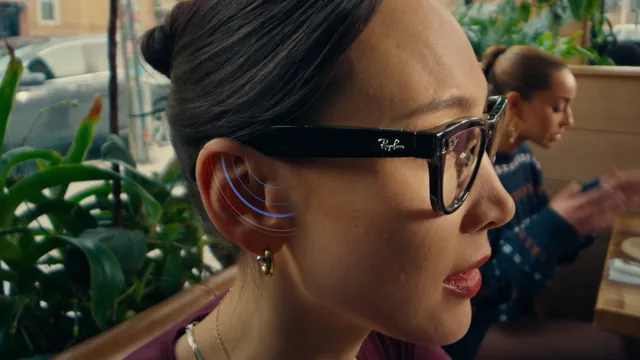
Look at the front corners of the frame. On Ray-Ban Meta glasses like the pair in the photo above, there's a small round camera at one corner and the capture light at the other. Meta lists the Gen 3 camera as "left-oriented" on its comparison page. Oakley Meta Vanguard, a wraparound sports model, has a centered camera instead, according to Meta.
Not every pair of smart glasses has a camera. Meta lists Ray-Ban Meta Audio, announced in September, as "audio-only frames" with no camera. Even Realities' G2 display glasses are "camera-free. By design," the company says, though they have four microphones and a feature called Conversate that "captures and transcribes every word" of a conversation. The glasses Samsung is making for Google with Gentle Monster and Warby Parker, due this fall, are called audio glasses but include a camera, Google says.
There's also an app for this. Nearby Glasses, an Android app from a hobbyist developer, scans for the Bluetooth identifiers that Meta and Snap devices broadcast and alerts you when it finds one, TechCrunch reported. Its creator warned that it can mistake other devices from those companies, such as a Meta VR headset, for glasses.
What the light tells you, and what it doesn't
Meta says every pair of its camera glasses has a white capture LED on the front. "For a photo, it blinks briefly, while for a video, it continues to blink for as long as you are recording," the company wrote in July, adding that the light "has no off switch" and that from the second generation on, the camera stops working if the light is blocked.
That's useful if you see it. Hamburg's data protection office, which tested a first-generation pair, found the light "is not easily visible in many environments, particularly outdoors and in direct sunlight," and that it works as a signal mainly for people standing close and looking almost straight at the glasses, according to its September report. It also found that when the wearer asks Meta AI about their surroundings, the light glows very dimly on the first generation and not at all on the second.
So a blinking light means you're probably being photographed or filmed, but no light doesn't prove you aren't. Our guide to smart glasses recording lights explains how each brand signals recording.
What happens to photos and videos of you
Meta says photos and videos taken for the wearer's gallery "are stored privately on your glasses" until the wearer imports them to their phone, and that it's "up to you whether you choose to share them." Once someone posts a clip, the rules of whatever platform they post it on apply.
The camera is also used for Meta AI. When a wearer asks what they're looking at, the glasses capture an image and send it to Meta to answer. Meta has said it sometimes uses contractors to review content shared with Meta AI "for the purpose of improving people's experience" and that it filters that data "to help prevent identifying information from being reviewed," according to TechCrunch.
How well that works has been questioned. In February, Swedish newspapers reported that workers at Sama, a Kenya-based contractor, had seen footage from Ray-Ban Meta glasses that included nudity, people having sex and people using the toilet, and some said face blurring didn't work consistently. Meta ended its contract with Sama in April, saying the company didn't "meet our standards," Ars Technica reported. A class action filed in March in federal court in California accuses Meta and Luxottica of America of misleading buyers about privacy. Hamburg's investigators found that, in the data Meta returned to them, faces in images taken for Meta AI had been covered with gray circles, but they couldn't confirm whether that happened before the images reached Meta.
Face recognition
Meta's glasses don't identify people, but the company has worked on it. In June, WIRED found unreleased face-recognition code, called NameTag internally, inside the Meta AI app that pairs with the glasses. Meta spokesperson Ryan Daniels told the magazine that nothing had shipped to consumers, that "no final decision has been made on what to do here," and that Meta is "not building a central face database." The Electronic Frontier Foundation reported on June 8 that Meta had removed the code in its latest app update.
Face recognition carries legal risk in the US. Meta paid $650 million to settle a class action by Illinois users over Facebook's old photo-tagging system and agreed in 2024 to a $1.4 billion settlement with Texas over allegations that it unlawfully collected biometric data, WIRED noted. Australia's eSafety Commissioner says "users should not be able to use smart glasses to obtain information about members of the public."
Where the law protects you
In public, people can generally photograph and film you, with glasses or a phone. The rules tighten in two situations.
Conversations are the first. Federal law allows recording when one person in the conversation agrees, but about 11 states require everyone's consent, including California, Florida, Illinois, Massachusetts, Pennsylvania and Washington, according to the Reporters Committee for Freedom of the Press. Oregon requires that everyone be told before an in-person conversation is recorded.
Private places are the second. Every state restricts hidden cameras in places such as bathrooms and changing rooms, and many of those laws focus on nudity. Some places restrict the glasses themselves: New York's courts don't allow eyewear with cameras or microphones inside since July 20, and Royal Caribbean's own policy bars smart glasses from its casinos, spa service areas, restrooms, locker rooms, medical facilities, youth facilities and other private areas. Our guide to where smart glasses are banned collects the written rules. Our guide to whether it's legal to record with smart glasses goes state by state.
What you can do
Ask. Meta advises its own customers to "stop recording if anyone expresses that they would rather you not," The Guardian reported.
Tell the staff. Some businesses already ban filming customers and employees without permission. In the UK, the pub chain Wetherspoons, Soho House's clubs and ATG Theatres have said they don't allow recording with the glasses, The Guardian reported in August. Tim Martin, Wetherspoons' chief executive, said the rule in most pubs is that "you can't film customers or employees without their permission."
Report posts. If a video of you turns up on Instagram, report it. Instagram head Adam Mosseri has said that when people post videos that harass the people in them, such as pickup-line clips, "we're going to take the content down," according to The Guardian. Meta told CBS News it had removed thousands of harassing posts related to pickup artist and prank content.
Call the police when it's a crime. Every state has laws against hidden cameras in private places such as bathrooms and changing rooms. Australia's eSafety Commissioner has documented cases in which people who filmed strangers with smart glasses later demanded money to remove the clips.
If you run a business, put your rules in writing. Royal Caribbean, for example, now lists recording glasses among its restricted items and confiscates them from passengers who ignore the policy.
Why this keeps coming up
Camera glasses aren't rare anymore. Meta has sold at least 9 million pairs of its Ray-Ban glasses since the start of 2023, according to The Guardian. Australia's eSafety Commissioner cites a 2024 study in which 17% of Australian smart glasses owners said they had used them in a prohibited way, "such as recording others without consent or recording in restricted locations."
Europe's regulators want recording to be obvious, and Norway plans a temporary ban on camera glasses in parks, schools and other public places. Our analysis of how regulators are pushing back covers those moves, and our smart glasses explainer covers how the devices work.
Frequently asked questions
How can you tell if someone's smart glasses are recording?
On Meta's glasses, look for a white light blinking at a front corner of the frame: it blinks briefly for a photo and keeps blinking during video. It can be hard to see outdoors, and Hamburg's regulator found it doesn't light on second-generation glasses when the wearer asks Meta AI about what's in view.
Can I ask someone to stop recording me with smart glasses?
Yes. Meta's own advice to wearers is to stop recording if anyone says they'd rather not be filmed, and venues such as courts and some cruise lines restrict the glasses. In private places such as bathrooms, every state has laws against hidden cameras.
Can smart glasses recognize my face?
Meta's glasses don't offer face recognition. WIRED found unreleased face-recognition code in Meta's AI app in June, Meta said nothing had shipped and no decision had been made, and the code was removed in a later app update, according to the EFF.
Is there an app that detects smart glasses nearby?
Yes. Nearby Glasses, an Android app from a hobbyist developer, alerts you when it picks up Bluetooth signals from devices made by Meta or Snap, according to TechCrunch. It can't tell glasses from other gadgets by the same companies, such as Meta's VR headsets.
Can I get a video someone took of me deleted?
Start with the person who took it: Meta says captured photos and videos stay on the wearer's glasses and phone unless they share them. If it's posted on Instagram or Facebook, report it. Instagram's head, Adam Mosseri, has said the platform takes down videos that harass the people filmed.
Sources
- Meta: Meta's AI glasses, your questions answered (July 7, 2026)
- Meta: Compare AI glasses
- Meta: Athletic intelligence is here, meet Oakley Meta Vanguard (Sept. 17, 2025)
- Google: Intelligent eyewear is coming this fall (May 19, 2026)
- Even Realities: Even G2
- Hamburg Commissioner for Data Protection: final report on Ray-Ban Meta AI Glasses (Sept. 10, 2026, PDF)
- TechCrunch: Meta sued over AI smart glasses privacy concerns (March 5, 2026)
- Ars Technica: Meta cuts contractors who reported seeing private Ray-Ban Meta footage (April 30, 2026)
- WIRED: Meta silently added face-recognition code for its smart glasses to millions of phones (June 4, 2026)
- Electronic Frontier Foundation: Move fast, surveil things (June 4, 2026, updated June 8)
- TechCrunch: A new app alerts you if someone nearby is wearing smart glasses (March 2, 2026)
- The Guardian: Norway plans temporary ban on smart glasses in some public places (Oct. 5, 2026)
- The Guardian: Restaurants, pubs and theatres ban Meta's spy glasses over privacy fears (Aug. 6, 2026)
- CBS News: Meta says AI glasses fix stops users from secretly recording others (Sept. 2, 2026)
- eSafety Commissioner: Smart glasses and online safety
- Reporters Committee for Freedom of the Press: Introduction to the Reporter's Recording Guide
- Syracuse.com: New York to ban smart glasses from all courthouses (July 7, 2026)
- Cruise Critic: Royal Caribbean adds smart glasses to restricted items list (Oct. 9, 2026)
- TechCrunch: If you own Ray-Ban Meta glasses, double-check your privacy settings (April 30, 2025)
- New York State Unified Court System: No smart glasses poster (effective July 20, 2026, PDF)
- Royal Caribbean: What items are prohibited onboard a cruise ship? (read Oct. 26, 2026)
Join the conversation
Questions, or something to add? Talk about it with other smart glasses owners in r/Talaya, our community on Reddit.