Smart Glasses · Guide
Meta Ray-Ban Display: price, features, battery life, Neural Band and where to buy
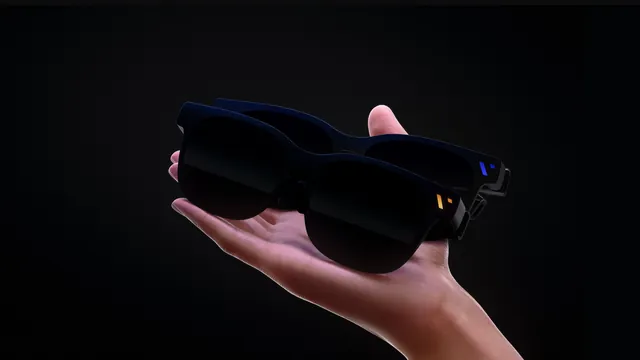
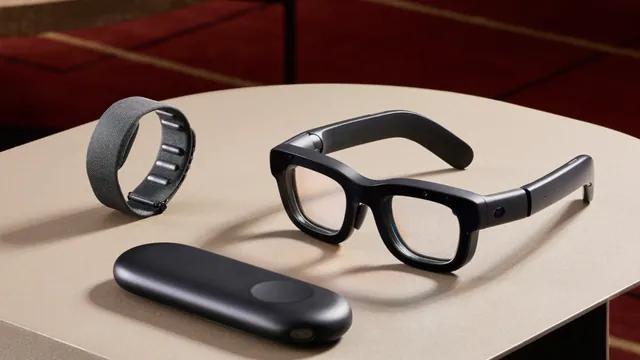
Meta Ray-Ban Display puts a small full-color screen in a pair of Ray-Bans and pairs it with a wristband that reads finger movements. It costs $799 in the US and is now sold online and in five more countries.

Meta Ray-Ban Display is Meta's first pair of glasses with a screen. A full-color display in the right lens shows messages, directions, captions, Meta AI answers and a camera viewfinder. It comes with the Meta Neural Band, a wristband that reads the electrical signals of the muscles in your wrist, so you can control the glasses with small finger movements. The pair costs $799 in the US.
Meta introduced the glasses on Sept. 17, 2025, and started selling them on Sept. 30, 2025, in a limited number of US stores. On Sept. 23, 2026, it added online ordering and expanded to the UK, Canada, France, Italy and Germany.
This guide is based on Meta's announcements, blog and help center and on Ray-Ban's published specifications. We haven't tested the glasses.
Meta Ray-Ban Display specs
| Spec | Meta Ray-Ban Display |
|---|---|
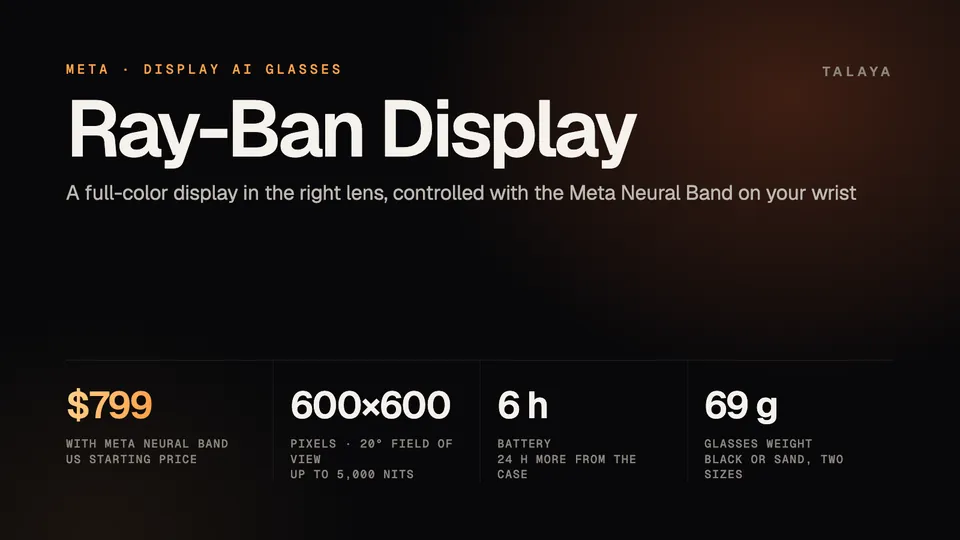
| Price | $799 (US), £749 (UK), CA$1,149 (Canada), €899 (France, Italy, Germany), Neural Band included |
| Display | Full color, 600 by 600 pixels, in the right lens |
| Field of view | 20 degrees |
| Sharpness | 42 pixels per degree |
| Brightness | Up to 5,000 nits |
| Camera | 12MP, 3x zoom |
| Video | 1,440 by 1,920 pixels at 30 fps |
| Audio | Two open-ear speakers, five microphones and a contact mic on the nose bridge |
| Battery | Up to 6 hours, plus up to 24 hours from the case |
| Weight | 69 grams |
| Frames | Shiny Black or Shiny Sand, standard or large |
| Lenses | Transitions, clear to grey |
| Storage | 32GB |
| Connectivity | Wi-Fi 6, Bluetooth 5.3 |
| Neural Band | Sizes 1, 2 and 3; up to 18 hours; IPX7 |
| Prescription | -4.00 to +4.00 total power |
The field of view, camera, audio, storage and connectivity figures come from Ray-Ban's spec sheet, which also lists the weight by size: 68 grams for the standard frame and 70 for the large. The rest is from Meta.
The display
The screen is monocular, so only your right eye sees it, and it sits slightly to the side of your line of sight. Meta says it's large enough to read a text message or watch a small video, and it disappears a few seconds after you stop using it. It isn't meant to be on all the time; Meta describes it as a display for short interactions.
Inside is a custom light engine and a geometric waveguide. Meta says the 42 pixels per degree make it sharper than any of its consumer VR headsets, and the brightness of up to 5,000 nits, together with the Transitions lenses and automatic brightness, is meant to keep it readable on sunny days. Only 2% of the light leaks outward, according to Meta, so people around you shouldn't be able to read your screen. The front still has the same white capture LED as Meta's other camera glasses.
How you control it
Most of the time you use the Neural Band. Tapping your index finger and thumb together selects, tapping your middle finger and thumb goes back, and swiping your thumb along your index finger scrolls. Pinching and turning your wrist like a dial changes the volume or zooms the camera. The band works with your hand resting at your side, and Meta's neural handwriting feature lets you write replies with a finger on any surface. Our Meta Neural Band explainer lists every gesture and covers sizing.
You can also use the touchpad on the right arm of the glasses or your voice. Ray-Ban's FAQ lists touchpad gestures for waking the glasses, scrolling, selecting, opening the menu and calling up Meta AI.
What it can do
The feature list has grown since launch, and several features are limited to the US or to English.
Messages, calls and navigation
You can read and reply to messages from WhatsApp, Messenger, Instagram and your phone's texting app, and take WhatsApp and Messenger video calls that show the other person what you see. Meta says neural handwriting works across Instagram, WhatsApp, Messenger and native Android and iOS messaging.
Turn-by-turn walking directions with a map in the lens started in 28 cities and now cover every US city. At Connect 2026, Meta said cycling directions and live transit departures would arrive in the US and Canada starting in late September, and that walking directions will start using landmarks, such as "turn left at the yellow house."
Meta AI, captions and the camera
Meta AI can show answers and step-by-step instructions on the display. In the US, a July 2026 update moved the assistant to Meta's Muse Spark models, and Early Access users in the US and Canada can write questions to it with the Neural Band instead of speaking. Live captions show speech directed at you, and real-time translation covers 20 languages, according to Meta. The camera has a live viewfinder with zoom, so you can frame a shot before you take it and preview it before you share.
Music, work and social apps
The music card shows album art and controls for Spotify, Amazon Music, Apple Music on iPhone and Shazam, and you can browse Spotify in the lens. A teleprompter for notes and scripts began rolling out in January 2026. The calendar app links to Google Calendar and Outlook, and in the US, in English, it lets you see who's attending a meeting, accept or decline invites and join meetings. Widgets on the home screen show reminders, weather, stocks and your schedule. Instagram Reels arrived in March 2026 and Threads in July 2026.
Announced but not yet everywhere
Meta has described several features as coming soon: Hologram, a voice-driven digital version of your face for WhatsApp video calls, due in Early Access in the US later this fall; phone notifications mirrored on the display; and Explore, an app for finding experiences built for the glasses.
Battery life
The glasses and the band charge separately. Meta's help center gives the glasses up to six hours per charge, three hours less than the nine Meta quotes for Ray-Ban Meta Gen 3, and the case, which folds flat when empty, holds up to 24 more hours. The Neural Band lasts up to 18 hours and charges on its own charger.
Price and where to buy
The $799 US price includes the glasses and the Neural Band. In the UK it costs £749, in Canada CA$1,149 and in France, Italy and Germany €899. Online ordering opened on Sept. 23, 2026, in the US, UK and Canada and on Oct. 13 in France, Italy and Germany, through the Meta Store and certified retailers. An online tool measures your wrist with your phone's camera to pick a band size. You can also try them in stores: at launch, Meta sold them through select Best Buy, LensCrafters, Sunglass Hut, Ray-Ban and Meta Lab stores in the US, and the new markets started with stores in Vancouver, Toronto, London, Paris, Milan, Rome, Frankfurt, Hamburg and Munich.
The step-by-step buying process is in our guide to Meta Ray-Ban Display price and how to buy, and the dates for each country are in Meta Ray-Ban Display release dates.
Prescription lenses
You can get prescription lenses, but only when you buy the glasses. Meta's buying FAQ says the Display supports nearsightedness, farsightedness and astigmatism up to a total power of -4.00 to +4.00 (sphere plus cylinder) and up to 4.00 of cylinder. The lenses are single-vision polycarbonate with an anti-reflective coating and clear-to-grey Transitions. They're built into the display lens, so they can't be added later, and Meta says prescription orders take five to eight weeks. Meta's FAQ lists prescription as a $200 add-on in the US, for $999 in total.
Prescription orders are available through Meta.com in the US and Canada and at select stores in the UK, France and Italy, and Meta says they'll come to Germany later in 2026.
Is it worth it?
On paper, Meta Ray-Ban Display is for people who want to read messages, follow directions, see captions or check a viewfinder without taking out a phone. It's the only Meta glasses that can do any of that, and the Neural Band is included in the price.
The specs also show what you give up. Battery life is six hours against nine for Ray-Ban Meta Gen 3, the glasses weigh 69 grams, video is recorded at a lower resolution than Gen 3's 3K, there's one frame shape, and the prescription range is much narrower. It's sold in six countries, and some features are US-only or English-only. If you mostly want a camera, audio and the voice assistant, Gen 3 costs $350 less; our comparison of Meta Ray-Ban Display and Ray-Ban Meta Gen 3 goes through the differences.
Every Meta Ray-Ban Display guide
Essentials
- Meta Ray-Ban Display battery life: how long the glasses, case and Neural Band lastMeta Ray-Ban Display battery life: up to 6 hours, 24 more from the case, up to 18 for the Neural Band. What Meta hasn't published, and Gen 3
- Meta Ray-Ban Display or Ray-Ban Meta Gen 3: which Meta glasses to buyMeta Ray-Ban Display ($799) adds a screen and a wristband. Ray-Ban Meta Gen 3 ($449) lasts longer and shoots 3K video. Specs, prescriptions
- Meta Ray-Ban Display prescription lenses, sizes and fit: what to know before you orderMeta Ray-Ban Display prescription range (-4.00 to +4.00), no progressives, five to eight weeks to deliver, plus frame sizes, band sizes and
- Meta Ray-Ban Display release dates in the US, UK, Canada and EuropeWhen Meta Ray-Ban Display went on sale in the US, UK, Canada, France, Italy and Germany, what it costs in each, and what Meta has said about
How to use Meta glasses
- Meta Neural Band explained: how the wristband works, gestures, sizes and fitHow Meta's EMG wristband reads finger movements, every gesture for Meta Ray-Ban Display, the three band sizes, how to measure your wrist and
- Meta Ray-Ban Display apps and features: what Meta documents and what each needsEvery app and feature Meta documents for Meta Ray-Ban Display, from WhatsApp and Meta AI to maps, captions and the teleprompter, with what e
- Meta Ray-Ban Display live captions and translation: how to use them, languages and limitsHow to start live captions and translation on Meta Ray-Ban Display, what Meta says about languages and internet use, and how they help deaf
- Meta Ray-Ban Display navigation: how walking directions work and where you can use themHow walking directions work on Meta Ray-Ban Display, how to start them with the Maps app, your voice or the Neural Band, where they work and
- Meta Ray-Ban Display price and how to buy it online or in a storeMeta Ray-Ban Display costs $799, £749, CA$1,149 or €899 with the Neural Band. How to order online, find your band size, book a demo and add
Fix common problems
- Meta Neural Band not working: fixes for gestures, pairing, charging and fitMeta Neural Band gestures not working, not connecting or not charging? Fit and size checks, re-pairing, charging, cleaning, resets and when
- Meta Ray-Ban Display not working: fixes for the screen, pairing, updates and chargingMeta Ray-Ban Display screen not showing, not connecting or won't charge? Official steps for brightness, restarts, resets and updates, plus w
Frequently asked questions
What is the field of view of Meta Ray-Ban Display?
Ray-Ban lists a 20-degree field of view for the monocular display in the right lens. It shows 600 by 600 pixels, which Meta says works out to 42 pixels per degree.
Can people around me see the display?
Meta says only 2% of the display's light leaks out, so the screen is meant to be private. People nearby can see the capture LED, which blinks when you take photos or video.
Can I use Meta Ray-Ban Display without the Neural Band?
Yes. There's a touchpad on the right arm and you can use your voice with "Hey Meta." The band comes in the box, and it's needed for features like neural handwriting.
Does Meta Ray-Ban Display work with an iPhone?
Yes. It needs the Meta AI app on an iPhone or Android phone and a Meta account. Some features, such as Apple Music, depend on the phone you use.
Is Meta Ray-Ban Display waterproof?
Meta rates the Neural Band IPX7, but neither Meta's announcements nor Ray-Ban's spec sheet gives a water rating for the glasses themselves.
How heavy is Meta Ray-Ban Display?
Meta says 69 grams. Ray-Ban's spec sheet lists 68 grams for the standard frame and 70 grams for the large one, and 169 grams for the charging case.
Sources
- Meta: Meta Ray-Ban Display, AI glasses with an EMG wristband (Sept. 17, 2025)
- Meta blog: Meta Ray-Ban Display, breakthrough AI glasses available now
- Meta blog: Connect 2025 day one recap
- Meta blog: Meta Ray-Ban Display, how to buy and why (Oct. 2025)
- Meta blog: CES 2026, teleprompter, neural handwriting and more (Jan. 6, 2026)
- Meta: Introducing our first AI glasses built for prescriptions (March 31, 2026)
- Meta: Which AI glasses are right for you? (May 8, 2026)
- Meta blog: Meta Ray-Ban Display gets Threads and a new version of Meta AI (July 27, 2026)
- Meta: New features for Meta Ray-Ban Display (Sept. 23, 2026)
- Meta blog: Making Meta Ray-Ban Display more useful to more people (Sept. 23, 2026)
- Meta Help Center: About battery life on Meta Ray-Ban Display and Meta Neural Band
- Meta Help Center: How to order Meta Ray-Ban Display
- Ray-Ban: Meta Ray-Ban Display product details
- Ray-Ban: Meta Ray-Ban Display FAQ
- Meta Store: Meta Ray-Ban Display
Join the conversation
Questions, or something to add? Talk about it with other smart glasses owners in r/Talaya, our community on Reddit.