Smart Glasses · Guide
Best smart glasses for cycling in 2026: helmet fit, wind, traffic and ride data
Cycling smart glasses are either camera and audio pairs like Oakley Meta Vanguard or display pairs like Engo 3 that put ride data on a lens. Here is how they compare on helmets, wind, traffic and price.

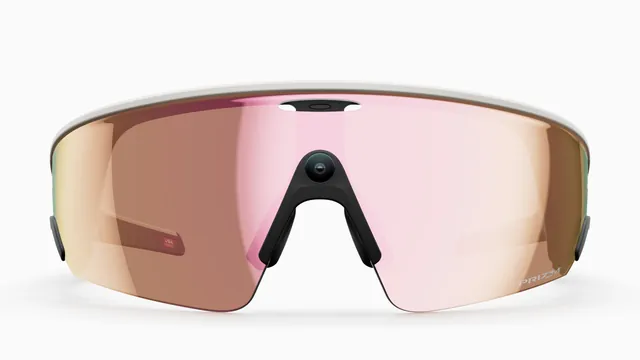
Smart glasses for cycling come in two kinds. Camera and audio glasses such as the Oakley Meta Vanguard ($499) record video, play music and give stats by voice. Cycling glasses with a display, such as Engo 3 ($399.95) and Everysight Maverick Sport ($399), show ride data on a lens, and the pages we read list no camera or speakers for either. On the specs, Vanguard is the pair made for riders who want a camera: it is rated IP67, Meta says it is shaped to wear with cycling helmets, and its speakers are built for wind. Engo 3 suits riders who want power, heart rate and radar alerts in their eyeline, and Everysight Maverick Sport pairs a color display with a phone app.
This guide is based on published specifications from Meta, Oakley, Garmin, Engo and Everysight, with US prices as of Oct. 25 and 26, 2026, and we haven't tested these glasses, so the picks follow the specs alone.
The picks at a glance
| If you ride for | Pick | US price | Why, on the specs | What it gives up |
|---|---|---|---|---|
| Video, music and voice stats | Oakley Meta Vanguard | $499 | IP67, made for helmets and hats, wind-tuned audio, 12MP camera, up to nine hours | No display, no prescription lenses |
| Power, heart rate and radar alerts on a lens | Engo 3 | $399.95 | 38.5 grams, IP55, more than 20 hours, more than 81 Garmin devices, Varia radar alerts | No camera or speakers listed, partial support for Edge 530 and 830 |
| A color display and a phone app | Everysight Maverick Sport | $399 | 43 grams, IP55, 10 hours, 22-degree color display | No camera or speakers listed, no prescription option listed |
| A cheaper Oakley with a camera | Oakley Meta HSTN | From $399 | 12MP camera, 3K video, listed by Garmin and Strava | IPX4 only, not a wraparound shield, no helmet claim in the pages we read |
| Cycling directions on a lens, in the US and Canada | Meta Ray-Ban Display | $799 with the Neural Band | Cycling directions announced Sept. 23, 2026 | Six hours of battery, 69 grams, Meta's own caution about bicycles |
Specs side by side
| Oakley Meta Vanguard | Oakley Meta HSTN | Engo 3 | Everysight Maverick Sport | |
|---|---|---|---|---|
| US price | $499 | From $399 | $399.95 | $399 |
| Display | None | None | Multi-color data in one eye | 22-degree color in one eye |
| Camera | 12MP, 122-degree lens | 12MP, angle not published | None listed | None listed |
| Audio | Open-ear, six decibels louder than HSTN's | Open-ear | None listed | None listed |
| Water rating | IP67 | IPX4 | IP55 | IP55 |
| Battery | Up to 9 hours, case adds up to 36 | Up to 8 hours, case adds up to 48 | More than 20 hours in normal use | 10 hours with the display on |
| Weight | Not published | Not published | 38.5 grams | 43 grams |
Lenses, wind and eye protection
Vanguard is a wraparound shield, and Meta says its Prizm lenses are "designed to block out sun, wind, and dust". They swap out, and replacement lenses cost $85 each. Vanguard costs $499 with Prizm lenses and $579 with Prizm Transitions Ember lenses on Meta.com. Oakley's announcement describes those Transitions lenses as shifting from a lighter tint indoors or in low light to a darker sun lens outdoors, which is the closest the pages we read come to low-light riding. Oakley's pages give names and prices for most tints but no intended use, so our lens guide lists what Oakley does say.
HSTN is Oakley's regular sunglass shape, with Prizm lenses at $399, Prizm Polarized at $449 and Transitions at $479. Engo 3 comes with tinted lenses (category 3) or light-adaptive lenses (categories 1 to 3), and Engo describes the light-adaptive ones as darker under full sun and "clear at dusk or night." Everysight ships tinted lenses and sells clear ones for $79, or $59 when added to a Maverick Sport order, and its page recommends clear visors for night. Oakley's safety guide also says Oakley Meta glasses must not be used "as safety or protection against mechanical impact."
Helmet fit: Oakley Meta Vanguard and the rest
Meta says Vanguard is optimized to wear with cycling helmets and hats. It uses Oakley's Three-Point Fit and ships with three nose pads, including low-bridge and high-bridge options, in one size. Neither Meta nor Oakley publishes a weight for it, and Oakley says you can book an appointment to try Oakley Meta in a store, where fitting and adjustment are free.
Engo 3 weighs 38.5 grams, has adjustable temples and nose pads and comes with a strap, and Engo has a 30-day risk-free trial. Everysight Maverick Sport weighs 43 grams, has foldable temples and replaceable nose pieces, and comes in Standard (pupil distance 64 to 72 mm) and Narrow (55 to 63 mm) sizes. HSTN has a wide, high-bridge fit and a 51 mm lens, and the pages we read make no helmet claim for it.
Hearing traffic with open-ear speakers
Open-ear speakers leave your ears uncovered, and Meta says its audio is directional and meant mainly for you. Meta says Vanguard's speakers are six decibels louder than HSTN's and loud enough for a bike ride in 30 mph wind, and that its five microphones are tuned to cut wind noise on calls and voice commands. Our open-ear explainer covers what Meta, Amazon and Bose say about leakage and hearing safety. The pages we read give no measurement of how well you hear a car behind you through open-ear speakers, so keep the volume low enough to hear the road.
Oakley's safety and warranty guide, in a May 2025 edition that predates Vanguard, says to "Always pay attention to your surroundings, including signage and obstacles." It warns that voice commands and LED lights "may distract you or increase the time it takes to react to hazards." It also says covering the speakers and your ears with a close-fitting hat or helmet could push sound pressure to levels that harm hearing, which is worth checking against your own helmet.
Rules on headphones for riders vary by state. California's Vehicle Code 27400 says "A person operating a motor vehicle or bicycle may not wear a headset covering, earplugs in, or earphones covering, resting on, or inserted in, both ears," with exceptions that include hearing protection and prosthetic devices that aid the hard of hearing. FindLaw's copy is current as of Jan. 1, 2026 and may not reflect the latest version. The text doesn't mention glasses, and our driving guide found no official guidance on speakers built into glasses temples. Other states word their rules differently, and this isn't legal advice.
Ride data: Garmin, Strava and on-lens displays
With Oakley Meta, Garmin says select Garmin smartwatches and cycling computers work through Garmin's Meta AI app from the Connect IQ Store, and only in the US for now. You can ask for pace, speed or heart rate by voice, set a status LED for pace, heart rate or power zones, and let autocapture record video at milestones. Garmin's own example is "create a 1 hour bike ride workout with power between 170W and 190W." Meta doesn't list compatible models, and Garmin's page names Vanguard and HSTN without saying whether every feature runs on both. Strava's help center says its overlays work with all Oakley Meta and Ray-Ban Meta glasses except Ray-Ban Stories. Our setup guide has the details.
Engo 3 works with more than 81 Garmin watches and bike computers and shows data from your Garmin on the lens, including radar. Engo says a Garmin Varia radar is required for rear-vehicle alerts and that they aren't available on Apple Watch. It lists the Edge 530 and Edge 830 as partially compatible, with a limited number of sensors connected at once, and says a non-Varia ANT+ radar works if your Garmin shows a radar data field on its own. Engo's glasses display what the Garmin computes and don't extend radar range. You build screens from more than 40 data fields in Engo's app. The older Engo 2 lists Strava Live Segments through an Apple Watch app, but Engo's US store marked it unavailable on Oct. 26.
Everysight Maverick Sport connects to iPhone, Android, Apple Watch and Wear OS. Its page lists live stats for rides, runs and workouts, plus turn-by-turn directions, speed and arrival time, and its home page says the E-Sport running and cycling app has Strava and Garmin radar integration.
Meta announced turn-by-turn cycling directions for Meta Ray-Ban Display in the US and Canada on Sept. 23, 2026, and said they would start later that month. You ask for them by voice and they show on the display. The Display is an everyday frame based on Ray-Ban's Wayfarer, and Meta's safety guide for it says: "Use caution when operating a moving vehicle, such as a car or bicycle, while using the Product." It also warns that images on the display "may obscure or block your view of your surroundings, including in low visibility conditions like night, rain, or fog." Our Display navigation guide covers the directions.
Camera, battery and cold
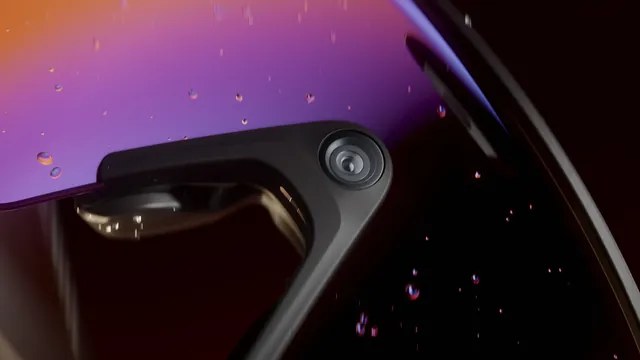
Vanguard's 12MP camera sits in the center of the frame behind a 122-degree lens, records 3K video at 30 frames per second and 720p at 120, and has Slow Motion, Hyperlapse and adjustable stabilization. Meta's shooting guide, which covers Ray-Ban Meta, suggests the high stabilization setting for fast movement such as biking, and 60 frames per second at 1080p. Autocapture records without a tap, so our recording guide covers the consent rules. HSTN has the same 12MP camera and 3K video, with no published camera angle.
Battery figures are ceilings: Oakley's footnotes say battery life varies with use, configuration and settings, and Meta says Vanguard's nine hours of mixed use is enough for a marathon. In the cold, Meta's advice, collected in our battery guide, is that charging pauses below 32°F (0°C) and that a beanie or helmet can help keep battery performance up. Oakley says Vanguard's frame resists extreme temperatures and gives no range, and neither company publishes an operating temperature range.
Prescription lenses
HSTN is the Oakley Meta sold with prescription lenses, in a range of -6.00 to +4.00 according to Oakley, though the prescription FAQ on Best Buy's Meta page lists -12.00 to +6.00. Vanguard isn't offered with them. Engo says its display is readable for farsighted wearers without reading glasses and that other vision corrections need contact lenses, and the Everysight page lists no prescription option. Our Oakley Meta prescription guide and all-brand prescription guide have the details. If you also run, our running guide compares the same pairs for that.
Frequently asked questions
Do Oakley Meta Vanguard glasses fit under a bike helmet?
Meta says Vanguard is optimized to wear with cycling helmets and hats, and it uses Oakley's Three-Point Fit with three replaceable nose pads. Fit depends on your helmet and head, and Oakley says you can book an appointment to try Oakley Meta in a store. Oakley's safety guide also warns that a close-fitting helmet over the speakers and your ears could push sound to harmful levels.
Is it legal to cycle with smart glasses that have speakers?
It depends on your state. California's headset law covers people operating a motor vehicle or bicycle and names headsets, earplugs and earphones covering, resting on or inserted in both ears. It doesn't mention glasses, and our driving guide found no official guidance on speakers built into glasses temples. This isn't legal advice, so check your state's rules.
Can smart glasses show cycling data on the lens?
Yes. Engo 3 shows power, heart rate and other Garmin data plus Varia radar alerts, Everysight Maverick Sport shows live stats from its running and cycling app, and Meta announced cycling directions for Meta Ray-Ban Display in the US and Canada. Oakley Meta Vanguard has no display.
Do Oakley Meta glasses work with Garmin Edge bike computers?
Garmin says select Garmin smartwatches and cycling computers work, through the Meta AI app from its Connect IQ Store, and that the integration is available only in the US for now. Meta doesn't list models, so check Garmin's compatible-device list before you buy a bike computer for this. Our Garmin and Strava guide has the setup steps.
Which of these smart glasses handle rain best?
On published ratings, Oakley Meta Vanguard's IP67 is the highest here, and Meta says it covers temporary submersion in up to a meter of water. Engo 3 and Everysight Maverick Sport are rated IP55, and Oakley Meta HSTN is rated IPX4, which Meta says is enough for sweat and light rain.
Sources
- Oakley: Oakley Meta Vanguard product page
- Oakley: Oakley Meta HSTN product page
- Oakley: The new Oakley Meta AI glasses (US landing page)
- Oakley: Oakley Meta AI glasses safety and warranty guide (May 29, 2025 edition, read Oct. 26, 2026)
- Oakley: Oakley Meta Vanguard debuts Prizm Transitions in new colorway launch (March 31, 2026)
- Meta: Athletic intelligence is here, meet Oakley Meta Vanguard (Sept. 17, 2025)
- Meta Store: Oakley Meta Vanguard
- Meta: Guide to shooting POV with AI glasses
- Meta: New features for Meta Ray-Ban Display (Sept. 23, 2026)
- Meta: Safety guide for Meta Ray-Ban Display (archived copy of June 15, 2026, as read for our driving guide)
- Best Buy: Meta AI glasses with prescription lenses (Meta's prescription FAQ)
- Garmin: Oakley Meta AI glasses
- Garmin Connect IQ Store: Meta AI app listing
- Strava Help Center: Meta glasses and Strava
- FindLaw: California Vehicle Code 27400 (current as of Jan. 1, 2026, read Oct. 26, 2026)
- Engo Eyewear: engo3 product page (EU store copy, read Oct. 26, 2026)
- Engo Eyewear US store: engo3 product data and price (read Oct. 26, 2026)
- Engo Eyewear US store: engo2 product page and price (read Oct. 26, 2026)
- Everysight: Maverick Sport AR Glasses product page (read Oct. 26, 2026)
- Everysight: home page (read Oct. 26, 2026)
Join the conversation
Questions, or something to add? Talk about it with other smart glasses owners in r/Talaya, our community on Reddit.