AI · Guide
ChatGPT on smart glasses, watches and earbuds: where it works and where it doesn't
ChatGPT reaches wearables through Apple's Siri on iPhone and a few glasses makers such as Rokid. Meta's glasses use Meta AI, and OpenAI's own device isn't due before 2027. Here is what the companies document, and what they leave out.

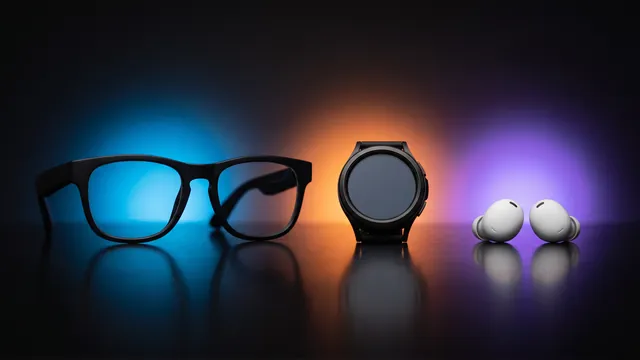
Where ChatGPT works on wearables depends on the device. On an iPhone, Apple's Siri can pass questions to it. Rokid offers it on its AI glasses. On Meta's glasses, the Apple Watch and AirPods, the built-in assistants are Meta AI and Siri, and the company pages we read don't list ChatGPT. OpenAI is building its own device, and it told a court that the first one won't ship before the end of February 2027.
This guide is based on Apple's iPhone User Guide, OpenAI's help center, the glasses makers' pages as collected in our product guides and press reports on OpenAI's hardware. We haven't tested any of these combinations, and each section says what the companies don't document.

ChatGPT in Siri on iPhone
Apple's own integration is the route with official documentation. In its iPhone User Guide, Apple says that with Apple Intelligence you "get more in-depth answers from Siri and compose text in Writing Tools when you enable the ChatGPT extension." The guide also covers using Visual Intelligence to ask ChatGPT for information. To turn it on, open Settings, tap Siri, tap ChatGPT and tap Set Up. Signing in to a ChatGPT account is optional, and it's the only way to have your requests saved to your ChatGPT chat history.
Apple's page lists the requirements: iOS 27 or later on an iPhone 15 Pro, iPhone 15 Pro Max or an iPhone 16 model or later, in a region where ChatGPT is available, and an age of at least 13 or your country's minimum. Usage limits may apply.
Apple says you control when ChatGPT is used and are asked before any of your information is shared, unless you turn off Confirm Requests so that Siri sends requests automatically. Your request, any attachments and limited data such as your time zone, country, device type and language go to ChatGPT. Your IP address is obscured, but your general location is shared, Apple says. If you use the extension without an account, Apple says OpenAI gets nothing tied to your Apple Account, must process your data only to fulfill the request, must not store the request or response unless the law requires it and must not use it to train its models. If you sign in, your ChatGPT account settings and OpenAI's data privacy policies apply instead.
Does it reach Apple Watch or AirPods?
Apple documents the extension in the iPhone guide. The Apple pages we used for our Apple Watch guide, our AirPods Pro 3 guide and our assistant comparison don't mention ChatGPT. They cover Siri AI, which Apple released on Sept. 14, 2026, as the assistant on the watch and on AirPods. A voice request on your wrist or through AirPods is a Siri request, and Apple doesn't say it can be handed to ChatGPT there.
ChatGPT apps for watches
OpenAI's help articles list ChatGPT apps for iOS and Android, the web and a desktop app for macOS and Windows. Its ChatGPT Voice article names the same places. None of the OpenAI pages we read lists an Apple Watch or Wear OS app. On Wear OS the assistant is Gemini, and on Apple Watch it is Siri. If you find a watch app that offers ChatGPT, check who publishes it, because OpenAI's pages don't list one.
Glasses that offer ChatGPT
A few makers outside Meta and Google let you choose ChatGPT or say they support it. The table shows what each company or retailer says.
| Glasses | Price | What is documented |
|---|---|---|
| Rokid Glasses, with a display | $699 at B&H | B&H says the assistant can use ChatGPT or Gemini, and Tech Times reported in March that Rokid is among the first makers to support both. Answers appear as text in the lenses. |
| Rokid AI Glasses Style, no display | $399 | Rokid says the assistant works with several platforms, including ChatGPT and DeepSeek. Answers come by voice. |
| Even Realities G2 | $599 | Even Realities said at the G1's June 2024 launch that the glasses supported AI models like ChatGPT. Our guide lists Even AI as the G2's assistant and doesn't name a model. |
| Brilliant Labs Halo | $399 | The assistant is Noa, and Brilliant doesn't say which models power it on Halo. TechCrunch reported that the earlier Frame's Noa used OpenAI's GPT-4 and Whisper, among others. |
| Ray-Ban Meta, Oakley Meta and Meta Glasses | From $249 | Meta AI |
Rokid is the clearest case. Our Rokid guide has its lineup and specifications, and our guides to Even Realities and Brilliant Labs cover the other two. Google's Android XR glasses, due this fall, use Gemini, as our Gemini on Android XR guide explains.
Using ChatGPT's voice mode through Bluetooth glasses or earbuds
OpenAI describes ChatGPT Voice as a feature of the ChatGPT apps on iOS and Android, the web and the desktop app, and it asks for microphone access. We found no mention of glasses, earbuds or other Bluetooth devices in it. Its newest option, Live, is powered by GPT-Live-1.1 and can listen and speak at the same time. Live doesn't support video or screen sharing, which stay in the Advanced option on iOS and Android. OpenAI limits Live by plan: on Plus it's three hours over a rolling 24 hours.
Meta says its glasses connect to your phone over Bluetooth, and Be My Eyes' FAQ for the glasses says that once paired, "your glasses will act as the audio output device instead of your phone." Our music and podcasts guide covers listening through the glasses. In the pages we read, Meta and OpenAI don't say how ChatGPT Voice behaves over that connection, including whether it uses the glasses' microphones, so treat it as undocumented. The same goes for AirPods, where Apple's pages cover Siri and not the ChatGPT app. The video-sharing section of OpenAI's article doesn't mention a glasses camera as a source.
For developers, Meta's Wearables Device Access Toolkit reached version 1.0 at Connect, letting phone apps use the glasses' camera, voice commands through "Hey Meta" and head motion, Meta's developer recap says. That is the documented way for a third party to build an app for the glasses, ChatGPT-powered or not. OpenAI hasn't announced one in anything we read.
Why Meta's glasses use Meta AI
Meta AI is Meta's own assistant, and the glasses are built around it. You set up and manage them in the Meta AI app and wake the assistant with "Hey Meta." Meta has been rolling out its Muse Spark model behind Meta AI on glasses in the US and Canada since April, and it says its Muse agent comes to the glasses "in the coming months." Our Meta AI guide covers the features, and our Muse guide covers the agent.
Meta hasn't said, in the pages we read, why it doesn't offer ChatGPT. What the pages show is a company building its own assistant and agent while OpenAI builds its own. MacRumors described OpenAI's Dots agents, launched Sept. 29, as a rival to Meta's Muse.
OpenAI's own hardware
OpenAI announced in May 2025 that it was acquiring io, Jony Ive's hardware startup, which Fortune says it bought for $6.5 billion. The io team is now OpenAI's hardware group, with more than 400 employees. What has been reported since comes from court filings and the press.
On Feb. 10, 2026, a filing in a trademark lawsuit from the audio startup iyO said OpenAI's first device won't ship before the end of February 2027, MacRumors reported, citing Wired. OpenAI's original goal had been to ship before the end of 2026. The filing also said it hasn't made packaging or marketing materials and won't use the name "io" for its hardware.
By July 22, Fortune wrote, the device was expected to ship as early as 2027, a source said the design of the first device was finalized, and a lawsuit from Apple accusing OpenAI of trade secret theft had "thrown those plans into chaos."
OpenAI hasn't shown the device, and the reports differ on what it is. MacRumors said earlier filings in the iyO case indicate it apparently won't be an in-ear device or a wearable. Fortune cited a Bloomberg report of a home-speaker-like companion with moving mechanical parts. OpenAI hasn't announced a name, price or date in anything we read. If those reports are right, OpenAI's first device wouldn't be glasses or earbuds, and ChatGPT would keep reaching wearables through other companies' products.
Which route fits you
- On an iPhone, the ChatGPT extension under Settings, Siri is the route Apple documents.
- For ChatGPT on glasses, Rokid is the documented choice, at $699 with a display or $399 without.
- With Ray-Ban Meta or Oakley Meta glasses, Meta AI is the assistant, and ChatGPT Voice on them isn't documented.
- On your wrist or in your ears, Siri and Gemini are the documented assistants, as our comparison shows.
Frequently asked questions
Can you use ChatGPT on Ray-Ban Meta glasses?
Meta's glasses use Meta AI as their assistant, and the Meta and OpenAI pages we read don't list ChatGPT as a feature of them. Meta says the glasses connect to your phone over Bluetooth, but neither company documents how ChatGPT's voice mode behaves over that connection.
Is there a ChatGPT app for Apple Watch?
OpenAI's help pages we read list ChatGPT apps for iOS, Android, the web and a desktop app for macOS and Windows, and none lists an Apple Watch or Wear OS app. Siri is the Apple Watch's assistant and Gemini is the one on Wear OS.
Does Siri use ChatGPT?
On an Apple Intelligence iPhone running iOS 27, Siri can send requests to ChatGPT once you turn on the ChatGPT extension in Settings. Apple says it asks before sharing your information unless you turn off Confirm Requests.
Does Apple send my Apple Account details to OpenAI?
Apple says that if you use the extension without a ChatGPT account, OpenAI receives no information tied to your Apple Account. Your IP address is obscured and your general location is shared. If you sign in to ChatGPT, your ChatGPT account settings and OpenAI's privacy policies apply.
Which smart glasses have ChatGPT?
B&H's listing says Rokid Glasses can use ChatGPT or Gemini, and Rokid says its AI Glasses Style work with several platforms including ChatGPT and DeepSeek. Even Realities said at the G1's launch in 2024 that it supported AI models like ChatGPT.
What is OpenAI's device?
OpenAI hasn't shown it. In court filings it said the first device won't ship before the end of February 2027, and MacRumors reported, based on earlier filings, that it apparently won't be an in-ear device or a wearable. Fortune relayed a Bloomberg report describing a speaker-like companion.
Sources
- Apple Support: Turn on ChatGPT on iPhone (iPhone User Guide, iOS 27)
- OpenAI Help Center: ChatGPT Voice
- OpenAI Help Center: ChatGPT release notes (read Oct. 25, 2026)
- Fortune: Sam Altman and Jony Ive formed a dream team to reinvent hardware (July 22, 2026)
- MacRumors: OpenAI's Jony Ive-Designed Device Delayed to 2027 (Feb. 10, 2026)
- B&H Photo: Rokid AI/AR Glasses with Display (RV101), price and specifications (read Oct. 25, 2026)
- Tech Times: Smart glasses go mainstream, Rokid makes its US retail push at Vision Expo 2026 (Mar. 19, 2026)
- Rokid: News
- Even Realities: Even Realities unveils G1 digital glasses (June 26, 2024)
- TechCrunch: AR glasses with multimodal AI nets funding from Pokémon GO creator (Feb. 8, 2024)
- Meta: Bluetooth glasses, style meets connectivity
- Be My Eyes Help Center: Meta AI Glasses FAQ (updated Aug. 14, 2026)
- Meta: Meta Connect recap for AI glasses developers (Sept. 24, 2026)
Join the conversation
Questions, or something to add? Talk about it with other smart glasses owners in r/Talaya, our community on Reddit.