EU privacy regulators adopt a statement on smart glasses under GDPR
The European Data Protection Board adopted Statement 01/2026 on smart glasses on Oct. 13. It is preliminary guidance, not a ban: it covers who is responsible when glasses record bystanders and what makers and wearers should do.

The European Data Protection Board (EDPB), the body that brings together the EU's national privacy regulators, adopted Statement 01/2026 on Smart Glasses on Oct. 13, 2026. The document is stamped "Adopted on 13 October 2026." The statement is five weeks old. The board's news release says it was adopted "during its latest plenary" and published alongside a separate expert report.
The board is clear about the weight of the text. It describes it as "an initial statement which provides preliminary guidance to users, manufacturers and service providers." It is not a new rule. The statement names no company and sets no deadline or penalty.
What the statement says
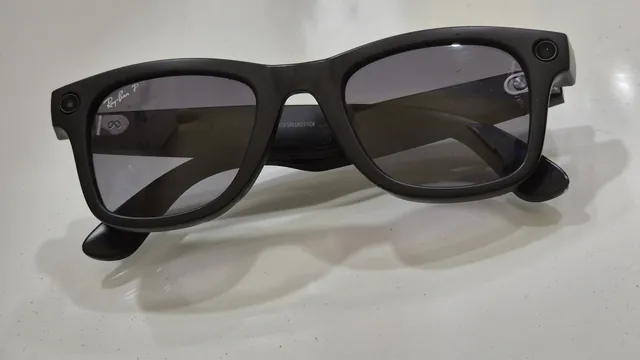
The EDPB defines smart glasses as "wearable devices which often look like regular glasses or sunglasses," with cameras, microphones and AI features. When they handle information about an identifiable person, the board says "they process personal data, and the processing is therefore subject to the GDPR."
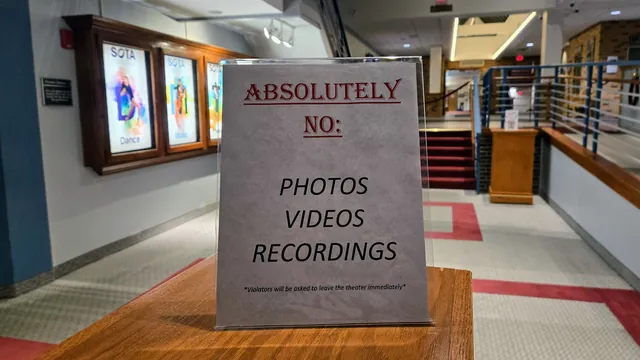
Its main worry is bystanders. The statement says the devices "allow a near invisible or hidden collection, storage, and other forms of processing of personal data since they can be difficult to distinguish from ordinary eyewear." It singles out sensitive settings: "a medical facility, schools and other places where minors are present, changing rooms, swimming pools or beaches, toilets." It also says particular attention should be paid to children.
Who is responsible
For wearers, the statement draws a line. A user "is not subject to the GDPR, provided that the user's actions are carried out in the course of a purely personal or household activity." That exemption "would not apply if the photo or video is shared to an indefinite number of persons on a public social media account." A wearer using the glasses in an official, professional or political context "would qualify as a controller or joint-controller" and has to follow GDPR, including its transparency rules.
Makers and AI providers do not get the same exemption. The board says GDPR "does still apply to controllers or processors which provide the means for processing personal data for such personal or household activities." The producer or the AI provider can be a controller, for example when its AI analyzes a camera image of other people to answer the wearer. Makers also "should not rely on the users' actions to meet their own GDPR obligations."
What it asks of makers
The EDPB says traditional transparency notices "do not seem sufficient or appropriate to inform non-users in the context of smart glasses." It asks for "measures that provide by default in-the-moment transparency that processing is taking place." The options it lists include visual or LED indicators, audio cues and smartphone proximity notices. For indicators, it says "it should not be possible to record information when the indicator is covered." Phone notifications "should not be the sole method of providing transparency," because not everyone runs the app that detects the glasses.
On legal grounds, the board says it "would be difficult" to obtain bystanders' freely given, specific, informed and unambiguous consent, and that consent obtained after a recording would not be valid. Relying on legitimate interest for further commercial processing, such as AI training, "would be particularly difficult to demonstrate."
For devices that act as real-time assistants, the statement says "persistent storage of captured audio, images, or video may not be necessary and should therefore be disabled by default." It recommends limiting continuous recording, live streaming and retention, and it suggests "privacy frictions" that slow down sharing on social media platforms.
What it means for owners and buyers
Recording for purely personal or household purposes stays under the exemption, according to the text. Posting identifiable strangers on a public account, or using glasses for work, is where GDPR can start to apply to the wearer.
The board also says a user "should not justify their continuous or indiscriminate recording of other individuals solely by a general or hypothetical concern for their personal safety."
The practical effect falls mostly on makers, who are being told what regulators expect: visible indicators that work, defaults that store less, and no reliance on wearers to inform everyone around them. None of the sources we read names a maker that has changed its glasses, indicators or app defaults in response.
What is still unknown
The statement says the EDPB will further analyze the topic, but it gives no timetable. It is not known whether the guidance will become binding rules or enforcement, or which national authorities will act on it. The text cites earlier material from other bodies and mentions a Hamburg initiative "to propose a ban on smart glasses in public transport and swimming pools," but names no enforcement action.
It is EU data protection guidance. The sources we read say nothing about effects for US buyers.
It lands during a busy month for regulators. Ireland's Joint Committee on Artificial Intelligence recommends prohibiting smart glasses capable of covert recording without consent, and a UK minister told MPs on Nov. 4 that the government is looking at restricting smart glasses in certain settings. For what people nearby can do today, see our bystander guide.
Sources
Join the conversation
Questions, or something to add? Talk about it with other smart glasses owners in r/Talaya, our community on Reddit.