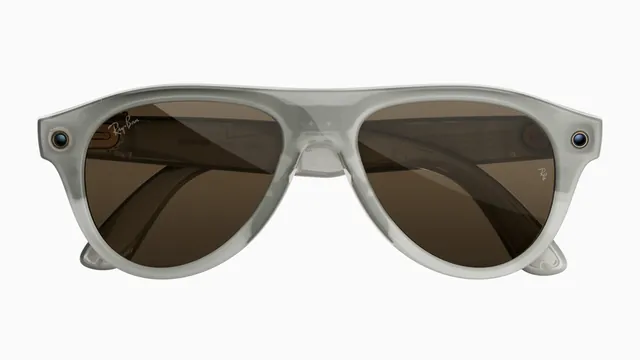
German consumer group sues Ray-Ban over smart glasses privacy and targets Meta
Germany's federal consumer association, the vzbv, said on Nov. 24 that it filed an injunction lawsuit against Ray-Ban over Ray-Ban Meta AI glasses and started proceedings against Meta. Meta's public reply has not been found.
Germany's federal consumer association, the Verbraucherzentrale Bundesverband (vzbv), said on Nov. 24, 2026 that it has filed an injunction lawsuit against Ray-Ban over the Ray-Ban Meta AI glasses and has started proceedings against Meta. The claims are the association's own, laid out in its press release. The release reports no court decision.
Who filed what
The vzbv names Ray-Ban (Luxottica Group S.p.A) as the defendant in the injunction lawsuit, an Unterlassungsklage. The release says the suit went to the Kammergericht after Ray-Ban did not respond to a warning letter. The release does not name the city. 24 News HD described it as a Berlin court and named the glasses maker as EssilorLuxottica. We use the vzbv's wording for the defendant.
Meta is a less clear case. The release's lead says proceedings against Meta were started ("eingeleitet"). A later section says the association decided to file a lawsuit against Meta. The vzbv says Meta did not sign a cease-and-desist declaration after its warning letter. The release gives no case numbers or filing dates for either matter, so we cannot say whether the Meta case is already in court.
What the vzbv alleges
The association's claims against Ray-Ban and Meta fall into four groups:
- Information before purchase: the vzbv says Ray-Ban's online shop does not tell buyers before they buy that, when they collect other people's personal data with the glasses, they can become data controllers themselves. It argues this breaches pre-contract information duties.
- Design and bystanders: it says the product design practically prevents wearers from meeting the GDPR information duties (Articles 12 and 13) toward the people they record. In its view the glasses cannot be used in public without restriction in a GDPR-compliant way, and breaches can be fined by data protection authorities.
- The light: the vzbv alleges a privacy-by-design breach under Article 25 of the GDPR. In its words, "Ein kleines weißes blinkendes Licht ist unzureichend" to inform people in public about the collection of their data (in English: a small white blinking light is insufficient). It adds that people cannot learn what data is processed or for what purpose, or tell whether their data is used to train AI systems.
- Advertising: it says Meta's ads give the impression that all advertised functions can be used in everyday life without issue, which the association calls misleading.
Ramona Pop, a board member of the vzbv, put the point this way (English translation ours): a white blinking light a few millimeters wide is not enough to signal to people in public that they are being filmed.
The vzbv also asks the German government to push for product rules in the current GDPR reform, such as privacy-friendly default settings and clearly recognizable recording functions.
Not the same as the HateAid complaint
The vzbv suit is separate from the earlier complaint built around covert recording. In August 2026, the German nonprofit HateAid filed a criminal complaint with the Generalstaatsanwaltschaft Frankfurt am Main. It names the managing bodies of Meta Platforms Technologies Ireland Limited, Ray-Ban and Oakley, plus the retailers Fielmann, Apollo-Optik, Mister Spex and MediaMarkt. HateAid reads German law as banning devices disguised as everyday objects and made to film or listen in secret, and it asks for a sales ban on the Wayfarer (Gen 2). That is HateAid's reading, not a ruling, and HateAid notes the presumption of innocence applies. We found no information on whether prosecutors opened an investigation.
The vzbv release speaks of the Ray-Ban Meta AI glasses in general and names no model, so the two actions should not be treated as covering the same products.
What it means for buyers
Nothing in the sources says the glasses are pulled from sale or that features change in Germany or the EU. An injunction suit asks a court to order a company to stop a practice, and it can take a long time to reach a decision. Prices and availability in Germany were not part of the vzbv release.
For owners in Germany and across the EU, the case adds to a month of regulatory attention. The European Data Protection Board published preliminary GDPR guidance on smart glasses, which is guidance and not a ban. The Dutch regulator advised consumers not to buy AI camera glasses for general use for now and named no brand. South Korean lawmakers also proposed rules requiring glasses to signal when they record, though that is a proposal with no vote.
What is still unknown
- Meta's response: we found no public statement from Meta or Ray-Ban on the vzbv action. We do not know their position.
- Court details: case numbers, filing dates and hearing dates are not published in the release.
- The Meta case: whether it is a filed lawsuit or proceedings still under way.
- Scope: which models and sales channels the vzbv means.
Sources
Join the conversation
Questions, or something to add? Talk about it with other smart glasses owners in r/Talaya, our community on Reddit.