Wearables · Guide
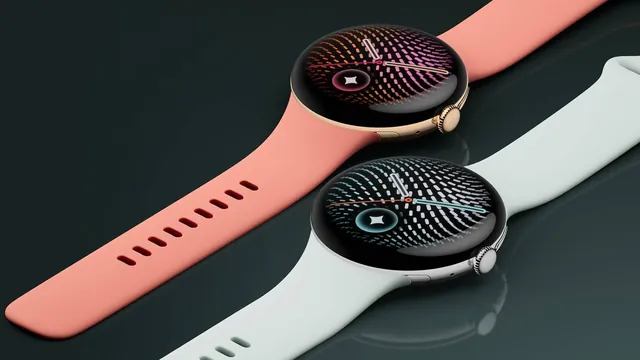
Samsung Galaxy Watch in 2026: Watch9, Watch Ultra2 and Watch8 Classic compared
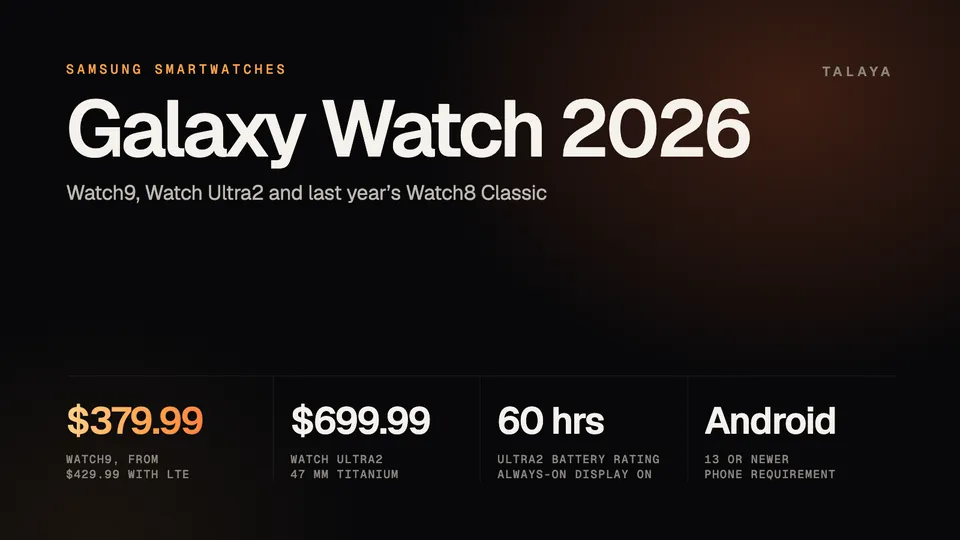
Samsung's US watch page lists the Galaxy Watch9 from $379.99, the Galaxy Watch Ultra2 at $699.99 and last year's Watch8 Classic. Sizes, battery ratings, LTE, health features, Gemini and which phones they need.
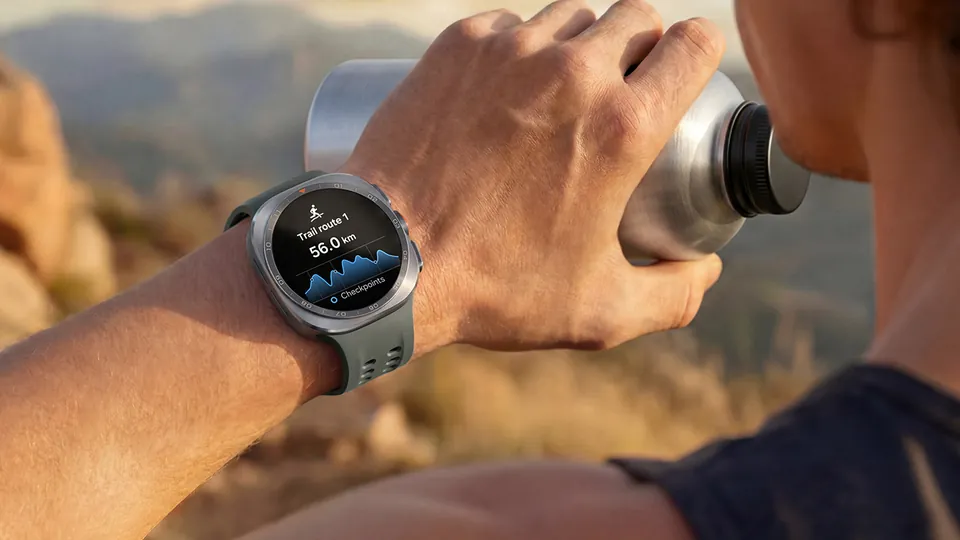
Samsung's US watch page lists three Galaxy Watch models as of Oct. 25, 2026: the Galaxy Watch9 from $379.99, the Galaxy Watch Ultra2 at $699.99 and the Galaxy Watch8 Classic, last year's model with a rotating bezel. Samsung announced the Watch9 and Ultra2 on July 22 and began general sales on Aug. 7. Both run Wear OS 7 and need an Android phone.
Samsung's July announcement covered only those two watches, and its watch page still shows the Watch8 Classic as the Classic. This guide is based on that announcement, Samsung's US product pages and their footnotes, and its 2025 launch release for last year's models. We haven't tested the watches.
The lineup at a glance
| Galaxy Watch9 | Galaxy Watch Ultra2 | Galaxy Watch8 Classic | |
|---|---|---|---|
| Price | From $379.99; $429.99 with LTE | $699.99; Samsung lists LTE on all Ultra models | $499.99, or $549.99 with LTE, at the July 2025 launch |
| Sizes | 40 mm and 44 mm | 47 mm | 46 mm |
| Case | Aluminum | Titanium | Stainless steel |
| Display | 1.34 in or 1.47 in, up to 3,000 nits | 1.52 in, up to 5,000 nits | 1.34 in |
| Battery capacity | 390 mAh (40 mm), 445 mAh (44 mm) | 800 mAh | 445 mAh |
| Rated battery, always-on display on | Up to 30 hours | Up to 60 hours | Up to 30 hours |
| Water and dust | 5ATM, IP68 | 10ATM, IP69K, EN13319 dive certified | 5ATM, IP68 |
| Controls | Home and Back buttons | Quick, Home and Back buttons | Rotating bezel and three buttons |
| Chip | Snapdragon Wear Elite | Snapdragon Wear Elite | Exynos W1000 |
| Storage | 32GB | 64GB | 64GB |
| Weight | 31.5 g (40 mm), 34.0 g (44 mm) | 61.5 g | 63.5 g |
Samsung's launch table gives one battery-hours figure for the Watch9, not one per size. The $379.99 starting price comes from the Watch9 product page. The Ultra2 price and the Watch8 Classic's $499.99 and $549.99 are launch prices from Samsung's newsroom, and the pages we could read don't show a current price for them, so check Samsung's store, where trade-in credits and promotions also change.
What changed from last year
The Watch9 changes less than the Ultra2. Samsung says the 40 mm Watch9's 390 mAh battery is 20% larger than the Watch8 40 mm's 325 mAh, and the 44 mm goes from 435 mAh to 445 mAh. Samsung calls it the first Galaxy Watch with Qualcomm's Snapdragon Wear Elite platform, which replaces the Exynos W1000 in the Watch8 and Watch8 Classic. Peak brightness is 3,000 nits, the figure Samsung gave the Watch8 series. The price rose $30: the Watch8 started at $349.99, or $399.99 with LTE, in July 2025.
The Ultra2 changes more. Samsung says its 800 mAh battery is 35% larger than the previous Ultra's 590 mAh and its case is 12% thinner than the previous generation's. The display reaches 5,000 nits, which Samsung calls a first for a smartwatch, and the watch is certified to the EN13319 diving standard, a first for a Galaxy Watch. Samsung says fast charging takes it to 40% in about 30 minutes. It costs $699.99, $50 more than the previous Ultra's $649.99 starting price.
Health features and what each one needs
Samsung describes most Galaxy Watch health tools as wellness features and says so in its footnotes. On the pages we read, only sleep apnea detection is described as FDA-cleared.
| Feature | What Samsung says | Conditions in Samsung's footnotes |
|---|---|---|
| Sleep apnea | "FDA-cleared" risk detection that looks for signs of moderate to severe obstructive sleep apnea from overnight blood oxygen | Regulated by the FDA as a medical device; notifies people who haven't been diagnosed of a risk; consult a physician |
| ECG and irregular rhythm notifications | ECG tests and alerts for signs of irregular rhythm such as AFib, on the Watch8 Classic page | Adults 22 and older; not for known arrhythmias other than AFib; not a replacement for diagnosis. The pages we read don't use the word "cleared" |
| Blood pressure | A morning estimate on the Watch9 | Calibrate every 28 days with a third-party cuff; not intended to diagnose |
| Vitals and Heart Health Score | Overnight baseline alerts and a cardiovascular score | Not intended to diagnose disease |
| Energy Score and sleep coaching | A daily readiness rating and a sleep program | Need a Samsung Galaxy phone, Samsung Health and a Samsung account |
Samsung's July release also lists Daily Cardio Load, Fitness Index and Hearing alerts for unsafe noise levels on both new watches. Its 2025 footnote on sleep apnea adds that the feature is not intended to provide a stand-alone diagnosis.
Gemini on the wrist
Samsung says Google Gemini is built into the Watch9: raise your wrist, talk, and Gemini answers without a wake word or a button press. A footnote says Gemini works with select apps and needs a Google Gemini account. The Watch8 Classic page describes the same assistant, and the Ultra2 page has the same Raise to Talk section.
Google's own requirements apply too. Its help page says Gemini on a Wear OS watch needs Wear OS 4 or later, a connected Android phone with Gemini as its assistant, and an eligible language and region, as our assistant comparison explains. Google says its Pixel Watch 5 handles core Gemini actions on the watch so they work offline; the Samsung pages we read don't say where Gemini's requests are processed. Our Pixel Watch guide covers that watch.
Phones, LTE and the rest of the Galaxy lineup
Galaxy Watches work only with Android phones. Samsung's launch specifications list Android 13 or higher with more than 1.5GB of memory for the Watch9 and Ultra2, and say activation needs a phone that supports Google Mobile Services. Samsung lists no iPhone support, so iPhone owners should read our Apple Watch guide.
A Samsung Galaxy phone matters for health features. Samsung tells buyers to pair the watches with a Galaxy smartphone for insights such as sleep score and personalized sleep coaching, and its footnote for Galaxy AI features asks for a compatible Samsung Galaxy phone, the Samsung Health app and a Samsung account.
LTE adds $50 on the Watch9, $429.99 against $379.99. Samsung's footnote says stand-alone LTE exists only on LTE models and Ultra models, needs initial pairing with an eligible Android phone and a separate wireless plan, and may not support stand-alone voice calls on your carrier. Stand-alone use is limited when the paired phone is powered off or offline.
Samsung pitches the watches alongside its other wearables. It says the Galaxy Ring and Galaxy Watch together "deliver detailed data and holistic insights" (see our Galaxy Ring guide), and its footnotes say gesture controls on its coming Android XR glasses work only through the Galaxy Watch9. Our Samsung smart glasses guide has the details.
Galaxy Watch Classic vs Ultra
The Watch8 Classic and the Ultra2 are the pricier options, and they suit different buyers.
The Classic has a rotating bezel for controlling apps, a stainless steel case and one size, 46 mm. Samsung lists it at 445 mAh and up to 30 hours, with 5ATM and IP68 ratings and last year's Exynos W1000 chip.
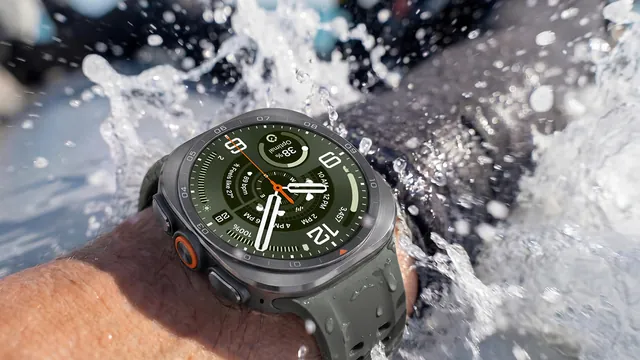
The Ultra2 has a titanium case, 800 mAh and up to 60 hours, 10ATM and IP69K ratings, EN13319 dive certification and a 5,000-nit display. Samsung's page adds a Depth app for dives down to 130 feet, GPX route following and up to 20 hours of outdoor workout tracking with GPS. Holding its Quick Button for five seconds starts an 86-decibel siren that Samsung says carries up to 180 meters.
The Ultra2 costs $200 more than the Classic's launch price. The two weigh about the same, 61.5 g and 63.5 g, so the extra $200 goes to battery and ruggedness.
Which Galaxy Watch is best for you
This advice rests on specifications, not testing.
- Most Android users should start with the Watch9. At $379.99 it has the lowest launch price of the three, comes in 40 mm and 44 mm, and has the newer chip.
- Pick the Ultra2 for the longest battery life, outdoor sports or diving, and accept the $699.99 price and a 47 mm case.
- Pick the Watch8 Classic if you want a rotating bezel and a more traditional look, after checking its current price.
- With an iPhone, none of these will work. Apple Watch is the iPhone option.
Samsung bundles a 60-day Strava trial and up to two months of iFIT with the Watch9 and Ultra2. Both can turn into charges: Samsung's footnote says the Strava trial becomes an auto-renewing annual subscription unless you cancel at least 24 hours before it ends, and iFIT's terms say it bills its monthly rate when the promotional period ends.
Every Galaxy Watch guide
- Samsung Galaxy Unpacked July 2026 wearables: two watches, smart glasses, no new RingWhat Samsung announced for wearables at Galaxy Unpacked July 2026: Galaxy Watch9 and Ultra2 prices and dates, the eyewear, and what happened
Frequently asked questions
What is the newest Samsung Galaxy Watch?
The Galaxy Watch9 and Galaxy Watch Ultra2, announced July 22, 2026, and on sale in the US since Aug. 7. The Watch9 starts at $379.99 and the Ultra2 costs $699.99.
Is there a Galaxy Watch9 Classic?
Samsung's July announcement covered only the Watch9 and Ultra2. Its US watch page still shows the Watch8 Classic, with the rotating bezel, as the Classic model.
Does a Galaxy Watch work with an iPhone?
No. Samsung's specifications for the Watch9 and Ultra2 list Android 13 or higher and a phone that supports Google Mobile Services, and many health features need a Samsung Galaxy phone. iPhone owners should look at the Apple Watch.
Which Galaxy Watch has the longest battery life?
The Galaxy Watch Ultra2. Samsung rates its 800 mAh battery for up to 60 hours with the always-on display on, against up to 30 hours for the Watch9 and the Watch8 Classic.
Can you use a Galaxy Watch without your phone nearby?
On LTE models, with limits. Samsung says stand-alone LTE is available on LTE models and Ultra models and needs a separate wireless plan, and that your carrier may not support stand-alone calling. Setup still needs an Android phone.
Sources
Join the conversation
Questions, or something to add? Talk about it with other smart glasses owners in r/Talaya, our community on Reddit.