
KAIST reports a crystal that could make polarization optics 1/120 as thick
KAIST says a copper aluminum oxide crystal could shrink polarization-control components to about 1/120 the thickness of conventional ones. It is lab research on small crystals, no company has announced glasses using it, and the researchers still need to make thin, uniform films.
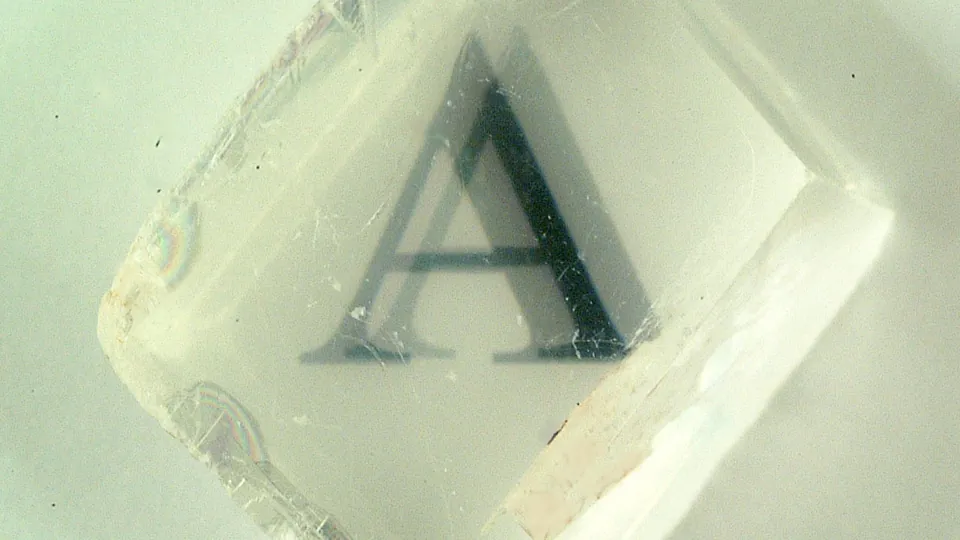
A research team at KAIST in South Korea says a crystal could make one kind of optical part about 1/120 as thick as it is today. According to KAIST's release, which says the university announced the work on Nov. 24 (Korea time), the material could "reduce the thickness of polarization-control components to approximately 1/120 that of conventional components while maintaining high light transmission."
This is laboratory research. The release names no company, product, price or date, and it does not describe a pair of glasses.
What KAIST actually reported
The team is led by Professor Changhee Sohn of KAIST's Department of Physics, with researchers from Ulsan National Institute of Science and Technology (UNIST) and Pusan National University. The material is copper aluminum oxide (CuAlO2), an oxide semiconductor that the release says "combines high light transmission with exceptionally strong polarization control."
The release makes a narrow claim. The thickness figure applies to components that control the polarization of light, and it is phrased as something that "could" happen. It does not say a glasses lens or a whole optical stack would get 120 times thinner.
Where the 120 comes from
The number starts with birefringence, which is the difference in how a material bends light depending on the direction the light oscillates. The release says CuAlO2 shows birefringence "approximately 120 times greater than that of quartz for violet light." Then it explains the link to thickness: "The greater the birefringence, the thinner a component can be while achieving the same optical effect."
The release uses a half-wave plate as its example, a part that changes the polarization of light. For violet light, it says, a quartz half-wave plate must be about 52 times as thick as the wavelength of the light itself. For CuAlO2, "the researchers estimated" one could be 173 nanometers thick.
That 173 nm figure is an estimate. The paper in Nature Communications, published online Oct. 13, reports a maximum birefringence of 3.67 and a direct band gap of 3.71 eV. Those measurements came from millimeter-sized single crystals, according to the abstract, not from thin films or finished components. We read the abstract and the release, not the full paper.
What it could mean for glasses buyers
Polarization-control parts, the release says, are "widely used in optical communication equipment, displays, and other optical devices." It does not say which part of a pair of smart glasses would use these components, and it does not name waveguides, projectors or lenses.
On glasses, KAIST's statements are conditional. The release says, "If high-quality thin-film fabrication techniques can be developed, the material could help reduce the size and weight of AR devices." Sohn adds: "This could help make smart glasses and optical communication equipment smaller and lighter."
For someone shopping for glasses, the possible benefit is what those two sentences name: smaller, lighter devices. How much weight a thinner polarization part would save in a real pair has not been published. One part getting thinner does not mean the whole lens or frame follows.
Where this sits next to other thin-optics research
Our waveguide explainer describes the clear plate that carries light from a tiny projector to your eye. The KAIST components are polarization parts, not waveguides, so the two are different pieces of the optical chain. That explainer also covers an earlier lab prototype that "weighed 2.7 grams, measured 0.55 millimeters thick and showed a 30-degree view. It was a research sample and isn't on sale." The KAIST work is at an earlier stage still, since it concerns a material rather than a built optic.
What is still unknown
- Whether any company plans to use CuAlO2 in glasses. The release names no partner.
- Whether the parts would go into AR glasses at all, and in which optical design.
- The weight or size saving in an actual pair of glasses. The only figure is the 173 nm estimate for one half-wave plate.
- Whether the estimate holds up in a built device. Sohn says the team is "now working to fabricate thin, uniform films suitable for practical devices while further reducing optical loss," so thin-film fabrication and optical loss are both open.
- When thin films could be made, or when any product could reach stores. KAIST gives no timeline.
- Price, availability and countries. The release describes no product, so KAIST has published none of these.
Sources
Join the conversation
Questions, or something to add? Talk about it with other smart glasses owners in r/Talaya, our community on Reddit.