Wearables · Guide
Smart rings without a subscription: prices, battery and what costs extra
Five rings sold in the US need no membership for their main features. What Samsung, RingConn, Ultrahuman and Circular charge, how long each lasts, which phones work and what each sells as an optional extra.
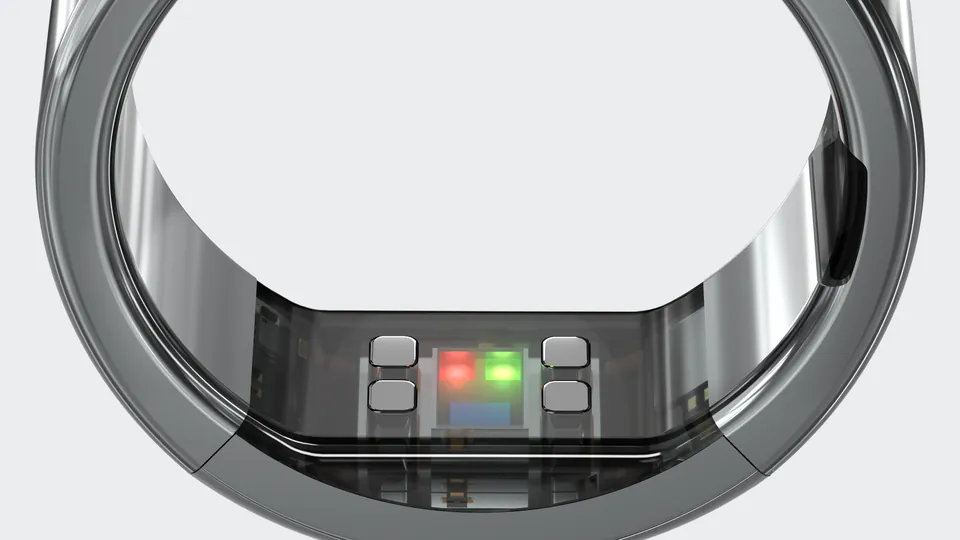
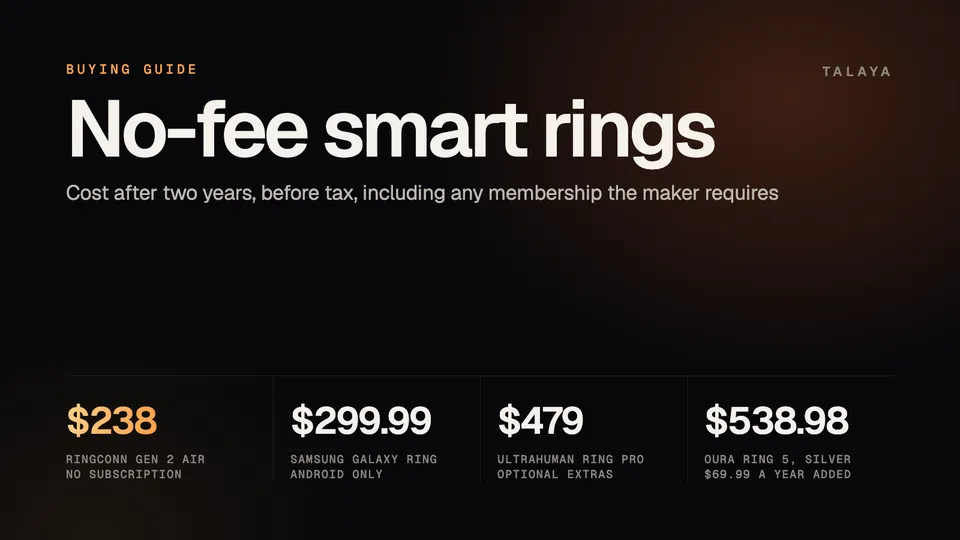
Four makers sell a smart ring in the US that needs no subscription for its main features: Samsung, RingConn, Ultrahuman and Circular. As of Oct. 25, 2026, their rings cost from $238 to $479. An Oura Ring 5 starts at $399 and adds a membership of $5.99 a month or $69.99 a year, which brings the cheapest version to $538.98 after two years.
This guide is based on each maker's US product and help pages as of Oct. 25, 2026; we haven't tested the rings.
Prices and fees at a glance
| Ring | US price | Required subscription | After two years | Optional paid extras |
|---|---|---|---|---|
| RingConn Gen 2 Air | $238 | None | $238 | Coverage plans |
| Samsung Galaxy Ring | From $299.99 | None | $299.99 | None listed |
| Circular Ring 2 | $349 | None | $349 | Pro features in the app |
| RingConn Gen 3 | $428 | None | $428 | Coverage plans |
| Ultrahuman Ring Pro | $479, charging case included | None | $479 | PowerPlugs and Ultrahuman Max, from $9.99 a month |
| Oura Ring 5, for comparison | $399 (Silver, Black) or $499 | $5.99 a month or $69.99 a year | $538.98 or $638.98 | Health Panels at $99 a test, Charging Case at $99 |
Prices are before tax and trade-in credit. The two-year column adds only required fees, and Oura's figure uses the annual plan with the first month included. Oura's ring prices are as CNET reported them; the other prices are from each maker's US page.
| Ring | Rated battery | Sizes | Phones |
|---|---|---|---|
| RingConn Gen 2 Air | Up to 10 days | 6 to 14 | iOS 17 or later, Android 10 or later |
| Samsung Galaxy Ring | Up to 7 days in sizes 12 and 13, up to 6 in smaller sizes | 5 to 15 | Android 11 or later only |
| Circular Ring 2 | 7 days | Not listed | iOS 15 or later, Android 9 or later |
| RingConn Gen 3 | 11 to 14 days, or 10 to 12 with vibration on | 6 to 15 | iOS 17 or later, Android 10 or later |
| Ultrahuman Ring Pro | Up to 15 days, plus up to 45 from the case | 5 to 14 | iPhone and Android |
| Oura Ring 5 | 6 to 9 days | 6 to 13 | iOS 16 or later, Android 11 or later |
What Oura's membership covers
Oura is the reason the question comes up. Without a membership, Oura says, the app shows three daily scores (Readiness, Activity and Sleep), the ring's battery level, basic profile information, settings and Explore content. The sleep stages, heart rate variability, resting heart rate and temperature trends behind those scores come with the $5.99 monthly fee, along with Oura Advisor, Health Radar and GLP-1 Insights. A new account gets its first month included. Our Oura membership explainer lists everything.
So with any ring, check what the free app shows. Samsung said at launch that the Galaxy Ring's data and insights live in Samsung Health "without a subscription." RingConn's Gen 3 page says "No Subscription Required." Ultrahuman says there are no recurring fees to access your data, and Circular says its core features and coach are included.
Samsung Galaxy Ring
Samsung lists the Galaxy Ring from $299.99 on its US store, down from $399.99 at its July 2024 launch. It is the oldest design here, and Samsung hasn't updated the hardware since. It is also the only ring that works solely with Android. Gestures, Find My Ring and the Energy Score need a Samsung Galaxy phone. Samsung rates the battery at up to seven days in sizes 12 and 13 and up to six in smaller sizes, and the ring comes with a charging case. Our Galaxy Ring guide has the full specifications.
RingConn Gen 3 and Gen 2 Air
The Gen 3 costs $428 on RingConn's US store and is rated for 11 to 14 days per charge, or 10 to 12 with its vibration alerts on. It is 2.3 mm thick, weighs 2.5 to 3.5 grams and is rated IP68 and 10ATM. It adds vascular health trends, which RingConn says are trend insights rather than single blood pressure readings, and sleep apnea pattern insights. It syncs with Apple Health and Google's Health Connect.
The Gen 2 Air, at $238, is the cheapest ring here. RingConn rates it for up to 10 days, and it charges on a dock instead of in a battery case. RingConn lists a one-year warranty outside the European Economic Area and 14-day returns and exchanges, with sizing kits excluded. It also sells optional coverage plans, which our best smart rings guide prices at $29.99 for one year and $49.99 for two.
Ultrahuman Ring Pro
Ultrahuman sells the Ring Pro on its US store for $479, with the PRO Charging Case included. Ultrahuman rates it for up to 15 days per charge, plus up to 45 more days of power from the case. It comes in sizes 5 to 14 and works with iPhone and Android. Ultrahuman says there are no recurring fees to access your data.
It does sell add-ons. Ultrahuman's HSA and FSA page lists a one-year Cardio Adaptability PowerPlug at $24 and a one-year Cycle & Ovulation Pro plug at $39.99, before tax. Ultrahuman Max starts at $9.99 a month, and Engadget reported that AFib detection carries a small monthly fee, as our Ring Pro guide notes.
The ring returned to the US after US Customs cleared it in March 2026. Oura sued on Oct. 22, TechCrunch reported, asking a court to stop US sales. No order has been issued, and Ultrahuman says the ring remains on sale.
Circular Ring 2
Circular's ring costs $349 and is the only one here with an on-demand ECG: a 40-second reading, with signs of AFib flagged by an algorithm Circular says is FDA cleared. Circular rates the battery at seven days. The ring weighs 4 grams, is water resistant to 50 meters and works with iOS 15 or later and Android 9 or later. Circular says its core features and its coach, Kira, are included, with optional Pro features in the app. It allows returns within 14 days, with the customer paying return shipping, and includes a one-year warranty.
Rings we couldn't confirm
Amazfit's US store page for the Helio Ring now shows the company's Helio Strap, an armband-style tracker, so we couldn't confirm the ring is still sold there. Ultrahuman's Ring Air, which also has no subscription, isn't sold in the US, according to Ultrahuman.
Before you order
- Match the phone. The Galaxy Ring needs Android 11 or later, RingConn needs iOS 17 or Android 10, Circular needs iOS 15 or Android 9, and Oura needs iOS 16 or Android 11.
- Read the free feature list. "No subscription" answers the monthly fee question but says little about which scores, alerts and trends come with the ring.
- Check the extras. PowerPlugs, Ultrahuman Max, Circular's Pro features and RingConn's coverage plans can change, so confirm them on the maker's US page.
- Order the maker's sizing kit first. RingConn's Gen 3 sizes differ from its earlier rings, and our sizing guide compares the kits.
- Weigh the patent fight. RingConn and Circular pay Oura royalties to keep selling their rings, according to TechCrunch, and Oura's Oct. 22 suit targets the Ring Pro.
Which ring suits whom
This advice rests on published specifications and prices, not on testing.
- An iPhone and the longest battery: the Ultrahuman Ring Pro, rated up to 15 days.
- A lower price on iPhone or Android: the RingConn Gen 3 or, on a budget, the Gen 2 Air.
- A Samsung Galaxy phone: the Galaxy Ring, which costs less than every ring here except the Gen 2 Air.
- An ECG on your finger: the Circular Ring 2.
- Oura's app: budget $538.98 over two years, or $638.98 for a $499 finish.
Samsung, Ultrahuman and Oura each say on their own pages that their rings are HSA and FSA eligible, and the IRS says the answer turns on why you buy and use a wearable. Our HSA and FSA guide lays out both sides. For rings against watches, see our smart ring vs smartwatch guide.
Frequently asked questions
What is the best Oura alternative without a subscription?
It depends on your phone and budget. On an iPhone, the Ultrahuman Ring Pro ($479, rated up to 15 days) and the RingConn Gen 3 ($428) need no subscription, and with a Samsung Galaxy phone the Galaxy Ring costs $299.99. Our best smart rings guide compares them.
Does the Galaxy Ring work with iPhone?
No. Samsung's requirements cover Android phones only, Android 11 or later, and gestures, Find My Ring and the Energy Score need a Samsung Galaxy phone. Our Galaxy Ring guide has the details.
What does an Oura Ring do without a membership?
It keeps working, but Oura says the app shows only the Readiness, Activity and Sleep scores, battery level, basic profile information, settings and Explore content. You can't use the Oura API, though you can still download your data from the Membership Hub.
Can a no-subscription ring start charging for features later?
The makers say their core data stays free, and each sells optional extras: Ultrahuman's PowerPlugs and Max plan, Circular's Pro features and RingConn's coverage plans. Plans can change, so check the maker's US page before you order.
Can I pay for a smart ring with HSA or FSA money?
Samsung, Ultrahuman and Oura each say on their own pages that their rings are eligible. The IRS says a wearable counts as a medical expense only if you buy and use it primarily for a specific disease, and your plan administrator decides. See our HSA and FSA guide.
Sources
- Samsung: Galaxy Ring US product page
- Samsung: Galaxy Ring FSA and HSA page
- RingConn: Gen 3 US product page
- RingConn: Gen 2 Air US product page
- Ultrahuman: Ring Pro US store page, with specifications and FAQ
- Ultrahuman: HSA and FSA page, with PowerPlug prices
- Circular: Circular Ring 2
- Oura Help Center: Oura Membership
- CNET: Oura Ring 5 first look, with pricing (May 28, 2026)
- TechCrunch: Oura sues rival Ultrahuman again (Oct. 22, 2026)
- Amazfit: US store page for the Helio Ring, now showing the Helio Strap
Join the conversation
Questions, or something to add? Talk about it with other smart glasses owners in r/Talaya, our community on Reddit.