Wearables · Guide
HSA and FSA wearables: can you buy Oura, Whoop, Galaxy Ring or Apple Watch?
Oura, Whoop, Samsung and Ultrahuman say their products are HSA or FSA eligible, and Apple says Apple Watch may be reimbursable. The IRS says it depends on why you buy the device. What each says, how medical necessity letters work and who decides.
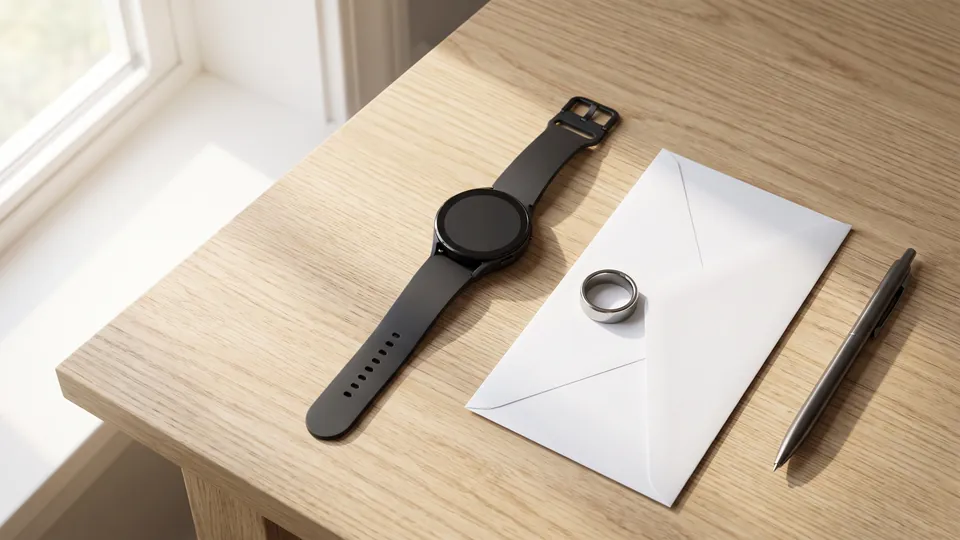
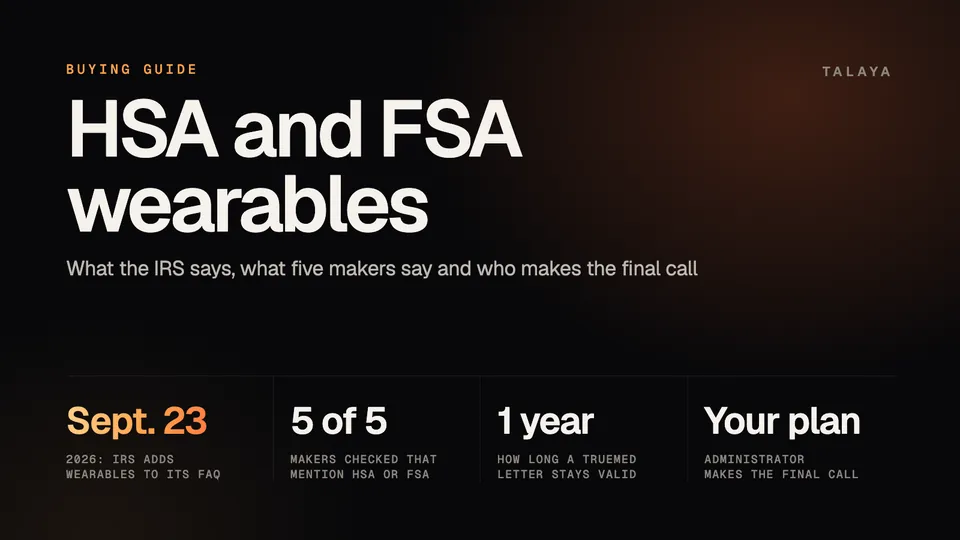
Sometimes. Oura, Whoop, Samsung and Ultrahuman each say on their own pages that their products are HSA or FSA eligible, and Apple's store page says Apple Watch "may be reimbursable." The IRS applies a narrower test. In a wearables answer it added to its FAQ on Sept. 23, 2026, it says a watch, ring or band counts as a medical expense if you buy and use it primarily to help diagnose, cure, treat or prevent a specific disease, and doesn't count merely because it tracks health information in general. Your plan administrator makes the final call, and nothing here is tax advice.
This guide is based on the IRS's published FAQ, a plan administrator's summary of an IRS alert and the makers' own HSA and FSA pages as of Oct. 25, 2026; we haven't filed a claim with any plan.
What the IRS says counts as medical care
The IRS's FAQ on medical expenses related to nutrition, wellness and general health covers HSAs, health FSAs, Archer MSAs and HRAs, and it points to Publication 502 for the full rules. It defines medical expenses as "the costs of diagnosis, cure, mitigation, treatment, or prevention of disease, and for the purpose of affecting any part or function of the body." They include "the costs of equipment, supplies, and diagnostic devices needed for these purposes." The limit that matters for wearables follows: "Medical expenses must be primarily to alleviate or prevent a physical or mental disability or illness. They don't include expenses that are merely beneficial to general health."
The FAQ applies that limit item by item. A gym membership counts only if it was bought for the sole purpose of affecting a structure or function of the body or treating a specific disease diagnosed by a physician, such as obesity, hypertension or heart disease. Exercise for general health, such as swimming or dancing lessons, doesn't count even when a doctor recommends it. Supplements count only if a medical practitioner recommends them as treatment for a specific diagnosed condition. If an HSA or FSA pays for an expense, you can't also deduct it on your tax return.
The wearables answer, added Sept. 23, 2026
Question 15 covers "a band, watch, ring, patch, sensor, or similar device" that tracks bodily functions or health information. It names no brand, and it doesn't mention FDA clearance. It says:
- Whether the cost is a medical expense "depends on all the facts and circumstances, including the device's functions and the reason it was purchased and used."
- A device with both medical and nonmedical uses, such as tracking general wellness, fitness or sleep, isn't a medical expense merely because it tracks health information in general, or because it tracks things like blood pressure or blood glucose that specific diseases can affect.
- It is a medical expense if you buy and use it "primarily to assist in the diagnosis, cure, mitigation, treatment, or prevention of a specific disease."
- Facts that may count include a recommendation from a medical practitioner, your symptoms, diagnosis, abnormal test results or risk factors, the link between what the device tracks and the disease, and how the information is reviewed or used. "A generalized desire to monitor or improve health is not sufficient."
- Accessories, add-ons and software subscriptions used with the device are medical expenses only if bought primarily for that medical purpose. In our reading, that applies to a software subscription such as Oura's membership.
The IRS's warnings about wellness items and doctors' letters
The IRS has also warned about marketing that stretches these rules. According to HealthEquity, a plan administrator, an IRS alert issued March 6, 2024 reminded taxpayers and plan administrators that personal nutrition, wellness and general health expenses aren't medical expenses, after concerns that some companies misrepresented what can be reimbursed. HealthEquity's summary says the IRS objected to claims that letters from doctors, relying solely on self-reported health information, can turn expenses such as gym memberships and dietary supplements into medical expenses. In the alert's example, a diabetic buys a "doctor's note" from a company to cover low-carbohydrate food, and his claim is denied. HealthEquity adds that a plan found to be paying non-medical expenses can be disqualified as a cafeteria plan. We read the alert through HealthEquity's summary, not on the IRS's site.
What each company says
These are the makers' statements, not IRS rulings or plan decisions, and each page mentions your plan administrator or provider.
| Maker | Products it calls eligible | HSA or FSA card at checkout | Letter of medical necessity |
|---|---|---|---|
| Oura | Ring, membership, extra chargers, shipping, taxes; not extended protection plans | Yes on Oura's online store if your card runs on a major network; add the card in the Membership Hub for the membership | "Most providers don't require it, but some may" |
| Whoop | One, Peak and Life memberships bought for one or 12 months, battery pack, chargers (confirm with your provider), Advanced Labs tests | Yes, through Truemed at join.whoop.com and in the app only | Whoop's page doesn't mention one; Truemed's checkout builds in a survey and a letter |
| Samsung | Galaxy Ring and shipping | No: Samsung.com doesn't accept HSA or FSA cards, so pay another way and submit the receipt | Not mentioned |
| Ultrahuman | Ring PRO, M1, Home, Photon, Voyager Charger and some PowerPlugs | Yes, through Flex at checkout | Not needed for products it calls "always eligible"; the Ring PRO isn't named in that answer |
| Apple | Apple Watch "may be reimbursable" | Not described in the passage we read | Not mentioned |
Oura
Its FSA and HSA page, published Sept. 30, 2025, says: "In the US, you can use Health Savings Accounts (HSA) or Flexible Spending Accounts (FSA) to pay for eligible Oura products, including the Oura Ring, Oura Membership, extra chargers, shipping, and taxes." A footnote says reimbursement "is subject to rules and restrictions of your specific provider, and not all Oura members will qualify." Oura says HSA and FSA money can't buy a gift, because the funds are for the account holder or eligible dependents. On letters it says: "If needed, a healthcare professional can provide a letter explaining how Oura supports your health." Our Oura membership explainer covers the fee itself.
Whoop
Its support article, last published June 17, 2026, says US members "can use their FSA or HSA funds to pay for WHOOP directly through our integration with Truemed, or they can submit eligible purchases for reimbursement through their FSA/HSA provider." Truemed checkout is available at join.whoop.com and on the app's membership extensions page, not on shop.whoop.com. Whoop lists UPC codes for reimbursement claims and says only one-month and 12-month memberships are eligible, not the monthly payments after an initial commitment. It recommends "confirming eligible payment details directly with your plan administrator." Our Whoop guide has the plans and prices.
Samsung
The Galaxy Ring page says "The Galaxy Ring and shipping costs are HSA and FSA eligible" and "Plan providers and employers set their own eligibility requirements." We found a Samsung page for the ring only, not for the Galaxy Watch. Our Galaxy Ring guide covers the ring.
Ultrahuman
Its US page says: "Ultrahuman products are HSA/FSA eligible with Flex. The Ring PRO, M1, Home, Photon and Voyager Charger are all HSA/FSA eligible." You pick Flex at checkout and get an itemized receipt. Ultrahuman says the Ring Air, the one-year Cardio Adaptability PowerPlug and the Voyager Ring Charger are "always eligible" and need no letter, and that some items, including Ultrahuman Home, require a short eligibility questionnaire. See our Ring Pro guide.
Apple
The Apple Watch store page says: "Apple Watch may be reimbursable under FSA or HSA. Please check with your FSA or HSA plan administrator." The AirPods Pro 3 store page adds that, for people using the Hearing Aid feature, "some insurance providers may allow you to receive reimbursement for your order." Our Apple Watch guide and AirPods Pro 3 guide cover the products. For smart glasses, see our Ray-Ban Meta FSA, HSA and insurance guide.
How letters of medical necessity work through third parties
A letter of medical necessity, or LMN, is a letter from a licensed healthcare provider that supports using HSA or FSA money for an item. A plan can ask for one. Some companies hand the process to a service. Whoop uses Truemed, and Ultrahuman uses Flex for card payments and receipts.
Truemed's help center describes the steps at a partner merchant:
- Choose Truemed as the payment method at checkout.
- Complete a clinical intake survey, on or before the day of purchase. The letter's date is tied to the survey.
- A licensed provider reviews your answers and decides whether a letter is appropriate.
- If approved, the letter is issued and linked to your purchase, and you can reach it in your Truemed dashboard.
Truemed says a letter lasts one year from the day it is issued, and that it can't issue one for a purchase already made outside its checkout. For some products bought elsewhere, such as gym memberships, saunas, exercise equipment and activity trackers, it says it may issue a generic letter that you submit with itemized receipts. It adds: "Your HSA/FSA administrator makes the final determination on whether the reimbursement is approved." Whoop says Truemed "verifies your eligibility and processes the transaction in compliance with HSA/FSA requirements."
The IRS items above bear on this. The wearables answer lists a practitioner's recommendation, a diagnosis or risk factors, and how you use the data as relevant facts. As HealthEquity summarizes it, the 2024 alert called it incorrect to claim that letters relying solely on self-reported information can make such expenses medical. The pages we read don't say whether a letter issued after an online survey meets the IRS's test for a wearable.
What your plan administrator decides
Every maker's page mentions your plan or administrator. Samsung says plan providers and employers set their own requirements. Oura says not all members will qualify. Whoop and Apple tell you to ask your plan administrator, and Truemed says the administrator makes the final determination.
Before you pay, ask your administrator:
- Does the plan accept the maker's payment route, an HSA or FSA card at checkout or a receipt submitted afterward?
- Does it want an itemized receipt, a product code (Whoop publishes UPCs) or a letter of medical necessity?
- Does it treat the device and its membership or subscription separately? The IRS says add-ons and subscriptions count only if bought primarily for the medical purpose.
- Does it reimburse monthly payments? Whoop says it doesn't for payments after the initial commitment.
- What happens on a return? Oura says refunds go back to the same account, and Whoop says you must work with your provider to reverse a claim.
Keep the order confirmation, the itemized receipt and any clinician's letter. This guide isn't tax advice, and your plan administrator decides what a plan pays.
Frequently asked questions
Is the Oura Ring HSA eligible?
Oura says the ring, membership, extra chargers, shipping and taxes can be paid for with HSA or FSA funds in the US, and that reimbursement depends on your provider's rules. The IRS says a wearable counts only if you buy and use it primarily for a specific disease, so ask your plan administrator.
Is Whoop HSA or FSA eligible?
Whoop says US members can pay through Truemed at join.whoop.com or in the app, or submit a receipt for reimbursement. It lists One, Peak and Life memberships bought for one or 12 months, and says monthly payments after the initial commitment aren't eligible.
Can I use an HSA for an Apple Watch?
Apple's store page says: "Apple Watch may be reimbursable under FSA or HSA. Please check with your FSA or HSA plan administrator." The IRS applies the same facts-and-circumstances test to every wearable.
Is the Galaxy Ring HSA or FSA eligible?
Samsung says the Galaxy Ring and shipping costs are HSA and FSA eligible. Samsung.com doesn't accept HSA or FSA cards, so you pay another way and submit the receipt to your administrator.
What is a letter of medical necessity?
It is a letter from a licensed healthcare provider that supports using HSA or FSA money for an item, and a plan may ask for one. Truemed's help center says its letters follow a health survey completed on or before the day of purchase and last one year, and that your administrator decides on reimbursement.
Does an FDA-cleared feature make a wearable HSA eligible?
The IRS's wearables answer doesn't mention FDA clearance. It points to the device's functions and the reason you bought and use it, so ask your plan administrator how it treats a device with a cleared feature.
Sources
- IRS: Frequently asked questions about medical expenses related to nutrition, wellness and general health (Question 15 added Sept. 23, 2026)
- IRS: Publication 502, Medical and Dental Expenses
- HealthEquity: IRS reminds taxpayers and plans about ineligible personal expenses
- Oura: Oura Ring is FSA and HSA eligible (published Sept. 30, 2025)
- Whoop Support: FSA/HSA Eligibility (published June 17, 2026)
- Samsung US: Purchase Galaxy Ring with FSA or HSA funds
- Ultrahuman US: HSA and FSA eligible with Flex
- Apple Store: Shop Apple Watch Series 12
- Apple Store: Buy AirPods Pro 3
- Truemed Help Center: Letter of Medical Necessity (LMN) requests
Join the conversation
Questions, or something to add? Talk about it with other smart glasses owners in r/Talaya, our community on Reddit.