Brilliant Labs Halo goes on sale at $399 with memory in its Noa assistant
Brilliant Labs says its Halo glasses launched Oct. 27 at $399, with Noa memory and a game called Narrative. The price and the memory tiers are on the store page. Narrative, the privacy claims and the battery figure rest on the company's word.
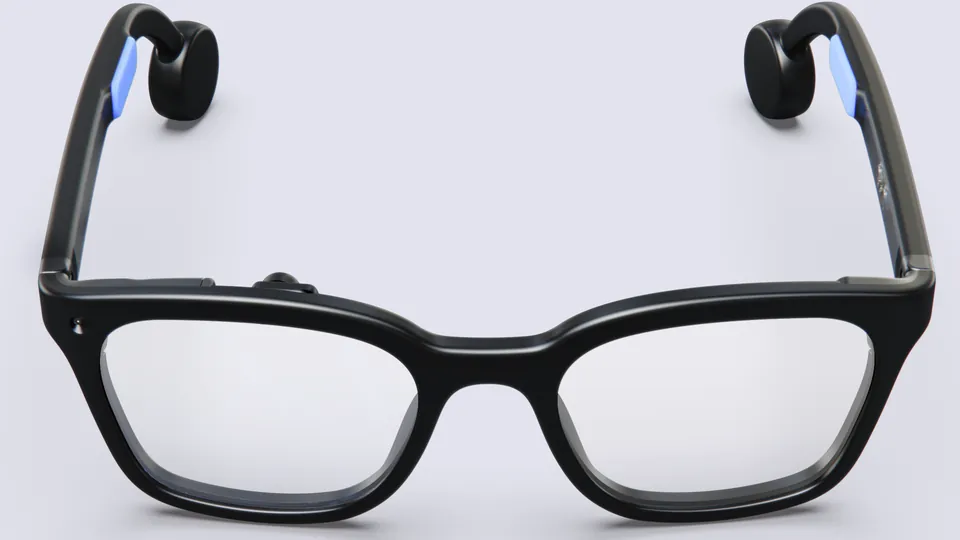
Brilliant Labs says its Halo glasses officially launched on Oct. 27, 2026, priced at $399 and available now at brilliant.xyz. The announcement came in a Business Wire release datelined Singapore, and the Halo product page shows a "Regular price $399.00 USD" and the line "Shipping now!"
The release leans on two features: memory in Noa, Brilliant's assistant, and a new adaptive game called Narrative. The store confirms the first. It says nothing about the second.
What the launch confirms
The price and the sale are on Brilliant's own store, so they are firm. So is the memory feature, in outline. The release describes Noa as "a personal AI companion that builds long-term memory around what matters to each user" and says that "rather than resetting with every interaction, Noa carries context forward."
The product page adds the commercial terms:
- Noa's out-of-the-box assistant now includes memory, "subject to a daily usage cap."
- Noa Plus costs $9.99 a month, or $8.25 a month billed annually.
- Noa Pro costs $39.99 a month, or $33.25 a month billed annually, and adds "triple the usage limits" and "the added benefit of LONG term memory" over Plus.
- Miniapps let users "build new experiences using natural language and share them with others" on an App Store.
Brilliant says Halo is open source, with design files and code on GitHub. For specs and the Frame history, see our Halo and Frame guide.
What only the company is claiming
Narrative
The release calls it "a new category of adaptive gaming that transforms the real world into an open-world game that continuously evolves with each player." The product page as read on Oct. 28 doesn't mention Narrative or any game. Brilliant hasn't published a price, a release date, device requirements or a subscription for it, and it hasn't said whether anyone can play it today. The name is also not new. In earlier coverage of Halo, Heise described Narrative as a context-based reminder system. Whether the 2026 game is related to that earlier feature isn't stated.
Battery and weight
The release gives "up to 14 hours of battery life" and "just over 40 grams." Those are Brilliant's figures. We found no independent test.
Privacy
The release says Halo's "low-resolution image sensor gives Halo visual context without functioning as a traditional camera for photography or video," and that images "are processed privately on-device, immediately discarded, and never stored."
Brilliant's privacy policy, updated Oct. 7, 2026, describes a wider picture:
- "Noa uses cloud AI to support conversation and image understanding."
- "With your permission, relevant information is shared with Google's Gemini services."
- "We retain conversation transcripts and associated memory data in encrypted cloud storage to support recall and personalization until you request deletion."
- The company obtains "separate explicit in-app permission before sharing personal information with third-party cloud AI."
The release's "never stored" line covers the images. The policy also says cloud AI supports image understanding, and it keeps transcripts and memory data in the cloud until you request deletion. The pages we read don't say how a user views or deletes that data.
Unite.AI reports that the hardware docs list a 640-by-480 global-shutter color sensor, while the product page calls it a "low-power optical sensor for AI inference."
What it means for buyers
Halo's price rose from the earlier offer. Road to VR reported a $299 pre-order price in August 2025, with shipping slated for Q4 2025. Brilliant hasn't explained the jump to $399.
Before ordering, note these store terms:
- Taxes aren't collected at checkout, and "import taxes may apply at delivery and vary by country."
- Returns that aren't for defects get a refund minus a $49 restocking fee, and the buyer pays return shipping.
- The display adjusts from +2 to -6 diopters, and prescription lenses are bought on a partner's site.
The free tier includes memory, but the page doesn't explain how memory differs between free, Plus and Pro.
What is still unknown
- Which countries Halo ships to, and delivery times or stock levels.
- Whether the App Store and Miniapps are live today, and how many apps exist.
- Everything about Narrative beyond the release's description.
- Whether Noa works without the cloud.
None of the outlets we read (Road to VR, Heise and Unite.AI) has tested Halo's memory, gaming or privacy claims.
Sources
- Brilliant Labs: Halo Glasses launch release (Business Wire, via Yahoo Finance), Oct. 27, 2026
- Brilliant Labs: Halo product page (read Oct. 28, 2026)
- Brilliant Labs: privacy policy (updated Oct. 7, 2026)
- Unite.AI: Brilliant Labs launches Halo AI glasses with memory and adaptive gaming
- Road to VR: Brilliant Labs Halo price and release date (Aug. 2025)
- Heise: Brilliant Labs presents Halo AI glasses
Join the conversation
Questions, or something to add? Talk about it with other smart glasses owners in r/Talaya, our community on Reddit.