Google details Fitbit Edge: bigger screen, side button, four finishes
Google's Oct. 27 design post describes the Fitbit Edge tracker: a Hybrid OLED screen, a physical side button, a thin curved aluminum case and swappable bands. Here is what Google says, plus the price and availability reported so far.
Google published a design post on Oct. 27 for Fitbit Edge, which it calls its "newest fitness tracker." The tracker itself was announced earlier. 9to5Google reported the announcement on Oct. 12, and Google's Australian launch post is dated Oct. 13. That post lists AU$269 and NZ$299 with shelves from Oct. 27, and 9to5Google reports a US price of $179.99 with availability the same day.
What Google says changed
The screen
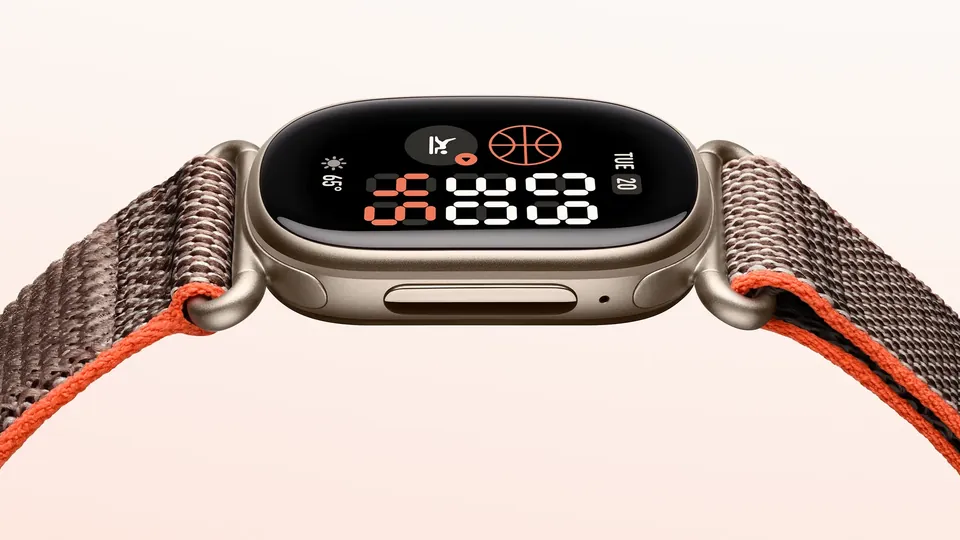
Google describes "our largest, brightest tracker display yet," using a Hybrid OLED panel it says is "easy to read, even with a harsh outdoor glare." It also says the screen comes with "a completely overhauled UX and UI," with information in "glanceable, high-contrast tiles and expressive clock faces." In the Australian launch post, Google puts the gain at "46% more viewing area than previous trackers." Neither post gives a screen size or resolution.
The button
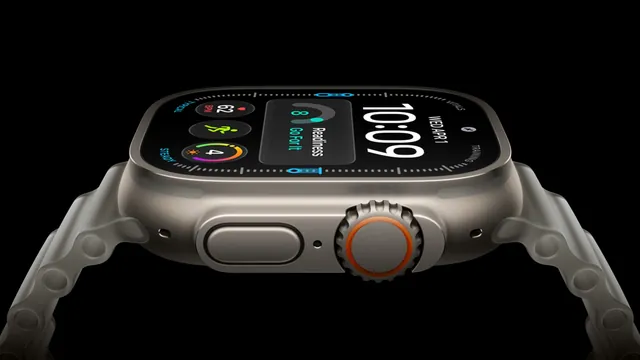
Fitbit Edge has "a tactile physical side button." Google's reason: "Sweaty fingers or wet weather can make on-screen tapping frustrating" during a workout, and it says the side button addresses that.
The body
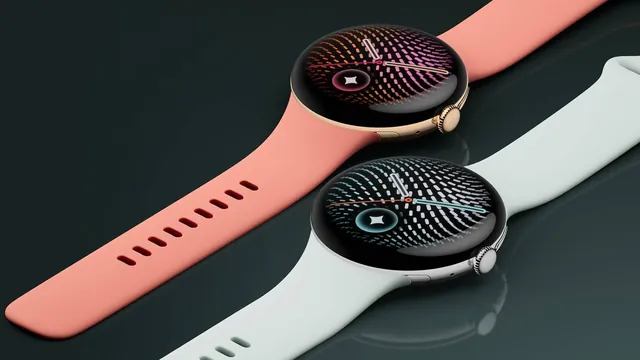
Google says it "sculpted the thin chassis and bottom sensor housing with a subtle curve." The stated goal is "minimized pressure points while ensuring continuous skin contact for 24/7 heart-rate and sleep tracking." The Australian launch post gives the thickness as 11.5 mm.
The chassis is "made from 100% recycled aluminum and comes in four finishes: Obsidian, Olive, Canyon, and Fog." A footnote on the design post says recycled aluminum is "at least 2% of product based on weight." The Australian post puts all recycled materials at "at least 31%" by weight.
Bands
Bands are sold separately. Google's design post lists the Active Sport Band, which "features wide perforations for maximum breathability during intense workouts" and comes in Obsidian, Porcelain, Olive and Hibiscus. It also lists a Performance Loop, a Magnet Band (Obsidian, Fog, Mahogany) and a Metal Link band (Matte Black, Brushed Silver, Champagne Gold). The post also carries a "Coming soon." line after the accessory list, without saying which band it refers to.
Google's posts do not price the bands. According to 9to5Google, the US prices are $39.99 for the Active Sport, $49.99 for the Performance Loop, $59.99 for the Magnet Band and $149.99 for the Metal Links.
Price and availability
- Australia and New Zealand: Google's launch post lists AU$269 and NZ$299, with pre-orders open and shelves from Oct. 27. It adds that eligible new and returning users get three months of Google Health Premium with a purchase.
- US: 9to5Google reports $179.99, with pre-orders from Oct. 12 and availability on Oct. 27. No Google post we read gives a US price or date, and the design post has no price, date or country list.
- Elsewhere: Nothing we read covers the UK, the EU or Canada.
For context, Google's Pixel Watch 5 starts at $399 for the 41 mm, and Google's store menu lists Fitbit Edge alongside Fitbit Air and Fitbit Versa 4. Google's design post is titled "Premium design for an active life," but at 9to5Google's reported US price, Fitbit Edge costs less than half as much as the cheapest Pixel Watch 5.
Battery, phones and subscriptions
The design post says "up to seven days of battery life." Its footnote calls that figure approximate and based on testing in California in 2026 on pre-production hardware and software. The Australian post adds that fast magnetic charging "can deliver a full day of battery in just five minutes when your battery is low," and calls Fitbit Edge Google's "first repairable Fitbit fitness tracker," with a replaceable battery.
Google says the tracker works with "most phones running on Android 11 or higher and Apple iOS 16.4 or higher." Setup needs a Google Account, the Google Health app and an internet connection. On subscriptions, the design post footnote says "some features require a Google Health Premium subscription (sold separately)." The Australian launch post words it more strongly, saying the device "requires Google Health Premium." Google has not reconciled the two statements in anything we read. Our Pixel Watch guide reports that Google Health Premium costs $9.99 a month or $99 a year.
On water and dust, the design post calls the tracker "water- and dust-resistant" and rates it 5 ATM and IP68 at the factory, with the footnote that it "is not waterproof or dust proof."
What is still unknown
- A US price or release date in Google's own words.
- Screen size, resolution and the exact Hybrid OLED specification.
- Battery life in real use.
- Which features need Google Health Premium.
Google's Fitbit line also includes the screenless Fitbit Air, which comes up in our smart ring versus smartwatch comparison.
Sources
Join the conversation
Questions, or something to add? Talk about it with other smart glasses owners in r/Talaya, our community on Reddit.